Forget the big games with playoff stakes. The ones that really hurt come from deep, historical feelings. These are fueled by past hurts and unmet expectations.
It’s all about passion, but not balanced. For one side, it’s just another game. But for the other, it’s a fight for respect and recognition.
This isn’t about who’s stronger. It’s about who’s respected. A win can erase old slurs like “commuter school” with one play. For the underdog, this game could make their whole season.
In debates among Longhorn fans, emotions often win over rankings. The true Texas rivalry games are those where fans pray to beat their rivals. It’s more than a game; it’s a test of worth.
Letdown scenarios
The secret to a perfect trap game isn’t in any playbook. It’s in the history of disrespect. We focus on recruiting and plays, but the real spark is often years old. It’s a failure that goes beyond sports, becoming a personal issue.

Looking back at past disappointments is like forensic psychology. When fans feel wronged, that feeling doesn’t fade. It builds up, becoming a part of the culture. The stadium may change, but the score in fans’ minds remains.
Letdown Scenarios
Let’s look at the 2001 Texas-Houston game, known as “Bleachergate.” Texas went to Houston for a game, but over 4,150 fans’ tickets were useless. The bleachers didn’t pass inspection.
Houston had to choose a new venue. They offered fans to watch on screens in a basketball arena. Most fans declined. The university president was worried about upsetting the community by moving the game.
Texas Athletic Director DeLoss Dodds said, “We don’t have plans to play Houston again.” This decision hurt the relationship for years. The anger spread to players, coaches, and fans, even those born later.
Letdown Scenarios
A ticketing mistake can turn into a trap game over time. Each retelling adds to the anger. New players carry the story forward. “This program disrespected us” becomes part of their identity.
For the favored team, it’s a risk. They see an easy win. But the underdog has a personal reason to win. This can make up for talent gaps.
Failed bleachers are just the start. Snubs, public insults, and media slights add to the list. Smart programs keep track of these. They know that upcoming matchups are more than just games.
The most dangerous trap games aren’t set by the conference. They’re created by past wrongs. An opponent you’ve beaten many times might be less of a threat than one you wronged long ago. The former expects to lose, while the latter seeks revenge.
Administrators often overlook the long-term effects of their decisions. They focus on logistics, budgets, and image. But in college football, tradition and rivalry are everything. Every slight can lead to a future upset. The key is to study history, not just film.
Schedule flow impact
Fans often talk about old rivalries, but athletic directors focus on TV slots and recruiting. This difference is interesting. The emotional calendar in your mind doesn’t match the AD’s strategic plans.
For Texas, everyone wants a piece of the action. The math is simple. Fans dream of 11 Texas rivalry games, but the schedule allows for only three or four.
The Diplomat’s Dilemma
Chris Del Conte, Texas’s athletic director, is a master of diplomacy. He talks about “like-minded” national brands like Michigan and Ohio State. These games are big for TV and prestige.
At the same time, he talks about his duty to Texas. He says they’ll play all 13 Texas FBS schools if they fit the schedule. This includes games with UTSA and UTEP, meeting part of this promise.
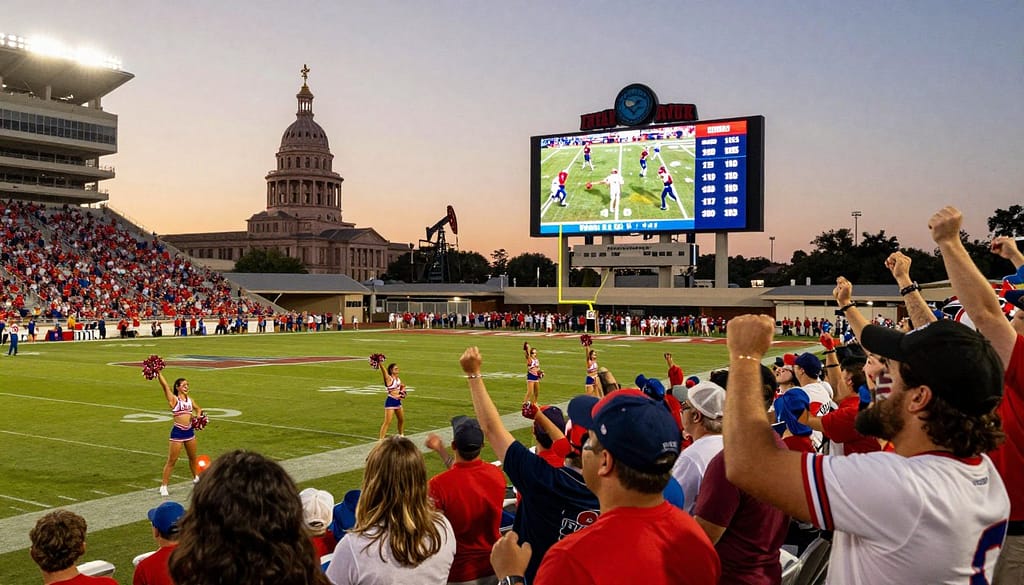
But, let’s look at the facts. Playing a hungry in-state school like Texas Tech or Baylor is riskier than hosting a big-name team. The out-of-state team might have more talent, but they don’t have the same emotional drive. Beating Texas is a big deal for the opponent.
The Arithmetic of Animosity
Let’s look at the numbers like a chess grandmaster. A professor found 11 schools see Texas as their biggest rival. Now, add conference realignment to the mix.
Joining the SEC is a financial boost but limits the schedule. There are only 3-4 non-conference games left. These games must meet several needs:
- Revenue: A game against a “buy” opponent.
- Prestige: A home-and-home with a national brand.
- Politics: A game against an in-state school.
- Strategy: A tune-up game before a tough conference stretch.
With so many needs, scheduling becomes impossible. The order of opponents is key. This is why scheduling flow is crucial.
Imagine Alabama’s schedule: a bye week, then Oklahoma, and then Georgia. Where do you fit a trip to Lubbock to face Texas Tech? It’s a high-risk game that could ruin the season.
The biggest win in scheduling might be avoiding a rivalry game for years. Or placing a “lesser” opponent in a way that helps recovery. The spreadsheet, not emotions, tells the true story of a season. For Texas, managing rivalries is now a key off-field challenge.
Coaching preparation
So here’s the real chess match. Forget X’s and O’s for a moment. The most fascinating battle happens between the ears, in the film room. Here, narratives are dissected and rebuilt.
Dana Holgorsen has lived this from both dugouts. He’s the guy who once gave the “Horns Down” after a legendary two-point conversion win in 2018. Now, as Houston’s coach, his message is pure ice water: “They’re good everywhere… Beating Texas is going to be hard.” Passion is the fuel, but discipline is the engine.
How do you convert a fanbase’s generational obsession into a game plan?
The Psychological Minefield
Steve Sarkisian’s answer was to tell his Longhorns to “embrace the hate” on their farewell Big 12 tour. It’s a brilliant psychological pivot. You take the target on your back and wear it as armor.
This mindset directly combats the complacency that creates classic trap games. After a massive win like the Red River triumph over Oklahoma, Sarkisian didn’t celebrate. He immediately stressed mental toughness and a standard weekly preparation.
The process, not the opponent’s logo, becomes the focus.
That’s the masterclass. Holgorsen must shrink Texas from myth to mere opponent. Sarkisian must inflate Houston from afterthought to urgent threat. Both are fighting the same enemy: external noise.
The best programs avoid trap games not by having better athletes, but by having coaches who master this emotional alchemy. They turn potential pitfalls into proof of concept. In the end, the preparation for Week 8 looks identical to Week 1.
That boring consistency is what makes dynasties—and kills Cinderella stories.