
The Blake Gideon Texas return matters because it gives the Longhorns something more valuable than another familiar name on the staff. It gives Texas a defensive redemption story at the exact moment Steve Sarkisian’s program needs more clarity on the back end, more trust in coverage, and a sharper plan for turning talent into championship-level consistency.
Gideon leaving Georgia Tech after one season as defensive coordinator to come back to Austin under Will Muschamp is not an assistant-coach move. It is a statement about timing, loyalty, ambition and the pressure now attached to the Texas secondary. Texas is trying to look complete.
Why The Blake Gideon Texas Return Feels Bigger Than A Staff Move
The first reason this story works is obvious: Gideon is not an outsider trying to learn the room. He is a former Texas safety, a former Longhorns assistant, and a coach with deep personal history inside the program. That history gives his return emotional weight, but the football case is just as important.
Texas did not bring Gideon back for nostalgia. The Longhorns need cleaner coverage rules, better communication and a secondary that can hold up when opponents force the defense into stressful downs. A program with ambition cannot afford soft spots in the defensive backfield.
That is why the Blake Gideon Texas return deserves more than a mention in the offseason cycle. Gideon is coming back to work with Muschamp, a defensive coordinator who carries his own Texas history and a reputation for demanding detail. Together, they give Sarkisian a defensive partnership built around discipline, accountability and familiarity with the standard in Austin.
The question is whether his return can help the Longhorns turn defensive talent into reliable weekly execution.
Muschamp And Gideon Give Texas A Clearer Defensive Voice
The Muschamp-Gideon pairing is compelling because it has a natural logic. Muschamp brings the coordinator authority. Gideon brings secondary expertise, program knowledge and the ability to connect with defensive backs through technical teaching and lived experience.
That matters because defensive communication is not only about calls. It is about shared language. The best secondaries look calm before the snap because players understand the formation, the threat and the help. The worst ones look talented until motion, tempo or route combinations force hesitation.
Texas needs more of the first version. Gideon’s job will be to make the secondary feel more connected, not merely more athletic. He must help defensive backs understand splits, leverage, route stems, disguise and situational football with enough precision that the Longhorns can survive high-level coverage stress.
Muschamp’s presence raises the stakes. He is not walking into Austin to manage a soft reset. His hiring signals that Texas wants a defense with a stronger edge and a tighter identity. Gideon becomes an important part of that effort because the secondary often reveals whether a defensive overhaul is real or cosmetic.
If the back end communicates better, the pass rush gets more time. If corners trust their help, they can play with more aggression. If safeties process faster, explosive plays shrink. That is how a staff move becomes a football impact.
The Secondary Is Where Texas Has To Prove Itself
Texas has enough blue-chip talent to compete with almost anyone. That is no longer the issue. The issue is whether the Longhorns can play with enough defensive consistency to match their roster profile.
The secondary is central to that challenge. Modern offenses use tempo to limit substitutions, motion to reveal coverage, bunch sets to create traffic, and layered route concepts to punish hesitation. A defensive back can have speed and still be late. Talent helps, but structure decides whether that talent becomes dependable.
That is where Gideon’s return should matter. He does not need to reinvent coverage. He needs to make Texas cleaner: fewer blown assignments, better angles, stronger tackling in space and more confident route recognition. He also has to teach when to take a calculated risk and when to protect the defense.
The Longhorns’ ceiling will still be shaped by quarterback play, offensive line performance and skill-position explosiveness. But the defense cannot be treated as a supporting character. A championship contender needs defensive balance, and the secondary is often where that balance either holds or breaks.
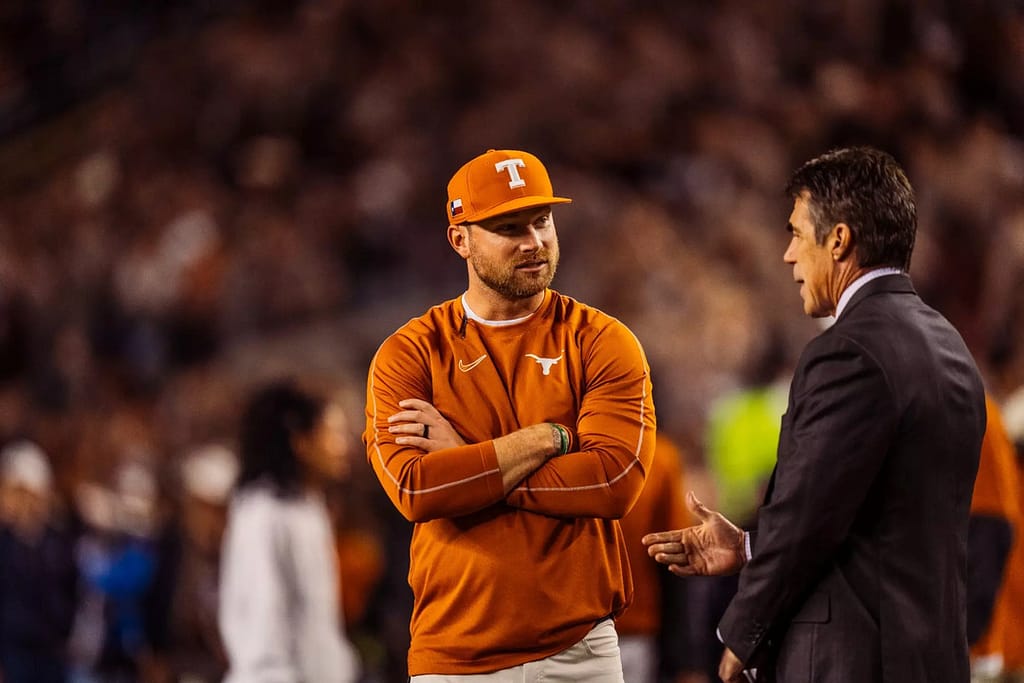
Gideon’s Texas Background Adds Credibility, Not A Guarantee
There is a temptation to assume that former players automatically connect with current players. Sometimes they do. Sometimes they do not. Credibility must still be earned in the meeting room, on the practice field and during the uncomfortable corrections that come after mistakes.
Gideon’s Texas background gives him a head start, not a free pass. He understands the expectations. He knows how loud Austin gets when the defense gives up a cheap touchdown. He knows the difference between being talented at Texas and being trusted at Texas. That institutional knowledge has real value.
But nostalgia will not defend a crossing route. It will not fix poor eye discipline or clean up a missed tackle. Gideon’s work has to be practical. The returning story is appealing because it is emotional, but the season will judge the move through technique, calls and results.
That is why I see this as a high-upside but fair test. Gideon brings enough experience to be taken seriously, and his official role as defensive passing game coordinator and secondary coach gives him a clear lane. His Texas football coaching profile reinforces how directly his career is tied to the Longhorns’ defensive identity.
What Gideon Must Fix First
The first priority should be communication. A secondary can survive a missed individual play. It cannot survive repeated confusion. When the back end is late passing off routes or slow adjusting to motion, the entire defense gets stretched.
The second priority is leverage. Good defensive backs understand where their help is and play accordingly. Bad leverage turns decent coverage into easy completions.
The third priority is tackling. Texas cannot let short throws become explosive plays because a defensive back takes a poor angle or fails to finish. In the SEC, physical receivers and skilled tight ends make space tackling a weekly test.
The fourth priority is disguise. If Muschamp wants to make quarterbacks work after the snap, Gideon’s secondary must show one picture and rotate into another without creating chaos. That requires practice, communication and patience.
Here is the cleanest way to frame the defensive project:
| Area To Improve | Why It Matters | What Success Looks Like |
|---|---|---|
| Communication | Motion and tempo punish hesitation | The secondary adjusts without panic |
| Leverage | Route concepts attack space | Corners and safeties play with better positioning |
| Tackling | Short throws can become explosive gains | Texas limits yards after catch |
| Disguise | Quarterbacks need post-snap uncertainty | Coverage rotations look controlled |
| Trust | Aggressive calls require dependable execution | Muschamp can expand the defensive menu |
Why This Move Says Something About Texas’ Standards
Ten-win seasons, major recruiting wins and playoff conversations have raised the baseline. That is healthy, but it also creates pressure. The program is not measured by whether it looks respectable. It is measured by whether it looks championship-ready.
That standard changes how staff moves are interpreted. Gideon’s return is not only about hiring a good secondary coach. It is about Texas choosing familiarity with a demanding standard over a more anonymous assistant hire. It suggests Sarkisian and Muschamp want coaches who understand the urgency of the moment.
That urgency does not mean panic. It means alignment. Texas is trying to build a staff where the defensive message is sharper and the teaching is more connected. A program with playoff expectations cannot afford mixed signals between the coordinator room and the position room.
Across Texas football, staff and roster decisions are increasingly being judged by how quickly they create visible results, and that same evaluation lens applies from college programs to NFL teams, including this useful look at a related Texas roster-building signal.
For the Longhorns, Gideon’s return should be read through that larger lens. It is a move about standard, not sentiment.
The Georgia Tech Detour Makes The Story More Interesting
Gideon’s year at Georgia Tech adds texture because it gave him coordinator experience away from Austin. That matters even if the return means stepping back into a position-coach role under Muschamp.
Coordinator work can sharpen a coach’s perspective. Handling game-planning demands, staff conversations and full-unit problems can create better awareness of how each position fits into the larger plan. Gideon returns with a wider view of the defense, not just a secondary coach’s tunnel vision.
That is a subtle but important advantage. If Gideon can translate coordinator-level perspective into position-room teaching, Texas gets more than a familiar assistant. It gets a coach with expanded judgment.
Why The Muschamp Factor Changes Everything
Muschamp’s return to Texas changes the tone of the defensive conversation. He is not a passive presence. His defenses have typically been associated with intensity, physicality and a high standard for assignment football.
That creates a natural pressure point for Gideon. If Texas is going to play with more aggression, the secondary must be trustworthy. Aggressive calls expose defensive backs. Blitzes create one-on-one situations. Rotations create responsibilities that must be handled cleanly. The coordinator can draw it up, but the defensive backs have to make it real.
That is why Gideon’s role is so central. The secondary is the hinge between Muschamp’s philosophy and the game-day product. If the back end plays with confidence, Texas can be more ambitious. If it wobbles, Muschamp may have to reduce risk and protect weaknesses.
The best defensive staffs know how to teach risk. They do not simply demand aggression. They show players how to play fast without playing reckless. Gideon’s job is to help the secondary find that line. That line may decide whether Texas looks merely talented or truly dangerous.
The Recruiting Impact Should Not Be Ignored
Coaching hires also affect recruiting. Defensive backs want development, visibility and trust. Gideon can sell all three if Texas plays well.
Recruiting, though, will follow performance. If Texas’ secondary improves, Gideon’s message gets stronger. If the Longhorns struggle in coverage, rivals will use that against them. That is the simple reality.
The better version is easy to imagine. Texas plays cleaner on the back end, defensive backs develop visibly, and Gideon becomes a more persuasive recruiter because the results support the pitch. That would create both immediate and long-term momentum.
What Fans Should Watch In 2026
When Texas gets back on the field, I would watch the defensive backs before watching the box score. Do they communicate before the snap? Do corners play with better leverage? Do safeties arrive under control? Do the details look calmer after motion?
Those details will reveal whether the coaching change is taking hold. The next thing to watch is explosive-play prevention. Great defenses do not win every snap. They limit the damage when they lose. If Texas cuts down the cheap explosives and forces opponents to earn long drives, Gideon’s influence will be easy to feel even without dramatic highlights.
Third down will also matter. Can Texas disguise coverage without confusion? Can the secondary hold up long enough for pressure to arrive? Can the defense get off the field when the stadium expects it? Those are the situations that shape public perception, and the Longhorns need more resilience in those moments.
The Risk Is Expecting One Coach To Solve Everything
Gideon’s return is important, but it should not be turned into a magic answer. Secondary improvement depends on more than one assistant coach. It requires pass-rush support, linebacker communication, defensive-line discipline and a game plan that fits the personnel.
If Texas cannot pressure quarterbacks, the secondary will eventually crack. If linebackers are late underneath, defensive backs will get blamed for completions that started elsewhere. If the offense puts the defense in bad field position, coverage stress increases. Football rarely gives clean responsibility.
That is why the Gideon story should be framed carefully. He can make a major difference, but he cannot fix structural problems alone. The Longhorns’ defensive improvement has to be collective.
Still, secondary coaching can be a powerful lever. A cleaner back end changes how aggressive a coordinator can be. It changes how confidently corners play. It changes how safeties fit the run and disguise coverage. One coach cannot solve everything, but the right coach in the right role can create meaningful change.
A Defensive Redemption Story With Real Stakes
The Blake Gideon Texas return is compelling because it blends memory with urgency. Gideon knows the program. Muschamp knows the standard. Sarkisian knows Texas cannot chase a national title with a defense that gives away easy answers.
That combination gives the Longhorns a sharp 2026 storyline. This is not just about one former player coming home. It is about whether Texas can tighten the secondary, rebuild defensive trust and turn staff changes into a more complete championship profile.
The opportunity is obvious. If Gideon helps the defensive backs communicate better, tackle cleaner and play with more confidence, Texas becomes harder to beat. If the same coverage issues appear, the move will be judged as symbolic rather than transformational.
That is what makes the story worth watching. Texas has the name brand, the talent and the ambition. The Blake Gideon Texas return now gives the Longhorns another piece of defensive purpose before 2026, and the next step is proving that the homecoming can become something more durable than a good offseason headline.