Did you know the most advanced psychological tool in college sports started in 1923? It wasn’t a new playbook or training method. It was a fight song.
“Texas Fight!” works like a special emotional trigger. It’s like a Trojan horse in music form. It looks like just school spirit, but it’s filled with deep cultural meaning.
Imagine Beethoven’s Fifth mixed with a military cadence, all in burnt orange. The mix of “The Eyes of Texas” creates a unique feeling. It’s both respectful and fierce at the same time.
Those “Give ’em hell!” shouts are more than cheers. They’re emotional releases that would impress Freud. This isn’t just tradition. It’s a carefully built emotional structure set to music.
Historic Rituals
What happens when a football program becomes a state’s civic mythology? Texas football rituals are more than just traditions. They are the sacred texts of a secular religion where ambition meets heritage on the 50-yard line.
Let’s look at how game day customs evolved into ancient rites. The Hook ‘Em Horns sign is both a greeting and a creed. It’s like a Masonic handshake for Texans abroad, showing “I belong” without words.
Burnt orange is more than a color scheme. It’s a unifying force that binds people from Dallas to Houston. This vibrant color creates instant kinship across social strata.
The transformation from sport to spectacle is fascinating. Three key elements elevate Texas football from entertainment to civic liturgy:
- Ritual repetition – Annual traditions create rhythmic certainty
- Symbolic unity – Shared signs and colors forge identity
- Mythic storytelling – Legendary games become foundational tales
Missing a Longhorns game feels like skipping Easter Sunday service. The restlessness you feel isn’t just FOMO. It’s disconnection from a cultural heartbeat that pulses through the state’s identity.
| Ritual Element | Secular Function | Cultural Impact |
|---|---|---|
| Hook ‘Em Horns | Non-verbal affiliation signal | Creates instant Texas kinship worldwide |
| Burnt Orange | Visual tribe identifier | Unites diverse economic classes |
| Game Day Chants | Communal participation | Reinforces shared values and identity |
| Season Traditions | Annual cultural rhythm | Provides cyclical certainty and belonging |
These Texas football rituals form what anthropologists might call “civic liturgy.” They bind ceremonies that transform individual spectators into collective participants. The stadium becomes a cathedral where hopes and heritage collide every Saturday.
We’re not just watching athletes chase a pigskin. We’re witnessing the performance of Texas identity itself. Here, ambition, restlessness, and pride meet in ritual celebration.
Famous Mascots
If mascots had royalty, Bevo would be the king. Texas chose a real Longhorn steer over a human in a costume. This shows their commitment to tradition.
Bevo is more than school spirit. He’s a symbol of Texas’s rich agricultural history. His size and strength are unmatched, making him a true Texas icon.
The Bevo Legacy
The story of Bevo’s first appearance is quite dramatic. He was allegedly served at a rival school’s banquet. This shows the fierce rivalry between Texas schools.
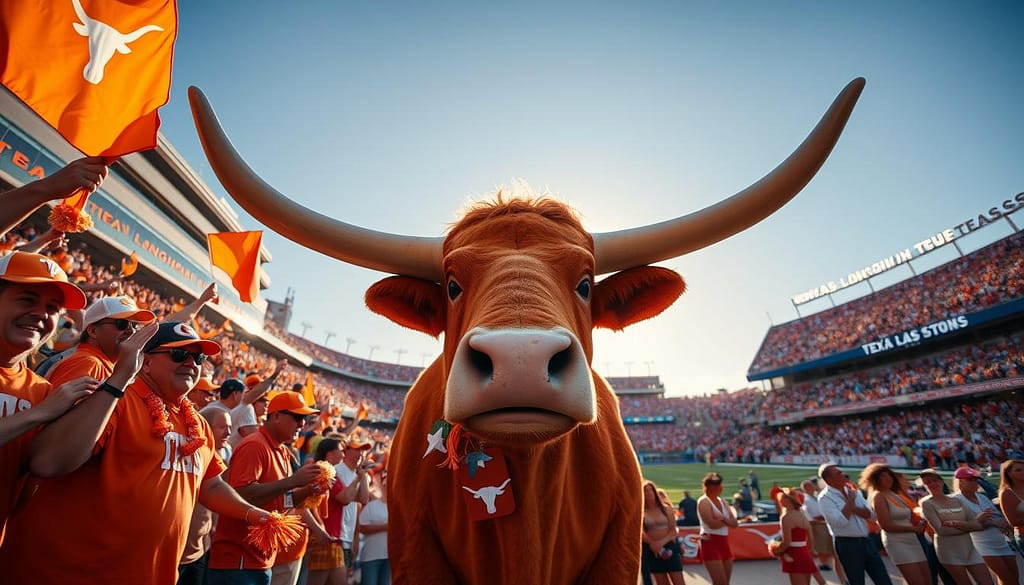
Despite this dark start, Bevo has become a beloved symbol. He represents the bold and proud spirit of Texas. Bevo XV carries on this legacy with grace and strength.
Bevo stands out because he doesn’t perform tricks. He simply exists, embodying Texas pride and strength. This makes him a unique mascot.
Bevo’s fame has grown over the years. He has his own air-conditioned trailer and a team ready to clean up after him. He’s a symbol of Texas’s agricultural heritage and independence.
Today, Bevo is more than a mascot. He’s a symbol of Texas pride and a reminder of the state’s traditions. He continues to inspire and represent the Longhorns.
Alumni Stories
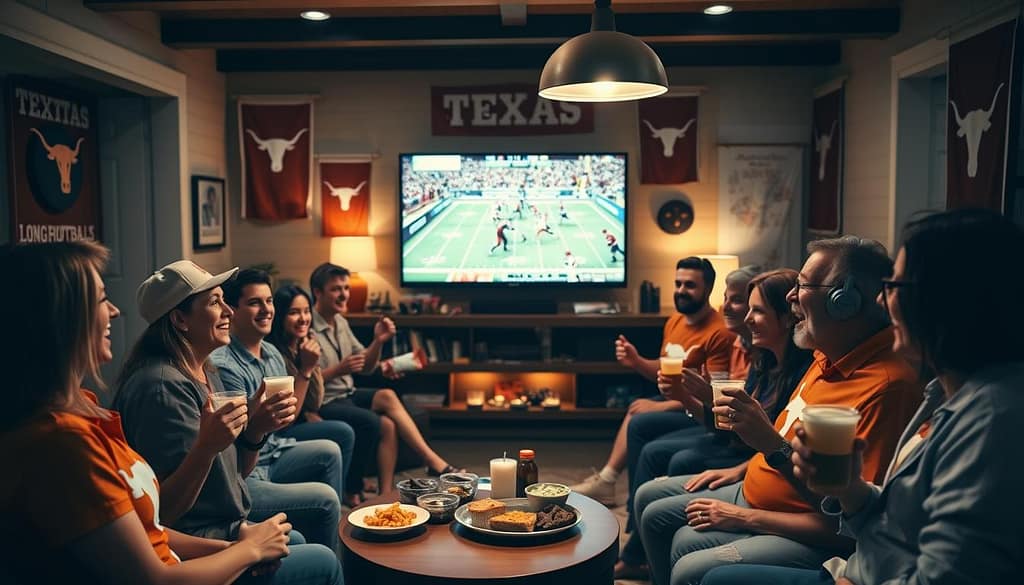
While mascots prance and bands play, the true keepers of Texas football rituals aren’t on the field. They’re in living rooms from Tokyo to Toronto. They schedule their lives around kickoff times like astrologers tracking planetary alignments.
The Global Orange Diaspora
Meet Sarah Chen, Class of ’08, who planned her London wedding around the Red River Showdown. Her reception started at 6 PM local time—precisely when the game ended. “My British in-laws thought we were mad,” she laughs. “But my Texas family understood completely.”
This isn’t just fandom—it’s cultural preservation. The Texas Exes network functions like an underground railroad for football tradition. It has secret handshakes (Hook ’em, obviously) and safe houses (any bar showing Longhorn games).
In Hong Kong, finance exec Mark Williams hosts 4 AM watch parties. Orange-blooded expats gather for breakfast tacos and mimosa-toasts to touchdowns. The time zone math alone deserves its own advanced degree.
Rituals Without Borders
What makes these Texas football rituals so transportable? They’re built on three pillars:
- Predictable cadence: Saturday games create rhythmic certainty in chaotic time zones
- Sensory triggers: The smell of stadium food replicated in foreign kitchens
- Tribal signaling: Burnt orange worn as both fashion statement and homeland beacon
These alumni don’t just watch games—they perform cultural anthropology. Their watch parties become embassies of Texanism. Newcomers get baptized in the holy trinity of football, friendship, and shared identity.
The ultimate Texas Exes power move? Measuring distance not in miles but in broadcast delays. When you’re cheering from Singapore, you’re not just following a team. You’re clinging to a piece of home that travels better than any souvenir.
Pre-Game Marches
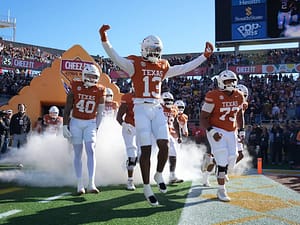
Forget Caesar’s march through Rome. The real show happens six Saturdays each fall in Austin. The Longhorns traditions of pre-game marches turn ordinary entry into a spectacle. It’s like claiming our turf.
This isn’t just walking. It’s like a military operation, with the spirit of a religious pilgrimage. When the cannon fires, it’s more than just noise. It’s the start of a civic ritual, like ancient Roman triumphs.
The Anatomy of a Texas March
Let’s analyze this ritual. The pre-game march has three main roles:
- Territorial marking: 100,000 people doing the Hook ‘Em sign is not random. It’s like primate behavior meets college football.
- Community building: Strangers become friends through shared movements. You’re marching with your tribe.
- Psychological preparation: By the time you sit, everyone is ready for battle.
The band’s timing is key. Their precision is both musical and strategic. They’re mapping the stadium’s sound and space. The drumline’s first beat pushes opposing fans back.
Coordination Physics for 100,000 People
Ever wonder how 100,000 people do the Hook ‘Em sign in sync? It’s not magic. It’s social physics. The gesture spreads like a wave, faster than panic.
This coordination shows collective intelligence. Or as gameday in Austin fans say: we know when to throw ’em up.
| Element | Function | Psychological Impact | Texas Scale Factor |
|---|---|---|---|
| Cannon Fire | Auditory trigger | Heightened arousal | Decibels equivalent to small artillery |
| Band Cadence | Rhythmic coordination | Collective entrainment | Precision of military drill team |
| Hook ‘Em Sign | Visual unity | Tribal identification | 100,000 fingers simultaneously deployed |
| Stadium Entry | Spatial claiming | Territorial dominance | Roman triumph meets Texas swagger |
Coolers aren’t just for beer. They’re for hydration, game ammo, and comfort. Would a Roman march without his shield? Exactly.
These Longhorns traditions are uniquely American. They mix military tactics with religious rituals, all in an excessive way. The pre-game march doesn’t just get you to your seat. It turns civilians into warriors and bleachers into sacred ground.
So next time, remember: you’re not just walking. You’re part of a ritual that’s like D-Day meets a pilgrimage to Mecca. With better snacks and louder cannon fire.
How to Join In
Mastering Texas football rituals is more than just wearing burnt orange. It takes precision timing and knowing the culture.
The Art of Participation
Shout “Give ’em hell!” after the opposing team’s third down play. But never during the national anthem to avoid getting side-eye. The Hook ‘Em hand sign is just a simple thumb extension, not a summoning gesture.
Your outfit should clearly show you’re a Longhorn fan, not a traffic cone. Wear genuine burnt orange, not safety orange. Denim and boots are perfect for moving around the stadium.
Learn the rhythm of the touchdown chant to avoid awkward clapping. These texas football rituals make you more than just a spectator. They show you’re part of the tradition.