
The easiest move in college football is panic. The harder move is conviction, especially in an era when impatience often masquerades as ambition. What TCU has done now is make a clear institutional statement: it believes its current trajectory is worth strengthening, not rethinking.
I see this as one of the more revealing decisions in the sport this offseason. At a time when programs across the country are chasing quick fixes, TCU football has instead chosen continuity with Sonny Dykes, reinforcing a leadership structure that has already proved it can win big, recruit with purpose, and keep the program relevant in a rapidly shifting conference landscape.
Why Continuity Matters More Than Ever
College football has become an ecosystem of constant disruption. Coaches leave faster, players move more freely, and roster construction is now a year-round exercise shaped as much by retention as recruiting. In that climate, stability is not passive. It is strategic.
That is why this moment feels important for TCU. A contract extension for Dykes is not simply a reward for past performance. It is a declaration that the school sees him as the right steward for the next phase of the program, not just the last one. That distinction matters.
I have long believed that programs outside the traditional small circle of blue-blood powers must be especially disciplined about identity. They cannot afford to drift. They need clarity in leadership, clarity in recruiting, and clarity in how they want to compete. TCU’s move suggests it understands exactly that. It is committing not only to a coach, but to a football vision built on offensive confidence, developmental depth, and a belief that the program can remain one of the conference’s most credible contenders.
For fans trying to understand the bigger picture, the official TCU football program page offers a snapshot of how the school continues to position itself competitively on and off the field.
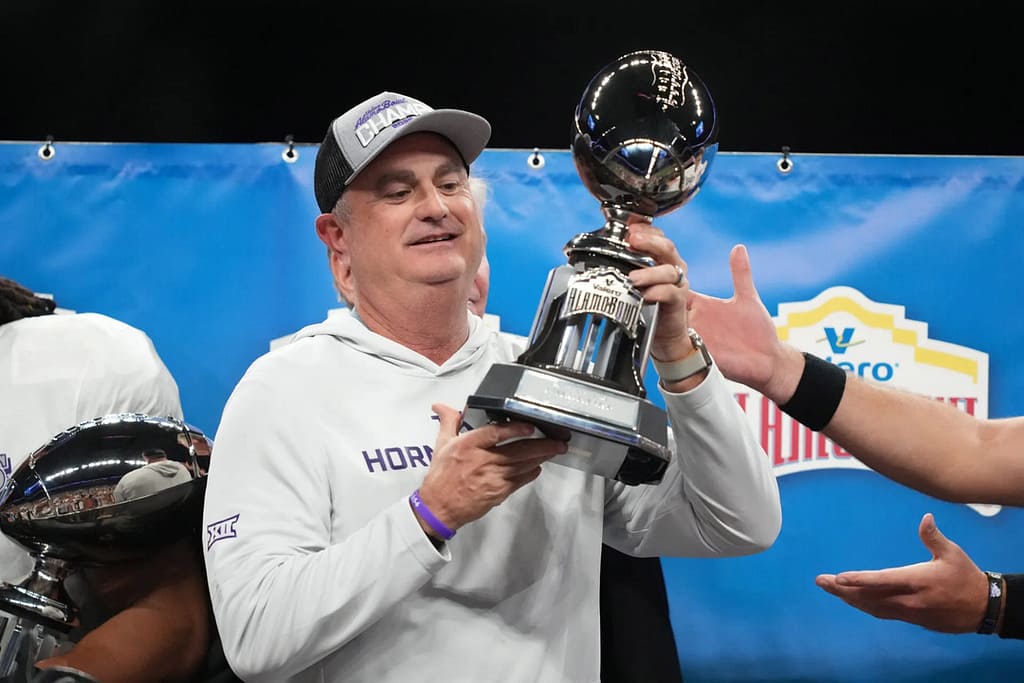
Sonny Dykes Has Earned Institutional Trust
The core reason this works is simple: Dykes has already shown he can deliver at a level that commands respect. His tenure has included elite results, national visibility, and the kind of program-wide momentum that schools spend years trying to manufacture.
But the real story is not just the peak. It is the breadth of what he has built around it.
When I evaluate a coach’s staying power, I look past signature wins and study whether the structure underneath those wins appears sustainable. Does the program recruit with coherence? Does it recover from setbacks without losing direction? Does it still attract belief from players, staff, and donors? In TCU’s case, the answer appears to be yes.
That matters because extensions can sometimes be ceremonial. This one feels operational. It gives TCU stronger footing in recruiting rooms, more certainty in staff planning, and a clearer message to current players who want to know whether they are building inside something durable. The strongest programs in modern college football are not just talented; they are believable. Right now, TCU looks believable.
Recruiting Momentum Gives The Decision More Weight
No coaching decision exists in isolation anymore. Every move is immediately interpreted through the lens of roster management. That is why TCU’s recent recruiting energy gives this extension added significance.
The addition of a promising young edge defender in the 2027 cycle may not dominate national headlines, but I would argue that it says something meaningful about how the program is being perceived. Recruiting is often the first place confidence shows up. Players commit to direction as much as opportunity, and coaches who can sell both usually control the most important narrative in the building.
For TCU, the message is straightforward: this is a program with a stable leader, a defined system, and enough competitive credibility to attract talent that wants development rather than empty promises. That combination is powerful.
I also think this matters within the Big 12 specifically. The conference remains one of the most fluid leagues in the country, rich in parity but often volatile in hierarchy. In such an environment, programs that maintain coaching consistency can create a meaningful edge. Not because they always have the best roster, but because they waste less time reinventing themselves.
The Big 12 Is Built For Programs That Know Who They Are
This is where TCU’s timing feels especially smart. The Big 12 does not always reward flash. More often, it rewards programs that can adapt quickly, recruit intelligently, and stay emotionally steady through the inevitable turbulence of a long season.
That is why I see this as more than a contract story. It is a competitive positioning story.
TCU is effectively saying it does not need to join the national noise cycle to stay relevant. It believes its best path forward is to keep refining what already works. That is not conservatism. It is confidence. And in a conference where weekly margins are thin, confidence anchored by structure can become a real advantage.
There is also a branding component here that should not be overlooked. In the current era, perception matters almost as much as performance. Programs need to project order. They need recruits, transfers, and supporters to feel that leadership is aligned. By backing Dykes publicly and emphatically, TCU has strengthened that perception at a moment when uncertainty can be costly.
What Comes Next For TCU Football
The extension raises the stakes in a healthy way. Once a school makes this kind of commitment, the expectations naturally sharpen. That is fair. Stability is valuable, but only when it continues producing competitive relevance.
The next challenge for Dykes is to turn institutional belief into sustained yearly force. That means maintaining offensive identity while continuing to evolve. It means stacking recruiting classes that bring both immediate athleticism and long-term depth. It also means proving that TCU can be more than a program defined by one breakthrough stretch, and instead become one of the Big 12’s most reliable standards.
I think that is the true significance of this moment. TCU is no longer chasing a one-off headline. It is trying to establish permanence. That is a harder task, but also a more meaningful one.
In the end, this decision matters now because TCU football has chosen steadiness at a time when college football often rewards chaos with attention. By extending Sonny Dykes and reinforcing the broader shape of the program, TCU is betting that clarity, continuity, and recruiting momentum will matter more than reaction. I think that is the right bet. And if the program converts this moment into sustained on-field authority, this will look less like a routine administrative move and more like the point when TCU decided to act like a program built to last.