Imagine the Texas backfield after the 2025 season. It looks more like a ghost town than a team.
Quintrevion Wisner was the top rusher, but he didn’t reach 600 yards. This ended a 16-year streak by Steve Sarkisian of 1,000-yard backs. Wisner, former five-star CJ Baxter, and Jerrick Gibson have all left via the portal.
Now, the depth chart is as thin as a Michael Bay movie. We’re left with two freshmen: Christian Clark and James Simon. That’s all the scholarship running backs Texas has.
So, what’s the plan? Is Texas building a committee, looking for a star player, or just adding bodies? The analysis starts now. The Longhorns are eyeing Isaac Brown from Louisville, who rushed for over 2,000 yards in two seasons.
With so few players, finding the right ones in the portal is crucial. It’s not just a need; it’s a complete overhaul for the position.
For more on this, check out this article about the running backs Texas should target in the portal.
Scheme compatibility
Finding a running back for Texas is more than just looking for athletes. It’s about solving a complex puzzle that fits into Sarkisian’s offense. It’s like trying to install Windows 95 on a new MacBook Pro. The parts might look good, but without the right system, it’s just a blank screen.
Steve Sarkisian has built his career on an offense that values the run game. For fifteen years, his teams have produced a 1,000-yard rusher every year. This streak is as consistent as a never-cancelled Netflix subscription.
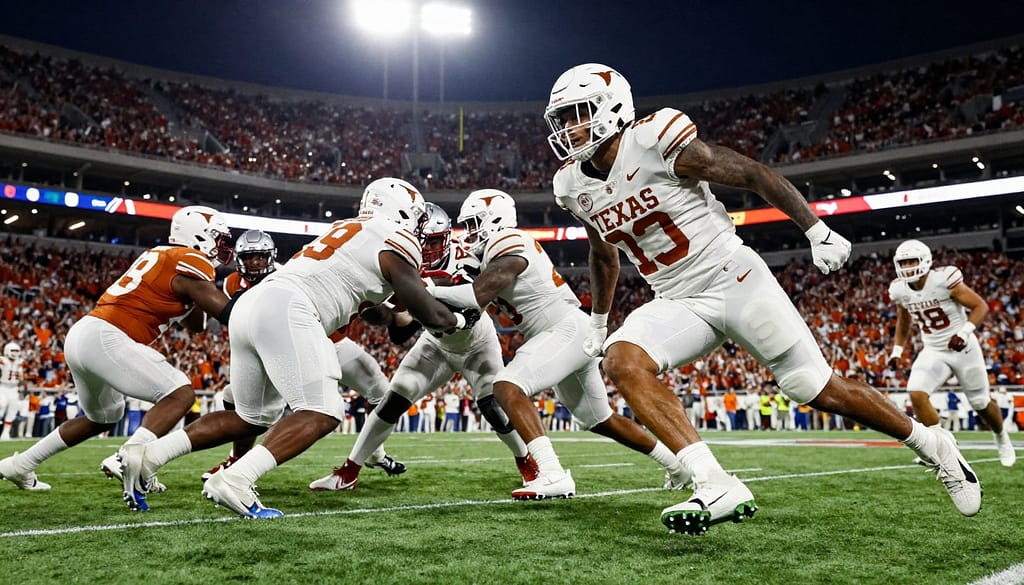
In 2025, the formula broke. The young and struggling offensive line ranked 121st in pressure rate allowed. The run game became inconsistent, turning a well-oiled machine into a broken car. So, what went wrong? Did the blueprint fail, or did the team forget how to follow it?
The search for a new running back in the transfer portal is not just about finding talent. It’s about finding someone who fits Sark’s offense perfectly. This offense relies on outside zone runs and play-action passes. It made Bijan Robinson and Jonathon Brooks stars because they fit this system well.
Isaac Brown has a 7.7 yards per carry average, which looks impressive. But the question is, can he fit into Sarkisian’s offense? Or does Texas need to change its approach?
The 2025 collapse makes us question if Texas is trying to restore the old formula or if it needs a new approach. Sometimes, you need to upgrade the machine, not just add new parts. Finding the right back is about more than just yards. It’s about making the offense work smoothly again.
True scheme compatibility is about silent communication. The runner knows where to go before the hole opens. The quarterback sells the fake convincingly because he knows the run is real. When it works, it’s beautiful. When it doesn’t, you get 2025. The search for a new back is about finding someone who can make the offense work again.
Short-yardage identity
The SEC is known for its strength in short-yardage situations. Texas, however, entered with a softer approach. Championship teams don’t just move the ball between the 20s. They impose their will, making everyone in the stadium know what’s coming.
Third and two, fourth and inches, and goal line stands are football’s toughest moments. In 2025, Texas struggled in these situations. Their offensive line faced pressure 46.2% of the time, ranking fifth-worst in FBS. This meant the quarterback was often running for his life.
This struggle had real consequences. Texas lost close games against Florida, Kentucky, and Mississippi State. They couldn’t get the two yards they needed, and the run game lacked a true hammer.
In the SEC, this weakness is fatal. Recent champions like Alabama and Georgia had powerful running backs. Even Vanderbilt’s Diego Pavia shows the kind of runner needed in the SEC.
So, what’s the solution for Texas? Do they need a big, tough runner or can they find success with their current team? The answer might be a mix of both. But first, they need to understand how bad it was.
| Situation | Texas 2025 Conversion % | Top SEC Avg Conversion % | Deficit |
|---|---|---|---|
| 3rd & 1-2 yards | 61.3% | 74.8% | -13.5% |
| 4th & 1 | 55.0% | 68.2% | -13.2% |
| Goal-to-Go (inside 3) | 58.7% | 72.1% | -13.4% |
| Red Zone Run Success | 42.5% | 51.9% | -9.4% |
This table shows Texas’s failure in short-yardage situations. They were 10-15% worse than the SEC’s best. This gap cost them games, momentum, and confidence.
Changing their approach requires more than just X’s and O’s. It’s about mentality. Do their Texas running backs aim to make a move or move the defender? The difference is between finesse and force.
Some say football has moved beyond short-yardage plays. But in the SEC, you still need to get those yards when it counts. As one deep dive into upcoming matchups noted, SEC defenses ask: “Can they run it when we know they’re going to run it?”
Last year, Texas couldn’t answer that question. This year, finding their identity is crucial. Without it, they’ll remain talented but toothless when it matters most.
The Texas running backs room has speed and elusiveness. But they need a mean streak. They should see third-and-one as an invitation to deliver pain. Until they find that player or develop that mentality, they’ll keep coming up short.
Workload management
The Texas Longhorns’ 2025 season showed the dangers of poor rushing attack management. Injuries to CJ Baxter and Jaydon Blue hurt the team badly. They made it hard to find a rhythm in the offense.
In 2026, Texas is rebuilding its backfield. Steve Sarkisian and his new coach must figure out how to share carries. They aim to keep players healthy and develop new stars. If they fail, they might face another tough season.

Managing a backfield is a mix of science, psychology, and tough choices. You have only 35 carries per game. You might have a star player wanting 20 touches, a young talent needing reps, and veterans eager to prove themselves.
This situation is called the “Carry Distribution Dilemma.” Coaches face a choice: go with the hot hand or plan carries carefully. Texas’s problem last year was not having a clear plan due to injuries.
The best approach is finding a balance. You need a lead back but also a change-of-pace back. Think of it like a company: a CEO, a COO, and interns. The CEO handles key downs, while the COO offers a different look. The interns learn and are ready for more.
History shows two main ways to handle carries:
- The “Bell Cow” Model: Give one back most carries. Pros: rhythm, stats. Cons: injury risk, frustration.
- The “Committee” Model: Share carries evenly. Pros: fresh legs, happy players. Cons: no single back excels, predictable play-calling.
Texas might use a mix of both. A veteran might start as the lead back, while a freshman adds explosive plays. This approach builds a strong offense and controls games.
Players today track their touches on social media. A unhappy back can upset the team. Sarkisian must convince players that teamwork leads to success.
So, what’s the plan for Texas? Avoid the mistakes of 2025. Create a clear order by Week 2. Use the early games to try new things. Remember, a balanced rushing attack is key to success.
Season projection
So, where does this all lead? Let’s put on our analyst hats and project. Arch Manning is back, looking more like the promised heir. The defense has pieces like Colin Simmons. The motivation is there after 2025’s disappointment.
The entire 2026 season hinges on one question: Does Texas have the right backfield formula? If they nail the portal, find a back who fits, and rediscover that short-yardage mentality, the ceiling is the College Football Playoff. The preseason hype would be justified.
If they whiff, or if the pieces don’t gel, they’re looking at another 9-3 season of “what ifs.” The rushing attack becomes the anchor, not the engine. Texas cannot afford another year where the ground game falters.
The program’s deliberate portal approach suggests they understand the stakes. Specialists are coming. The real test is whether they land the difference-makers at running back and offensive line.
Many analysts project Texas could again be Preseason No. 1 in 2026. The irony is delicious. The Texas running backs room must transform from question mark to exclamation point.
Our verdict? The strategy isn’t genius yet. It’s a cleverly marketed gamble. The evidence suggests the floor is another good-but-not-great season. The ceiling? That depends entirely on whether the Longhorns’ rebuilt ground game can carry the weight of championship expectations.