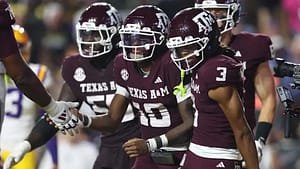
Texas Tech football controversy has moved from offseason noise to a real pressure point for one of the Big 12’s most ambitious programs. Between Cody Campbell’s public pushback at Texas, Steve Sarkisian’s scheduling jab and Brendan Sorsby’s eligibility fight, the Red Raiders are no longer just preparing for 2026 they are defending the credibility of the whole operation.
That is what makes this moment bigger than a few sharp comments or one quarterback’s legal battle. Texas Tech has spent heavily, recruited aggressively and positioned itself as a program ready to stop being treated like a convenient target. Now the Red Raiders have to prove that the momentum is deeper than the headlines.
Why the Texas Tech Football Controversy Has Teeth
Most offseason arguments fade because they are built on talk. This one has staying power because it touches almost every pressure point in modern college football: scheduling politics, NIL investment, transfer-portal roster building, player eligibility, public perception and the expanded playoff race.
Texas Tech is not being discussed as a quiet developmental program. It is being discussed as a Big 12 contender with enough money, ambition and roster confidence to make people uncomfortable. That changes the tone. When Texas takes a swipe at the Red Raiders’ schedule, it is not just a rivalry jab. It is a reminder that strength of schedule has become one of the most valuable currencies in the playoff era.
Cody Campbell’s response matters because he is not just another booster with an opinion. He represents the new public face of high-dollar college football influence: visible, aggressive and willing to challenge blue-blood programs directly. His message was simple enough if Texas wants to question Texas Tech, schedule the game.
That is where the story gets sharper. Texas Tech is fighting for respect while also managing uncertainty at the most important position on the field. Those two tracks are now running at the same time, and each one affects how the other is interpreted.
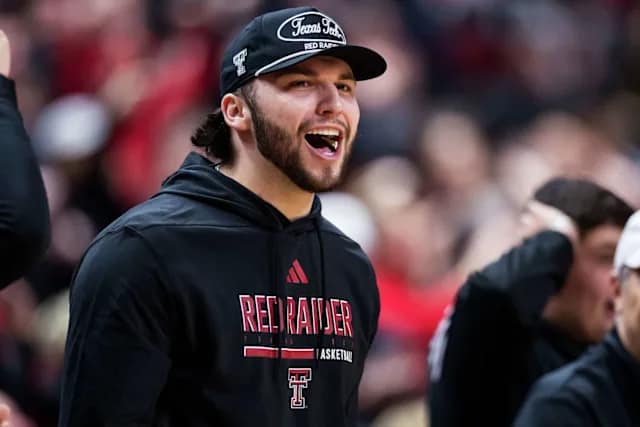
Sarkisian’s Shot Turned Scheduling Into a Brand Fight
Steve Sarkisian’s broader point was about playoff fairness and schedule strength, but Texas Tech became the easy target because of geography, history and the perception gap between the SEC and Big 12. Texas wants credit for playing through a brutal national schedule. Texas Tech wants credit for building a legitimate contender inside a conference that is still fighting for national respect after the latest wave of realignment.
Both sides have a case. Texas plays under a different weekly spotlight in the SEC. Texas Tech, meanwhile, does not control how the national audience instinctively values the Big 12. That is why the argument hits harder than a normal rivalry exchange. It is really about who gets the benefit of the doubt when playoff résumés are compared.
For the Red Raiders, the opportunity is obvious. Being challenged publicly by Texas gives Texas Tech a chance to frame itself as a program with teeth, not a second-tier in-state story waiting for validation. If Campbell’s response energizes the fan base and keeps the Red Raiders in the national conversation, it becomes useful.
The danger is that talk raises the bar. Once a program starts answering Texas in public, it has to look ready on Saturdays. That is where the Sorsby issue complicates everything.
Sorsby’s Eligibility Fight Is Bigger Than QB1
Brendan Sorsby was not added as a luxury piece. He was brought in to lead an offense with serious expectations. Texas Tech’s current football roster reflects how central he is to the 2026 plan, even as his eligibility status remains unsettled.
The situation is delicate because it sits at the intersection of competition, compliance and player welfare. Sorsby has been declared ineligible while Texas Tech pursues a reinstatement path, and the timeline matters because spring and summer preparation are not theoretical for a transfer quarterback. Every missed install, every delayed rep and every week of uncertainty can affect rhythm with receivers, command of the offense and leadership inside the locker room.
This is not simply a question of whether Texas Tech has another quarterback option. Every serious program needs contingency plans. The harder question is whether the Red Raiders can keep their offensive identity stable if the player they expected to build around is not fully available.
Any program navigating an eligibility matter tied to wagering has to live inside a strict compliance environment, not just a public-relations cycle. The NCAA’s own sports wagering education shows why these cases carry consequences beyond one roster decision.
For Texas Tech, the key is discipline. The school has to support the player, protect the program and avoid making the eligibility fight sound like a simple football inconvenience. That balance is hard, especially when the outside world is already reducing the case to playoff implications.
The Red Raiders’ Risk Map Is Already Clear
The best way to understand Texas Tech’s offseason is to separate the noise from the actual football risk. Some issues create headlines. Others can alter the season.
| Pressure Point | Why It Matters | Main Risk For Texas Tech |
|---|---|---|
| Public fight with Texas | Keeps the Red Raiders in the national conversation | Raises expectations before games are played |
| Sorsby eligibility case | Affects the quarterback plan and offensive timing | Forces a late pivot if reinstatement fails |
| Strength-of-schedule debate | Shapes playoff perception before selection weekend | Leaves less margin for a weak loss |
| NIL-driven expectations | Signals ambition and roster investment | Turns every setback into a referendum |
| Big 12 title chase | Offers a clear route to national relevance | Conference depth can punish inconsistency |
The takeaway is that Texas Tech’s problem is not attention. The program has plenty of it. The real challenge is converting attention into authority.
A lesser program might welcome any headline. Texas Tech has moved past that stage. The Red Raiders now need the kind of season that makes the conversation less about whether they belong and more about how far they can go.
Big 12 Momentum Can Flip Fast in Lubbock
The Big 12 is built for volatility. There may not be one overwhelming national brand controlling the league every year, but that also creates room for a program like Texas Tech to make a major move. The league rewards teams that are deep, physical, well-coached and stable at quarterback. It punishes teams that spend the offseason managing distractions.
That is why the Red Raiders’ 2026 storyline is so compelling. They are close enough to matter, loud enough to be noticed and unsettled enough to make the season feel fragile before it begins.
The national stage also matters because Texas Tech already owns a valuable late-season spotlight, especially with the Texas Tech and TCU Thanksgiving window turning the regular-season finale into more than a rivalry game. If the Red Raiders are still in the Big 12 race by then, that window could become a playoff résumé moment.
That is the upside of the current controversy. Attention can become leverage if the team backs it up. The Red Raiders do not need everyone to agree with Campbell or defend the schedule. They need the conversation to keep them relevant long enough for the games to do the real work.
Still, relevance is not the same as security. If Sorsby’s case drags on, the offense could be forced into uncertainty at the exact time a contender wants clarity. If Texas Tech stumbles early, the scheduling debate will come back with sharper edges. If the Red Raiders win, the same arguments may suddenly look like motivation.
The Next Signals Will Decide Whether This Becomes Fuel Or Friction
The first signal is the quarterback timeline. Texas Tech needs clarity on Sorsby as early as possible because leadership at that position affects everything from play-calling confidence to locker-room hierarchy. A late answer is still an answer, but late answers rarely create clean preparation.
The second signal is how Joey McGuire manages the public temperature. He does not need to turn every Texas comment into a campaign speech. The smarter move is to let the program’s ambition show without letting outside noise become the identity of the season.
The third signal is whether Texas Tech’s schedule becomes a talking point or a trap. If the Red Raiders handle business, the criticism fades. If they look sloppy against teams they are expected to beat, the same schedule that was defended in May becomes evidence against them in November.
That is the uncomfortable truth behind this Texas Tech football controversy: the Red Raiders wanted to be treated like a major player, and now they are being judged like one. The schedule fight gives them visibility. The Sorsby situation tests their stability. The 2026 season will reveal whether this is the moment Texas Tech turns outside pressure into proof, or the moment the noise arrives before the program is fully ready for it.