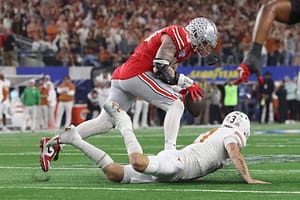
The 2027 NFL Draft conversation has arrived early, and Arch Manning is already at the center of it. For Texas, that is more than preseason noise; it is a pressure test for a program now expected to turn quarterback promise into championship-level performance.
Why The Arch Manning 2027 NFL Draft Buzz Matters Now
I view the current Arch Manning 2027 NFL Draft discussion as one of the clearest signs that Texas football has entered a different phase of national scrutiny. Manning is not merely being evaluated as a talented college quarterback. He is being treated as a potential franchise-altering NFL prospect before his defining college season has fully unfolded.
That distinction matters. College football has always produced early hype, but Manning’s case carries unusual force because of three overlapping forces: his family name, his physical profile, and Texas’ reemergence as a national power brand. When those elements converge, every throw, scramble, injury update, and performance trend becomes part of a larger public valuation.
The early No. 1 overall conversation is not just about Manning’s arm strength or athleticism. It is about projection. NFL teams, draft analysts, oddsmakers, and fans are trying to determine whether he is simply the next major Texas quarterback storyline or the kind of prospect who can define an entire draft cycle.
The Weight Of The Manning Name
No quarterback prospect enters the public square with a cleaner, heavier, or more complicated inheritance than Arch Manning. The surname guarantees attention, but it also creates a trap. Every evaluation risks becoming either inflated by legacy or distorted by the desire to avoid overpraising him.
That is why the most credible way to assess Manning is to separate the family mythology from the football evidence. The name may explain why people look first. It does not explain why they keep looking.
Manning’s appeal as an NFL prospect starts with traits that translate: size, mobility, pocket instincts, off-platform creativity, and the ability to operate within a structured offense. He is not being discussed as a top 2027 NFL Draft candidate because of nostalgia. He is being discussed that way because evaluators see the outline of a modern quarterback who can win from the pocket while still threatening defenses outside it.
The Manning name magnifies the spotlight, but the modern NFL is too unforgiving for pedigree alone. Teams do not spend premium draft capital on family history. They spend it on processing speed, accuracy, durability, leadership, and the ability to solve problems against elite athletes. That is the real standard now facing him.
Texas Football Is Now Built Around Expectation
Texas has spent years trying to return to the sport’s most important rooms. With Manning, the Longhorns are no longer operating as a rebuilding blue blood searching for relevance. They are operating as a program expected to compete at the top of the SEC and national playoff landscape.
That is a major shift. When a quarterback becomes a projected first overall pick, the program around him inherits the same elevated lens. Offensive line play becomes a draft variable. Receiver development becomes a referendum on system quality. Play-calling becomes part of the quarterback’s résumé. Even close wins can be interpreted as warning signs if the quarterback does not look dominant enough.
Steve Sarkisian’s role is central here. His offensive system has credibility because it can create clean reads, protect quarterbacks with structure, and manufacture explosive plays without asking the passer to freelance every snap. For Manning, that is both an advantage and a challenge. The system can help him look polished, but it can also invite the question that follows every quarterback in a friendly offense: how much is the player, and how much is the architecture?
That question will follow him all season. The answer will shape not only his draft standing, but the way Texas is judged as a national title contender.

The “Freak Athlete” Label Needs Context
Calling Manning a “freak athlete” is useful only if the phrase is defined properly. He is not a gimmick runner or a quarterback whose value depends on designed rushing volume. His athleticism matters because it changes defensive math.
The most valuable modern quarterbacks do not need to run constantly. They need to make defenses pay for over commitment. Manning’s mobility gives him that potential. He can extend plays, threaten the edge, escape interior pressure, and turn broken structure into positive yardage. That ability forces defensive coordinators to hesitate before calling aggressive pressure packages.
For NFL scouts, this is where the projection becomes interesting. A quarterback who can operate from the pocket and survive outside it gives a franchise more answers. The league has moved beyond the old binary of pocket passer versus running quarterback. The premium now belongs to passers who can win on schedule, then rescue plays when the schedule collapses.
Manning’s athletic upside fits that model. The question is whether his decision-making and accuracy under pressure can keep pace with the physical gifts.
Why Early Draft Odds Can Be Misleading
Early betting markets are not scouting reports. They are snapshots of perception, liquidity, public interest, and probability. Manning becoming an early favorite for the top pick tells us that the market sees him as the most compelling name in the class. It does not guarantee he will be the best quarterback on the board twelve months from now.
This distinction is important. Quarterback draft cycles are volatile. A player can enter the season as the presumed No. 1 pick and slide once defenses expose tendencies. Another can begin as a secondary name and surge because of improved mechanics, better supporting talent, or a breakout season against elite competition.
Still, early odds do reveal something meaningful: Manning has already crossed the threshold from college star to NFL asset. That changes the conversation. He is no longer evaluated only by Texas fans or college analysts. He is evaluated by people trying to forecast the future of NFL franchises.
That kind of attention can accelerate a quarterback’s reputation, but it can also narrow the margin for error. A routine interception becomes a mechanical concern. A quiet second half becomes a leadership debate. A minor injury becomes a durability headline. That is the cost of entering a draft cycle this early as a favorite.
The 2027 Quarterback Class Could Complicate The Narrative
Manning’s path to the top pick will not exist in isolation. The 2027 quarterback class is expected to include multiple high-profile passers with legitimate first-round profiles. That matters because NFL teams rarely evaluate quarterbacks in a vacuum. They compare them by trait, age, scheme, production, medical profile, and perceived ceiling.
This is where Manning’s season at Texas becomes decisive. If he produces efficiently against top competition, protects the football, and shows command in high-leverage moments, he can strengthen the argument that he belongs at the top of the class. If the production is uneven, the field will tighten quickly.
The most dangerous competitors in any draft cycle are not always the biggest names in April. They are the quarterbacks who show rapid year-over-year growth. NFL evaluators love ascension. They want to see a player improve, adapt, and take ownership of an offense. Manning’s challenge is to show not only talent, but trajectory.
For a quarterback with his profile, being good may not be enough. He has to look like he is becoming inevitable.
The Texas Offense Must Help Without Hiding Him
One of the most important storylines around Manning will be how Texas balances protection and exposure. A quarterback prospect needs structure, but he also needs enough responsibility to prove he can handle NFL-level demands.
If the offense becomes too conservative, evaluators may question whether Texas is hiding weaknesses. If it becomes too aggressive, the risk of turnovers and stalled drives increases. The best version of the Longhorns’ offense will likely live in the middle: defined reads, layered route concepts, tempo variation, deep-shot opportunities, and enough quarterback movement to exploit Manning’s athleticism.
The tape NFL teams will want is not just highlight throws. They will want third-and-long answers. They will want red-zone decisions. They will want two-minute operation. They will want to see how Manning responds after mistakes. They will want proof that he can identify pressure, reset protections, manipulate safeties, and throw receivers open before windows fully declare themselves.
In other words, the hype may begin with traits. The draft grade will be built on evidence.
The Pressure On Manning Is Different From Ordinary College Stardom
Most college quarterbacks face pressure from fans, coaches, and media. Manning faces pressure from an entire football economy. His performances will affect Texas’ championship expectations, NFL mock drafts, sports betting markets, television debate segments, and recruiting narratives.
That is not normal pressure. It is industrial pressure.
The key question is whether Manning can make the environment feel smaller. Elite quarterbacks often share that quality. They reduce noise into routine. They treat a hostile road game, a national broadcast, and a third-quarter deficit as solvable problems rather than emotional events.
That temperament will matter as much as arm talent. NFL teams are not only drafting a thrower. They are drafting a decision-maker who may become the public face of a franchise. Manning’s background may help him understand that burden earlier than most, but understanding pressure and performing under it are different things.
The coming season will test that difference.
What NFL Teams Will Be Watching Most Closely
The evaluation will begin with physical tools, but it will not end there. Manning’s draft case will likely turn on several core questions.
Can he process quickly against disguised coverage? Can he keep his mechanics stable when moved off his spot? Can he avoid reckless throws while still creating explosive plays? Can he lead an offense through difficult stretches without becoming either passive or impatient?
Those are the questions that separate a talented quarterback from a franchise quarterback.
The NFL has become less tolerant of projection without production. Teams still bet on upside, but recent draft history has reminded front offices that traits must be paired with decision quality. Manning’s appeal is that he may offer both. His risk is that expectations are already pricing in a level of certainty he has not yet had the chance to fully prove.
That gap between projection and proof is where the 2027 draft conversation will live.
Why Texas Benefits From The Hype
The attention around Manning creates pressure, but it also gives Texas a strategic advantage. Elite recruits want to play in meaningful games, in visible offenses, with quarterbacks who attract national attention. Manning gives Texas a weekly marketing platform.
For receivers, the pitch is obvious: come catch passes from a quarterback being discussed as a future No. 1 pick. For offensive linemen, the message is just as powerful: protect the most watched quarterback in college football. For defensive recruits, the program can sell championship ambition and national exposure.
This is how quarterback hype becomes institutional momentum. It raises the profile of the entire roster. It also forces the program to match the perception with results.
Texas cannot simply be the school with Arch Manning. It must be the team that maximizes him.
The Risk Of Overvaluation
There is another side to this story. Early hype can create an evaluation bubble. When a player is widely discussed as the future No. 1 pick, every positive trait is amplified and every flaw can be rationalized as developmental.
That is dangerous. Honest quarterback evaluation requires discomfort. It requires asking whether a prospect sees the field clearly enough, whether his accuracy holds under duress, whether his best plays are repeatable, and whether his worst habits can be corrected.
Manning may ultimately validate every bit of the excitement. But the responsible view is not blind coronation. It is measured anticipation. He has the tools, the environment, and the platform. Now he needs the season that turns possibility into conviction.
That is the difference between hype and a draft résumé.
The Bigger Meaning For College Football
Manning’s early draft buzz also reflects a broader change in college football. Star quarterbacks now operate in a marketplace that blends NIL value, playoff stakes, transfer-portal volatility, and NFL projection. The college season is no longer just a college season. For top quarterbacks, it is a yearlong professional audition.
That reality changes how programs manage players. Health decisions become more scrutinized. Media access becomes more strategic. Offensive design becomes part of brand management. A quarterback’s image, production, and draft stock are all intertwined.
Manning sits at the center of that new ecosystem. His season will be judged by wins and losses, but also by how convincingly he looks like the next NFL franchise centerpiece. That is a heavy burden for any college player, even one with his background.
Conclusion: The Arch Manning 2027 NFL Draft Story Is Just Beginning
The Arch Manning 2027 NFL Draft conversation matters because it is no longer just about one quarterback’s future. It is about Texas’ national ceiling, the NFL’s appetite for elite quarterback traits, and the modern machinery that turns college stars into professional projections long before draft night.
Manning has the rare opportunity to control the narrative by doing what all great quarterback prospects eventually must do: make the evaluation obvious. If he turns Texas’ expectations into sustained production, the hype will look less like exaggeration and more like early recognition.
For now, the story is compelling because it remains unfinished. The tools are visible. The stage is enormous. The opportunity is real. What comes next will determine whether Arch Manning is merely the most discussed quarterback in college football or the defining prospect of the 2027 NFL Draft.