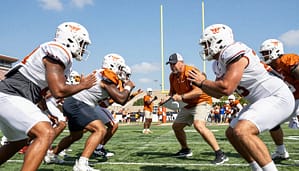
The timing wasn’t accidental. When the Dallas Cowboys added Marquez Valdes-Scantling on a short-term deal immediately following the draft, it signaled more than roster depth it revealed a calculated adjustment in offensive philosophy. In a league increasingly defined by spacing, speed, and vertical pressure, Dallas is quietly reshaping how it intends to attack defenses in 2026.
I’ve spent years analyzing roster construction patterns across the NFL, and moves like this rarely exist in isolation. They are connective tissue small decisions that, when viewed collectively, expose a franchise’s underlying strategy. This signing, while modest on the surface, offers a revealing window into how Dallas is recalibrating its offensive identity.
Reframing The Dallas Cowboys Wide Receiver Strategy 2026
At its core, the Dallas Cowboys wide receiver strategy 2026 appears to be evolving from reliance on singular star power toward a more diversified skill-set approach. Rather than stacking multiple possession receivers or route technicians, the front office is clearly prioritizing complementary archetypes.
Valdes-Scantling represents a very specific profile: a vertical field-stretcher capable of forcing safeties to retreat and defensive coordinators to rethink coverage shells. His addition suggests Dallas is less concerned with volume production and more focused on spatial manipulation how receivers influence defensive alignment even without touching the ball.
This is a subtle but important distinction. In modern offenses, the most valuable receivers aren’t always the ones leading the stat sheet; they are the ones reshaping defensive geometry.
Why A One-Year Deal Matters More Than It Appears
Short-term contracts often carry more strategic intent than long-term commitments. A one-year deal allows Dallas to accomplish three objectives simultaneously.
First, it minimizes financial risk while still addressing an immediate tactical need. Second, it creates internal competition without long-term roster blockage. Third and perhaps most importantly it preserves flexibility for future drafts and free agency cycles.
In this case, the Cowboys are effectively running a controlled experiment. They are testing whether adding a pure deep-threat receiver can unlock greater efficiency from their existing offensive core. If it works, the model can be replicated or expanded. If not, the exit cost is negligible.
This is disciplined roster management, not reactive spending.
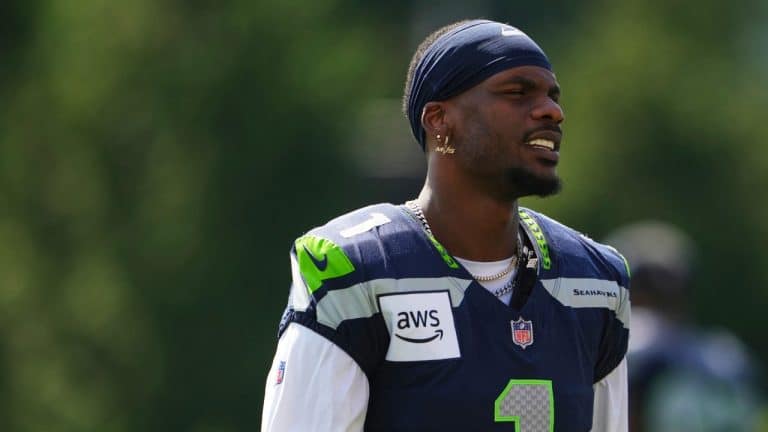
The Vertical Threat Factor In Modern NFL Offenses
To fully understand the move, you have to zoom out and look at broader league trends. Defensive schemes have increasingly shifted toward limiting explosive plays, with two-high safety looks becoming more prevalent. The natural counter is to stretch defenses vertically not necessarily for constant deep completions, but to create space underneath.
Valdes-Scantling’s presence forces defenses to account for speed on every snap. Even if he sees limited targets, his route participation alone can:
- Open intermediate passing lanes
- Reduce box congestion for the run game
- Create one-on-one matchups for primary receivers
This is the hidden value Dallas is betting on. The signing is less about replacing production and more about redistributing defensive attention.
Fit Within The Current Offensive Structure
The Cowboys’ offensive structure already includes established playmakers who thrive in possession and intermediate roles. What it has occasionally lacked is a consistent vertical element that commands respect.
By inserting a receiver whose primary function is to threaten deep coverage, Dallas can rebalance its route tree distribution. This has downstream effects on play-calling diversity and situational efficiency, particularly on early downs where defenses are most structured.
From my perspective, this move suggests a deliberate attempt to reduce predictability. Defenses that previously compressed coverage against Dallas may now be forced to defend the full field, both horizontally and vertically.
Quarterback Synergy And Tactical Implications
A vertical receiver is only as effective as the quarterback’s willingness to utilize him. This is where the strategic nuance becomes even more interesting.
Adding Valdes-Scantling creates optionality. It doesn’t require a philosophical overhaul, but it introduces the ability to pivot mid-game. If defenses crowd the line of scrimmage, Dallas now has a built-in counter. If safeties stay deep, the offense can exploit lighter boxes underneath.
This kind of flexibility is increasingly valuable in a league defined by in-game adjustments. It allows the Cowboys to dictate terms rather than react a subtle shift that often separates good offenses from elite ones.
For a deeper understanding of how offensive spacing and receiver roles are evolving across the league, the NFL’s official analysis provides useful context: Dallas Cowboys wide receiver strategy 2026.
Roster Construction Philosophy: Depth Over Redundancy
One of the most telling aspects of this move is what it says about Dallas’ broader roster philosophy. Rather than stacking similar receivers with overlapping skill sets, the team is clearly emphasizing diversity in function.
This approach reduces redundancy and increases adaptability. Each receiver fills a distinct role, allowing the offense to adjust without wholesale personnel changes. It’s a modular system one that can be reconfigured depending on opponent, game script, or injury circumstances.
Valdes-Scantling fits neatly into this framework. He doesn’t need to be a primary target to justify his roster spot. His value is embedded in how he complements others.
Risk Assessment And Potential Downsides
No move is without risk, and this one is no exception. Vertical receivers often come with variability production can fluctuate based on game flow, quarterback chemistry, and protection stability.
If the offensive line struggles or the quarterback lacks time to push the ball downfield, the impact of a deep-threat receiver diminishes. Additionally, if defenses choose to ignore the vertical threat and focus on limiting short and intermediate routes, the strategic benefit may not fully materialize.
However, the low-cost, short-term nature of the deal mitigates these concerns. The Cowboys are not overcommitting; they are probing for upside.
What This Signals About The 2026 Season
Stepping back, this signing is less about one player and more about directional intent. The Cowboys are signaling that they are willing to evolve, to experiment, and to adapt to the modern offensive landscape.
They are not abandoning their existing strengths they are augmenting them. The addition of a vertical specialist suggests a desire to become less predictable, more dynamic, and harder to defend over four quarters.
In a competitive conference where marginal advantages often determine playoff outcomes, these incremental adjustments can have outsized effects.
A Small Move With Strategic Weight
At first glance, the addition of Marquez Valdes-Scantling might seem like a routine depth signing. In reality, it reflects a deeper recalibration within the Dallas Cowboys wide receiver strategy 2026.
This is a franchise leaning into versatility, spatial awareness, and tactical flexibility. It’s a recognition that modern offenses are not built solely on star power, but on how well each piece interacts within the system.
As the 2026 season approaches, the real question isn’t whether Valdes-Scantling posts big numbers. It’s whether his presence alters how defenses approach Dallas and whether that shift unlocks a more efficient, more unpredictable offense.
If it does, this seemingly minor move will be remembered as a quietly pivotal one.