The calendar says spring, but for programs trying to define their fall ceiling, this is one of the most revealing moments of the year. As I look at the Houston Cougars spring game, I do not see a casual offseason exhibition. I see a live diagnostic test for a program trying to sharpen its identity before the real pressure arrives.
That is why April 18 at 10 a.m. inside TDECU Stadium matters right now. In college football, spring games rarely tell the full story, but they often reveal the outlines of it. For Houston, this one arrives at a critical point in the program’s development, when progress can no longer be measured by energy alone and must start showing up in command, cohesion, and consistency.
Why This Spring Game Carries Real Weight
I have always viewed spring games as misleading if they are judged by the scoreboard and invaluable if they are judged by structure. Houston’s upcoming scrimmage fits that rule perfectly. The outcome itself will not define anything, but the shape of the team will.
This is the third consecutive spring game for Houston, and that continuity matters. Programs do not build stability only through wins in November; they build it in controlled April environments where coaches can stress formations, test substitutions, and force players to show whether they truly understand the system. That is especially important for a team trying to establish itself with more authority in the Big 12.
What makes the setting even more significant is the way it brings the public into a private process. Fans will see a game. Coaches will see a live evaluation session. And I suspect the most important details will unfold not in the highlight plays, but in the in-between moments: the checks at the line, the tempo between snaps, the response after a busted protection, the way a defense resets after giving up a gain.
What I Will Be Watching Most Closely
Every spring game presents a temptation to chase the obvious. A deep touchdown pass, a breakaway run, a dramatic interception can dominate the conversation for hours. But those plays often flatter a team more than they explain it.
What I will watch first is the quarterback room. No position tells the truth faster than quarterback, especially in a spring setting where coaches are less interested in fireworks than in command. I want to see who processes quickly, who gets the offense lined up cleanly, who delivers accurately on routine throws, and who looks in control when the script breaks down.
Just behind that is the offensive line. Spring football has a way of exposing protection issues because timing is still developing and depth is still being sorted. If Houston’s line looks connected, communicates clearly, and creates functional space in the run game, that will mean far more to me than a flashy completion. A team with a stable offensive front can survive mistakes and grow into a season. A team without one spends September improvising.
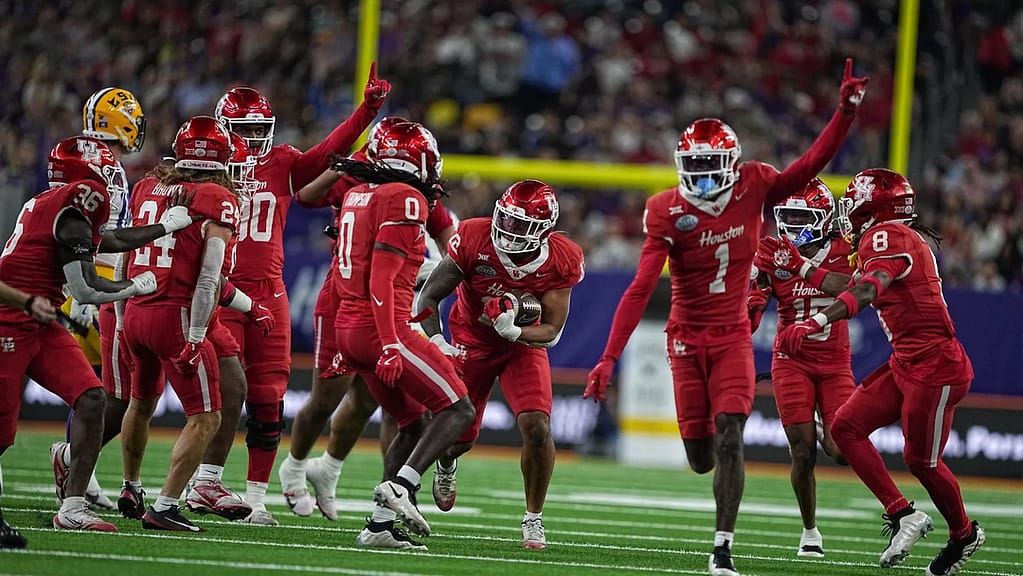
The defense deserves equal scrutiny. I am especially interested in speed, alignment, and communication. A spring defense does not need to look dominant to be encouraging, but it should look organized. Missed fits, late reactions, and obvious confusion are warning signs in April because they often become bigger problems once real opponents start using tempo and motion.
The Areas That Could Define Houston’s Fall Ceiling
The smartest way to interpret a spring game is to isolate the traits that travel into the season. For Houston, those traits can be reduced to a handful of pressure points.
- Quarterback command under ordinary down-and-distance situations
- Offensive line cohesion against pressure looks
- Red-zone execution when space tightens
- Defensive communication before and after the snap
- Team tempo and confidence from one series to the next
Those categories matter because they tend to survive beyond the spring. A long touchdown can be scripted. A gadget play can be manufactured. But poise, clarity, and discipline are harder to fake.
A Practical Read on What the Spring Game Can Tell Us
To keep the evaluation grounded, I think it helps to separate what this event can reveal from what it cannot.
| Area | What It Can Tell Us | What It Cannot Prove |
|---|---|---|
| Quarterback Play | Decision-making, rhythm, command | Full-season production |
| Offensive Line | Communication, basic cohesion, depth | How it will hold up over a long season |
| Defense | Alignment, speed, assignment discipline | Whether it can dominate top opponents |
| Team Identity | Preferred tempo and style | Final version of the playbook |
That distinction matters because spring football is part rehearsal, part audition. Coaches are not emptying the playbook. Players are not operating under full game-week pressure. Even so, the event can still tell us whether Houston looks like a team building toward clarity or still searching for it.
Why Fans Should Resist the Wrong Conclusions
I understand the urge to overreact. Spring games arrive after months without football, and any evidence feels important. But I would caution against building a narrative around the final score or a single standout play.
A spring game can distort reality because coaches often protect certain players, limit contact, and script situations that are designed more for evaluation than entertainment. That means the smarter audience response is not to ask which side won. It is to ask which units looked functional, which players appeared comfortable, and whether the team showed a recognizable personality.
That is the key insight here: Houston does not need to look finished on April 18. It needs to look coherent. If the offense appears organized, the defense communicates well, and the roster shows enough depth to keep the operation stable, then the spring has served its purpose.
Why April 18 Matters Right Now
I believe this spring game matters because it offers the first public evidence of whether Houston is moving from aspiration to definition. At this point in the calendar, fans are not looking for perfection. They are looking for signs that the program is becoming more difficult to push around, more certain in its style, and more dependable in the areas that decide close games.
That is why I will watch this event less like a scrimmage and more like a blueprint review. If Houston shows command at quarterback, sturdiness on the offensive line, and enough defensive order to trust its structure, then April 18 will have done more than entertain a spring crowd. It will have clarified what kind of team this is trying to become.
And right now, with the season still ahead and expectations beginning to form, that clarity matters more than any spring scoreboard ever could.