
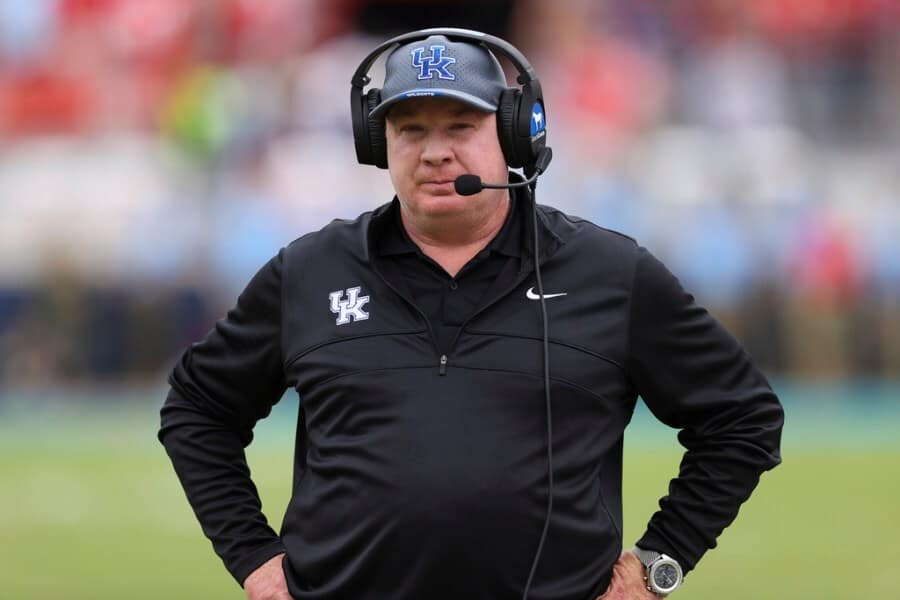
The landscape of college football is constantly evolving, and coaching staff adjustments often play a crucial role in shaping a program’s success. Recently, the Texas Longhorns football made headlines with the addition of veteran coach Mark Stoops to its coaching staff.
Stoops, who previously served as the head coach of the Kentucky Wildcats football, brings extensive experience in building competitive programs and managing complex defensive strategies. His arrival in Austin is viewed as a significant move by the Longhorns as they prepare for the upcoming college football season.
The hiring reflects a broader effort by head coach Steve Sarkisian to strengthen the leadership structure within the program and ensure that Texas remains competitive at the highest levels of college football.
Mark Stoops’ Coaching Legacy
Mark Stoops has long been respected as one of the most experienced defensive minds in college football. His career spans multiple decades, during which he built a reputation for developing disciplined defenses and mentoring players who later advanced to professional careers.
Before becoming a head coach, Stoops served as an assistant coach at several major programs across the country. His defensive expertise helped elevate the performance of teams competing in some of the most demanding conferences in the sport.
When Stoops took over at Kentucky in 2013, the program was struggling to establish itself as a consistent contender within the Southeastern Conference. Through recruiting improvements, disciplined player development, and a structured defensive system, Stoops gradually turned Kentucky into a competitive program capable of challenging top teams in the conference.
During his tenure, Kentucky achieved several notable milestones, including bowl appearances and historic wins against traditional conference rivals. These achievements helped elevate Stoops’ reputation across the college football landscape.
Why Texas Wanted Stoops on the Staff
For Texas, bringing in an experienced coach like Stoops provides valuable insight and leadership. The Longhorns already possess a strong coaching staff, but additional experience can be crucial when navigating the pressures of a demanding schedule and high expectations from fans, sports rehabilitation protocols.
Stoops is expected to serve in an advisory role within the program, assisting with strategic planning, defensive evaluation, and player development. His perspective as a long-time head coach can help Sarkisian manage both the tactical and organizational aspects of the program.
Another benefit of Stoops’ presence is his extensive knowledge of recruiting. Over the years, he has developed relationships with high school coaches and recruiting networks across the country. These connections could potentially strengthen Texas’ recruiting efforts as the program continues to compete for elite prospects.
In college football, recruiting often determines long-term success, making experienced voices within the coaching staff particularly valuable.
Strengthening Defensive Strategy
One area where Stoops’ influence may be especially noticeable is defensive strategy. Throughout his career, Stoops has emphasized discipline, physicality, and tactical awareness on the defensive side of the ball.
Texas has shown improvement in recent seasons, but defensive consistency remains an area where the program aims to continue developing. Stoops’ experience in designing defensive schemes and evaluating opponent tendencies could provide additional support for the Longhorns’ defensive staff.
Rather than replacing existing coordinators or position coaches, Stoops will likely contribute as a strategic advisor who can offer insights during film sessions, practice planning, and game preparation.
This collaborative approach allows the coaching staff to combine multiple perspectives when designing game plans.
The Vision of Steve Sarkisian
The decision to bring Stoops into the program reflects the leadership philosophy of Steve Sarkisian. Since taking over the Longhorns, Sarkisian has focused on building a program that combines strong recruiting with experienced coaching leadership.
Sarkisian himself is widely respected for his offensive creativity and ability to develop quarterbacks. However, modern college football requires a balanced approach in which both offensive and defensive units operate at a high level.
By adding Stoops to the staff, Sarkisian gains access to a seasoned coach who has spent years managing competitive teams. This dynamic could help create a more balanced coaching environment where strategic decisions benefit from diverse viewpoints.
The partnership also highlights Sarkisian’s willingness to collaborate with veteran coaches who bring valuable experience to the program.
Texas Football’s Rising Expectations
Few programs in college football carry the level of expectation associated with Texas football. The Longhorns possess a storied history, passionate fan base, and significant resources dedicated to athletics.
As a result, each season brings intense scrutiny from analysts, media outlets, and supporters. Fans expect the program to compete for conference championships and remain in contention for national recognition.
Recent seasons have shown signs of progress under Sarkisian’s leadership. Recruiting classes have improved, roster depth has expanded, and several young players have emerged as key contributors.
However, the competition within college football continues to grow stronger. Programs across the country invest heavily in facilities, coaching staffs, and recruiting operations.
Adding an experienced coach like Stoops is one way Texas is working to maintain its competitive edge.
The Impact on Players and Development
Beyond strategy and recruiting, coaching additions often have a significant impact on player development. Veteran coaches bring new perspectives to training sessions, film analysis, and mentorship.
Players benefit from exposure to different coaching philosophies and teaching styles. Stoops’ background as both a defensive coordinator and head coach means he understands the complexities of managing a team while helping individual athletes improve their skills.
Young defensive players in particular may benefit from Stoops’ guidance, as his experience in defensive systems can help refine technique and decision-making.
Strong mentorship can often make the difference between a promising athlete and a fully developed college football star.
What This Means for the Future of Texas Football
The addition of Mark Stoops signals that Texas is committed to strengthening every aspect of its football program. While one coaching change alone does not guarantee success, experienced leadership can provide valuable support during critical moments of a season.
Stoops’ knowledge of defensive football, recruiting strategies, and program management could prove beneficial as Texas navigates a demanding schedule and faces strong conference opponents.
More importantly, his presence reinforces the idea that Texas is focused on building a coaching staff capable of competing with the best programs in the country.
Conclusion
Mark Stoops joining the Texas coaching staff represents a noteworthy development for the Longhorns. His decades of coaching experience, leadership abilities, and defensive expertise bring an additional layer of knowledge to a program that already carries high expectations.
Under Steve Sarkisian’s leadership, Texas continues to build a coaching environment designed to support long-term success. The addition of Stoops reflects a strategy focused not only on recruiting talented players but also on surrounding the program with experienced voices capable of guiding the team forward.
As the Longhorns prepare for the upcoming season, fans and analysts will be watching closely to see how Stoops’ influence contributes to the team’s development.
If the collaboration between Sarkisian and Stoops proves effective, it could become an important step in Texas’ ongoing effort to return to national prominence in college football.