
Remember when building a football team felt like planning a high school dance? Those days are deader than the wishbone offense.
The modern game operates more like a corporate raid room. The whiteboard doesn’t just list hopeful teenagers anymore. It’s tracking proven commodities in a digital bazaar where a quarterback’s QBR is his asking price.
Right now, the NCAA transfer portal window is open. From January 2nd to 16th, it’s a feeding frenzy. Players like quarterback Brendan Sorsby—hopping from Indiana to Cincinnati to Texas Tech—aren’t exceptions. They’re the new blueprint.
Star wide receiver Cam Coleman moving to Auburn? Quarterback Aidan Leavitt heading to Arizona State? This movement defines modern roster construction.
So when we chatter about Texas recruiting rankings, we’re missing the bigger picture. That traditional class ranking is now just one line item on a complex balance sheet. The real action, the trend that swallows all others, is this brutal, continuous cycle of acquisition and retention.
Forget supplemental. This is foundational. The portal isn’t changing the game. It is the game.
NIL influence
If college football recruiting used to be a courtship, NIL has turned it into a high-stakes merger negotiation. Forget the romantic pitch about campus life and legacy. Today’s conversation starts with a spreadsheet. The NIL impact is the ultimate market corrector, and the case of quarterback Brendan Sorsby is its purest textbook example.
His move from Cincinnati to Texas Tech wasn’t just a transfer; it was a corporate acquisition. As the article notes, his production “should make him one of the highest-paid QBs in college football for 2026.” This isn’t a side effect of the rules—it’s the entire point. A player’s value is now quantifiable, and his movement is a direct function of that calculus.
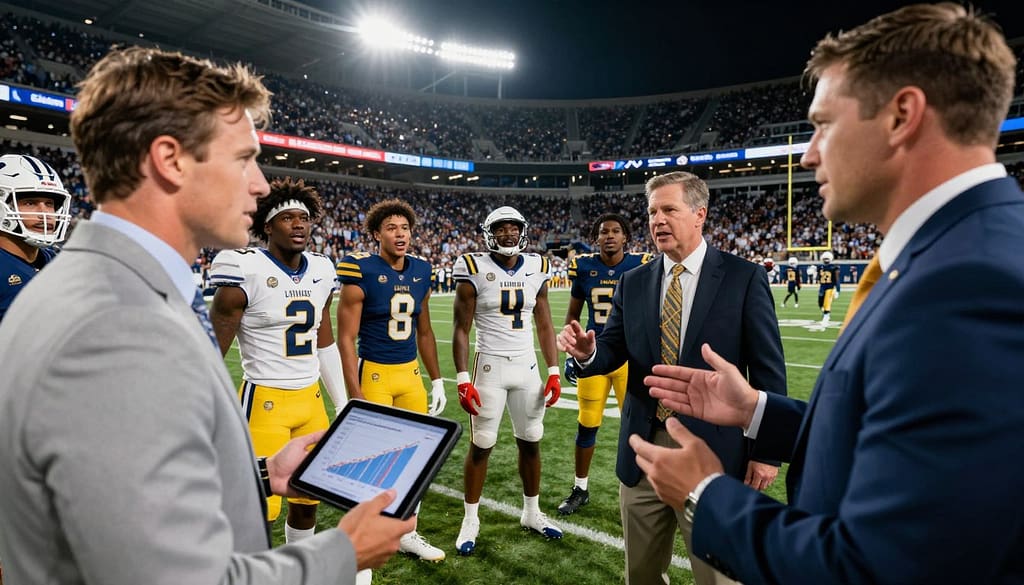
This transforms everything. A player’s “recruiting” process, even through the traditional recruiting process, now involves financial projections and ROI analyses worthy of a venture capital firm. Programs aren’t just selling playing time and development; they’re selling monetization platforms. The influence is total. It dictates which schools can play in the portal’s deep end and turns every standout season into an open auction.
Let’s break down the shift. The table below illustrates how the fundamental dynamics have changed:
| Aspect | Pre-NIL Era | Post-NIL Era |
|---|---|---|
| Primary Player Motivation | Playing time, coaching, NFL pipeline | Monetization potential, immediate financial return |
| Program’s Pitch | Tradition, development, exposure | Brand-building services, collective funding, NIL deal architecture |
| Transfer Decision Driver | Scheme fit, dissatisfaction | Market value reassessment; seeking highest bidder |
| Competitive Balance | Consolidated among historic powers | Fluid; schools with wealthy collectives can disrupt (see NIL’s effect on competitive balance) |
The result? It’s less “Name, Image, and Likeness” and more “Negotiate, Invoice, and Leverage.” A player like Sorsby isn’t just an athlete; he’s a revenue-generating asset. His All-Big 12 honors are less a trophy and more an audited financial statement, proving his worth to the highest bidder in Lubbock.
This new reality creates a stark divide. The “Group of 5” programs now face a brutal truth: they can develop talent, but they often can’t retain it. They’ve become feeder systems for wealthier conferences, their success punished by a market that rewards their stars with immediate upgrades. The impact is a fundamental rewiring of the sport’s ecosystem, where financial capital is as crucial as coaching talent.
So, when you see a major transfer, don’t just look at the helmet logo. Look at the collective’s bank account. The move is the headline, but the contract—the real NIL impact—is the story. It’s a pure, unadulterated business decision, and it’s the engine driving every major roster move in the modern game.
Player development results
The transfer portal has made player development a public test. Every coaching team is watched closely, with their work judged in short periods. The portal shows the results instantly, affecting their jobs right away.
Kevon Coleman, a Penn State edge, shows promise but needs more work. Oluwaseun Ibirogba, on the other hand, is a success story. He went from a FCS edge to a 290-pound ACC force.
Will Mestemaker’s journey is very telling. He went from a North Texas quarterback to a Power 4 contender. His story shows the challenges of moving up in football.
In today’s football, developing talent is key. You can buy a ready player, but the real value is in making a raw talent into a star. This is both your strength and weakness.
For high school players, the pitch has changed. It’s now about becoming better, richer, and NFL-ready. The portal checks if this promise is kept. Success or failure in developing talent can make or break your program.
Development is now a public show with immediate results. As Steve Sarkisian said, showing player growth is crucial for recruiting. It’s proof of a program’s worth.
Coaches are now more than just football teachers. They run talent incubators with clear exit strategies. Success or failure in player development can lead to players leaving or being taken by others.
This creates a tough choice for programs. Should they focus on ready players or raw talent? The answer is both, a fine balance that defines success.
The portal gives a harsh report card every season. It shows which coaching staffs are truly earning their pay. Players’ decisions to stay or leave are the ultimate judgment. In today’s college football, it’s not just about making players better. It’s about proving your program’s worth.
Transfer portal balance
The transfer portal has turned roster building into a high-stakes game. It’s like playing Jenga with a live grenade. You must carefully add and remove pieces before everything falls apart.
Texas Tech shows how to play the portal game aggressively. They lost key players and quickly found new ones. They got Indiana transfer Brendan Sorsby for their quarterback spot, showing they “were not going to be outbid.”
On defense, they needed an edge rusher. They got Cashius White and called him “a must-get.” These moves highlight the NIL impact on portal battles. Schools with more money can get the players they want.
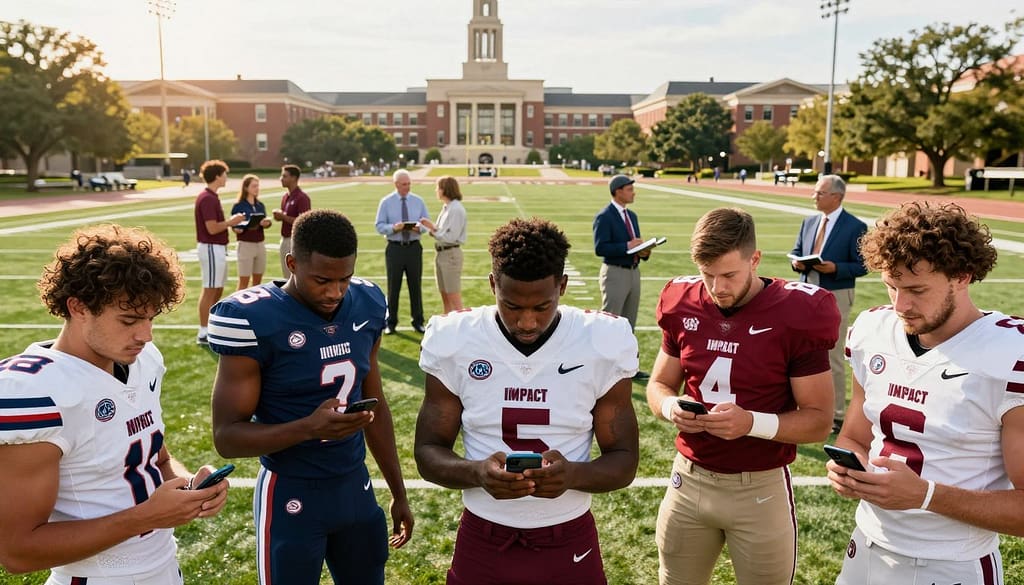
But this strategy is risky. For every team that succeeds, another struggles. It’s a game where filling one hole can create another.
It’s not just about numbers. It’s about team chemistry, cost, and player egos. This is like speculative finance. A wrong move can set a team back years.
There are different ways schools approach the portal:
| Strategy Type | Primary Goal | NIL Investment | Risk Level |
|---|---|---|---|
| Aggressive Replacer | Immediate starter upgrades | Very High | Extreme |
| Developmental Builder | Long-term roster depth | Moderate | Medium |
| Balanced Approach | Mix of starters and depth | High | High |
| Reactive Filler | Address unexpected losses | Variable | Very High |
Schools like Texas Tech are in the “Aggressive Replacer” category. Their NIL impact lets them take big risks. But what if they can’t afford it anymore?
The portal makes teams constantly change. Players have many options, and money matters. Coaches must be recruiters, GMs, and therapists.
Successful teams use the portal wisely. They find the right players and invest smartly. The others will chase every new name, like in fantasy football.
This balance affects everything, from practice to team spirit. An analyst said portal success can make or break a season.
The NIL impact has changed college football. Schools without big budgets can’t get top talent. This creates a new hierarchy based on money and coaching.
To succeed, schools must balance high school recruiting with portal use. Chemistry and talent are key. Sometimes, the best move is not making one.
Long-term outlook
So where does that leave us? The future of college football is no longer set in stone. It’s constantly changing due to transfers, portal entries, and court decisions.
The NIL impact has created a market that never ends. A recruit’s commitment is just the beginning. This makes every Texas recruiting rankings talk full of uncertainty. A recent On3 analysis shows deals can change overnight.
Future Texas recruiting rankings will look at more than just talent. They’ll check if a program can grow talent and use NIL wisely. They’ll see if it can manage transfers well.
The future looks divided. Top programs will be the ones who build smart teams. Others will just feed them talent. The NIL impact is key, but it’s just one part of the puzzle.
Getting attention in the offseason is simple. But winning games and keeping success going is hard. It takes building something real in the chaos.