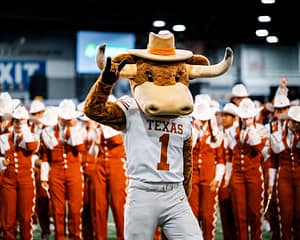
The Red River Rivalry has always represented more than a football game. For more than 120 years, Texas and Oklahoma have competed for regional pride, national recognition, recruiting influence, and a place among college football’s elite programs.
The annual meeting at the Cotton Bowl during the State Fair of Texas has become one of the sport’s most recognizable traditions. The divided stadium, passionate fan bases, and championship implications have created an atmosphere unlike any other rivalry in college football.
Now, the rivalry has entered its most significant transformation.
Texas and Oklahoma officially joined the Southeastern Conference in 2024, moving one of college football’s historic matchups from the Big 12 into a conference filled with national championship programs. The change did not reduce the importance of the rivalry. Instead, it elevated its significance by connecting the game to SEC standings, College Football Playoff opportunities, and the future direction of two historic programs.
The Red River Rivalry is no longer only about controlling the state of Texas and Oklahoma. It has become a battle for relevance inside the most competitive conference in college football.
A Rivalry Built On More Than Football
The Texas-Oklahoma rivalry began in 1900 and has developed into one of the longest-running traditions in college football. The matchup has produced legendary moments, iconic players, and seasons that shaped the history of both programs.
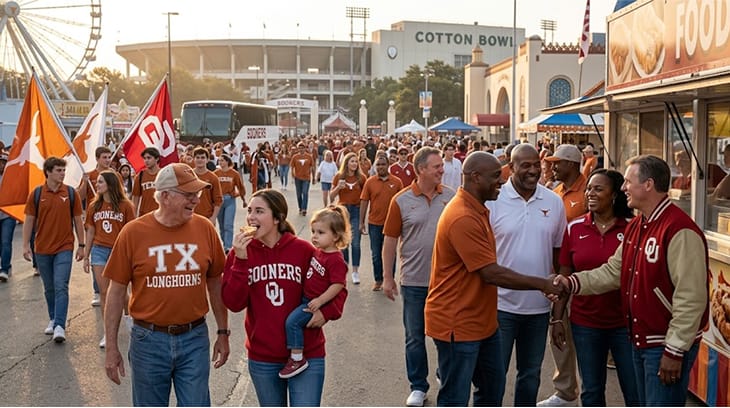
Unlike traditional campus-based rivalries, Texas-Oklahoma developed a unique identity because of its location. The Cotton Bowl in Dallas became the annual meeting point, creating an event where football, regional culture, and fan traditions combine into one of college football’s biggest weekends.
The Texas Longhorns football program has produced multiple national championships, Heisman Trophy winners, and NFL stars throughout its history. Oklahoma has built a similarly powerful tradition, creating a rivalry between two programs with championship expectations.
| Category | Red River Rivalry |
|---|---|
| First Meeting | 1900 |
| Location | Cotton Bowl, Dallas, Texas |
| Annual Event | State Fair of Texas Weekend |
| Former Conference | Big 12 |
| Current Conference | SEC |
| Rivalry Name | Red River Rivalry |
The rivalry’s importance comes from its ability to represent two major college football cultures. Texas represents one of the sport’s largest brands, while Oklahoma has developed a tradition built around national championships, elite quarterbacks, and sustained success.
The SEC era adds another layer to that history.
Texas And Oklahoma’s Move To The SEC Changed College Football
The decision by Texas and Oklahoma to leave the Big 12 and join the SEC was one of the biggest developments in modern college football realignment.

The move changed conference dynamics and placed two historic programs directly against teams such as Georgia, Alabama, LSU, and Tennessee on a yearly basis.
The SEC football conference has become the standard for college football success, producing numerous national championship teams and consistently sending elite talent to the NFL.
For Texas and Oklahoma, joining the SEC created a new challenge: proving that their historical success could translate into the deepest conference environment in the sport.
The Red River Rivalry immediately gained additional importance because the outcome now affects more than conference pride.
A victory can influence:
- SEC Championship positioning
- College Football Playoff opportunities
- Recruiting momentum
- National perception
A loss can significantly impact a team’s path during a demanding conference schedule.
The rivalry has evolved from a traditional annual showdown into a potential championship-defining matchup.
Texas Entered The SEC With National Championship Expectations
Texas arrived in the SEC after one of the strongest seasons in recent program history.
During the 2023 season, Steve Sarkisian guided the Longhorns to a 12-2 record, a Big 12 Championship, a victory over Alabama in Tuscaloosa, and the program’s first College Football Playoff appearance.
That success created momentum heading into SEC competition.
Sarkisian’s approach has focused on building a complete program capable of competing at the highest level. Texas has emphasized quarterback development, offensive consistency, recruiting strength, and defensive improvement.
The arrival of Arch Manning as the future face of the program has increased national attention around Texas football. His development represents the next stage of Sarkisian’s vision.
The Red River Rivalry provides an important opportunity for Texas quarterbacks because performances in this game often become part of program history.
Names such as Vince Young, Colt McCoy, Sam Bradford, and Baker Mayfield are connected to memorable moments from this rivalry. Manning now has the opportunity to create his own chapter.
Oklahoma’s Search For A New SEC Identity
While Texas entered the SEC with significant momentum, Oklahoma also faces the challenge of adapting to a new competitive environment.
The Sooners entered a new era under head coach Brent Venables after Lincoln Riley’s departure following the 2021 season. Venables has focused on rebuilding Oklahoma’s defensive identity while maintaining the offensive tradition that has defined the program.
Oklahoma’s history includes seven recognized national championships, multiple Heisman Trophy winners, and decades of elite quarterback development.
However, the SEC transition requires more than tradition.
The Sooners must consistently compete against programs with elite recruiting pipelines and deep rosters. The Red River Rivalry becomes an important measuring point because it tests Oklahoma’s ability to maintain its historical standard.
A victory over Texas inside the SEC would provide a major statement about Oklahoma’s future.
The Cotton Bowl Tradition Remains The Heart Of The Rivalry
Conference realignment changed college football, but it did not change what makes Texas-Oklahoma special.
The Cotton Bowl remains the center of the rivalry experience.
Every October, Dallas becomes the meeting point for two fan bases that have created one of the sport’s most recognizable environments. The State Fair of Texas provides a unique backdrop, allowing fans from both programs to celebrate tradition before the game begins.
The stadium itself creates one of college football’s best visual experiences. Texas fans occupy one side of the stadium, Oklahoma fans occupy the other, creating a divided atmosphere that represents the intensity of the rivalry.
The Red River Rivalry history continues attracting national attention because few games combine history, location, and competitive importance in the same way.
The SEC era may introduce new opponents, but the Cotton Bowl remains the foundation of the rivalry.
Recruiting Battles Are Becoming More Important In The SEC Era
Modern college football success is heavily connected to recruiting, and the Texas-Oklahoma rivalry now has even greater influence in that area.
Both programs recruit heavily throughout Texas, one of the most talent-rich states in the country. Winning the rivalry can strengthen a program’s reputation among elite high school prospects.
SEC membership has increased the recruiting stakes because Texas and Oklahoma now compete directly against national powers for the same players.
| Recruiting Factor | Impact On The Rivalry |
|---|---|
| Texas high school talent | Direct competition for elite prospects |
| SEC exposure | Greater national visibility |
| NFL development | Recruiting advantage |
| Rivalry victories | Program momentum |
For Texas, success against Oklahoma reinforces the idea that the Longhorns are building a championship-level program.
For Oklahoma, victories provide proof that the Sooners remain capable of competing among college football’s elite.
The Future SEC Championship Impact Of Texas-Oklahoma
The next evolution of the Red River Rivalry could be its impact on the SEC Championship race.
In previous years, the game often determined Big 12 title implications. Now, it has the potential to influence one of college football’s most competitive conference races.
If both programs reach championship-level expectations, the rivalry could become an annual SEC spotlight game with playoff consequences.
This creates a scenario where the winner is not only gaining bragging rights but potentially improving its path toward Atlanta and the College Football Playoff.
The SEC era has increased the importance of every possession, every decision, and every rivalry moment.
A New Chapter For College Football’s Greatest Tradition
The Red River Rivalry has survived more than a century because it continues adapting to changes in college football.
The move from the Big 12 to the SEC represents one of the biggest changes in the history of both programs, but the foundation remains unchanged.
Texas and Oklahoma are still competing for pride, history, recruiting influence, and national recognition.
The difference is that the stage is now larger.
The Cotton Bowl remains the home of the rivalry. The State Fair remains part of the tradition. The passion from both fan bases remains unchanged.
But the SEC era has added another level of importance.
Texas and Oklahoma are no longer only competing against each other. They are competing to prove they belong among the programs that define modern college football.
The next chapter of the Red River Rivalry will not erase its history. It will expand it, creating new moments that could shape the future of the sport.