
Few rivalries in college football carry the historical significance, cultural impact, and national attention of Texas versus Oklahoma. For more than a century, the Red River Rivalry has represented one of the sport’s most unique traditions, bringing together two powerhouse programs in a divided Cotton Bowl atmosphere where every possession carries championship implications.
The move of both programs from the Big 12 Conference to the Southeastern Conference has created a new chapter for the rivalry. Beginning with the 2024 season, Texas and Oklahoma entered the SEC together, transforming a traditional conference matchup into one of the league’s most anticipated annual events.
The rivalry has not lost its identity. The State Fair of Texas, the Cotton Bowl, and the split stadium remain central elements of the experience. However, the stakes have increased. Texas-Oklahoma games now influence SEC standings, College Football Playoff positioning, recruiting momentum, and the national perception of both programs.
As Texas continues building under head coach Steve Sarkisian and Oklahoma begins a new era under head coach Brent Venables, the Red River Rivalry has become a measuring point for two programs trying to establish themselves in college football’s toughest conference.
The Historic Foundation Of The Red River Rivalry
The Texas-Oklahoma rivalry began in 1900 and has grown into one of college football’s most recognizable traditions. Unlike many rivalries played on campus, this matchup developed its own identity at the Cotton Bowl in Dallas, creating an annual event that combines football, regional culture, and fan traditions.
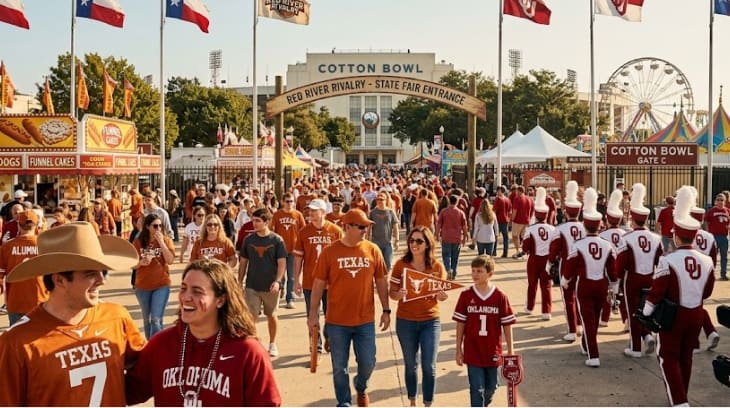
The stadium’s unique configuration places Texas fans on one side and Oklahoma fans on the other, creating a visual representation of the rivalry’s intensity.
According to Texas Longhorns football history, Texas has built one of the most successful programs in college football history with multiple national championships, conference titles, and legendary players. Oklahoma has developed a similarly strong tradition, creating a rivalry built around two programs with national championship expectations.
| Category | Texas-Oklahoma Rivalry |
|---|---|
| First Meeting | 1900 |
| Location | Cotton Bowl, Dallas, Texas |
| Nickname | Red River Rivalry |
| Conference Era | Big 12 (1996-2023), SEC (2024-present) |
| Historical Importance | One of college football’s premier rivalries |
The rivalry’s importance has never depended only on conference standings. It represents regional pride, recruiting influence, and the opportunity for both programs to define their seasons.
The SEC Move Changed The Meaning Of The Rivalry
Texas and Oklahoma’s decision to leave the Big 12 for the SEC represented one of the biggest changes in modern college football conference alignment.
The move created immediate questions about whether the rivalry would maintain its traditional importance while competing in a conference filled with established powers such as Alabama, Georgia, LSU, and Tennessee.
The answer has become clear: the rivalry has gained even more significance.
The SEC football conference has become the center of college football competition, regularly featuring multiple teams competing for national championships and College Football Playoff positions.
For Texas and Oklahoma, the annual matchup now carries additional consequences. A victory can impact conference standings, playoff opportunities, and recruiting momentum. A loss can create a difficult path toward championship goals.
The rivalry has moved from being a defining Big 12 game to becoming one of the SEC’s most important annual matchups.
Texas Entered The SEC With Championship Expectations
Texas arrived in the SEC after a successful final Big 12 season. In 2023, the Longhorns finished 12-2, won the Big 12 Championship, defeated Oklahoma in the regular-season rivalry game, and reached the College Football Playoff.
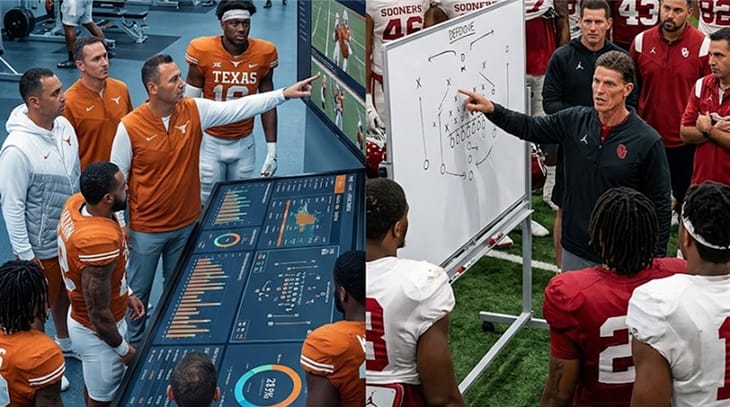
The transition gave Steve Sarkisian momentum heading into the SEC era.
Texas’ approach has centered around building a roster capable of competing against the conference’s physical style. Recruiting, quarterback development, and defensive improvement have become priorities as the Longhorns attempt to establish themselves among SEC contenders.
The emergence of Arch Manning as the future face of the program has added another layer of national attention. Texas-Oklahoma games featuring a quarterback with Manning’s profile will receive significant interest from fans, media, and NFL scouts.
For Texas, the rivalry represents more than tradition. It represents an opportunity to demonstrate that the program belongs among the SEC’s elite teams.
Oklahoma’s SEC Transition Creates A New Competitive Dynamic
Oklahoma also entered the SEC facing questions about its ability to adapt.
The Sooners experienced significant changes following the departure of longtime head coach Lincoln Riley and the arrival of Brent Venables. Building a new identity required improving defensive consistency, recruiting, and physicality.
The SEC environment presents a different challenge compared with the Big 12. Every conference game requires preparation against talented rosters and experienced coaching staffs.
Texas and Oklahoma now share the same challenge: proving that their historical success can translate into sustained SEC competitiveness.
This creates an interesting dynamic because neither program enters the rivalry simply trying to defeat the other. Both are attempting to establish themselves in their new conference home.
The Cotton Bowl Tradition Remains The Heart Of The Rivalry
Despite conference changes, the Cotton Bowl remains the centerpiece of Texas-Oklahoma.

The annual trip to Dallas creates an atmosphere unlike almost any other college football game. Fans arrive early for the State Fair of Texas, the stadium fills with opposing colors, and the game becomes a full-day cultural event.
This tradition provides continuity during a period of major change in college football.
The SEC era may introduce new opponents and new championship pathways, but the rivalry’s foundation remains unchanged.
For players, especially those who grew up watching college football, participating in the Red River Rivalry represents a career milestone. The intensity, history, and national attention make it one of the most memorable experiences in the sport.
Recruiting Impact Of The Texas-Oklahoma Rivalry
Modern college football success depends heavily on recruiting, and rivalry games often influence elite prospects.
Texas and Oklahoma compete for many of the same recruits, particularly in Texas high school football. Winning the rivalry provides a significant recruiting advantage because prospects see which program can compete on the biggest stages.
The SEC transition has increased recruiting battles because both programs now compete directly against national powers.
| Recruiting Factor | Rivalry Impact |
|---|---|
| National exposure | Showcases programs to elite prospects |
| Regional influence | Impacts Texas recruiting battles |
| SEC membership | Creates larger recruiting opportunities |
| Player development | Demonstrates path to professional football |
For Texas, maintaining success against Oklahoma strengthens its position as a destination for elite talent. For Oklahoma, victories provide evidence that the program remains capable of competing nationally.
Future SEC Championship Implications
The future of the Texas-Oklahoma rivalry could become even more significant if both programs consistently compete for SEC championships.
Conference realignment has created a situation where traditional rivalries must coexist with expanded championship structures. The Red River Rivalry now has the potential to become a game that directly impacts the SEC title race.
A matchup between two highly ranked Texas and Oklahoma teams could influence playoff positioning, conference championship scenarios, and national rankings.
This adds another layer of importance to a rivalry that already had decades of history.
For Texas and Oklahoma, the challenge is balancing tradition with the demands of modern college football.
The Next Chapter Of College Football’s Rivalry Landscape
The Texas-Oklahoma rivalry represents how college football is changing. Traditional programs are adapting to larger conferences, expanded playoff structures, and increased national competition.
However, some elements remain constant.
The Cotton Bowl atmosphere, the divided fan bases, and the importance of beating a historic rival continue defining the matchup.
The SEC era does not replace the Red River Rivalry’s history. It adds another level of significance.
Texas and Oklahoma are no longer competing only for regional dominance. They are competing for recognition in the most demanding conference in college football.
As the Longhorns continue their championship pursuit under Steve Sarkisian and the Sooners build their next era under Brent Venables, the rivalry will remain one of the defining events of every college football season.
The journey from the Cotton Bowl to the SEC has changed the environment surrounding Texas-Oklahoma, but the meaning of the rivalry remains the same: two programs, one historic stage, and a game that continues shaping college football history.