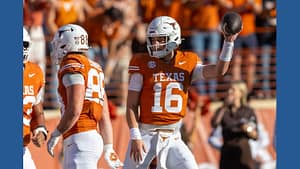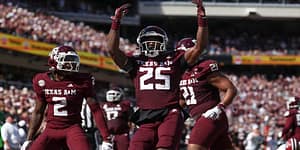
Texas stepping into full SEC competition has already shifted how road environments are discussed across college football, but few venues carry the weight of Kyle Field in College Station. As Texas prepares for future rivalry meetings with Texas A&M, the conversation around game day atmosphere is no longer abstract. It becomes a direct factor in performance planning, roster construction, and situational preparation.
Kyle Field is widely recognized for its scale and crowd intensity, regularly exceeding 100,000 fans on major SEC weekends. The noise, movement, and sustained crowd energy create conditions that affect cadence, communication, and offensive rhythm. For a program like Texas, which has leaned on structured offensive sequencing under Steve Sarkisian, that environment forces adjustments that go beyond standard road-game preparation.
The rivalry context also adds emotional weight. Texas and Texas A&M have not shared regular-season SEC competition in modern cycles, but the return of conference alignment reintroduces one of college football’s most historically charged matchups.
Kyle Field Environment Creates One Of College Football’s Most Demanding Road Tests
Kyle Field’s reputation is built on scale and sustained crowd involvement. Unlike environments where noise peaks during specific drives, College Station’s home atmosphere maintains pressure across entire quarters, especially during defensive stands.
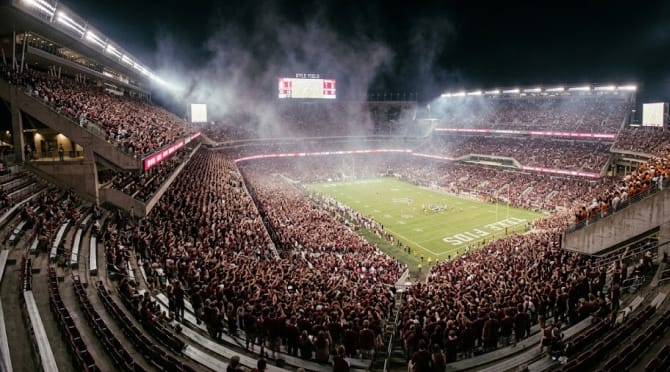
That environment directly impacts offensive operation. Quarterbacks must adjust protection calls, receivers must rely on non-verbal timing cues, and offensive linemen must execute without full cadence clarity.
Texas, under Sarkisian, has built an offense that relies on timing and layered passing concepts. That structure functions efficiently in controlled environments. In hostile stadiums like Kyle Field, execution windows tighten.
Arch Manning, entering his 2026 leadership phase after a 2025 season with over 3,100 passing yards and 26 touchdowns, represents the type of quarterback who will be evaluated heavily in these conditions. His ability to maintain decision speed under crowd pressure becomes a defining factor in Texas’ SEC adaptation.
Context from national venue analysis published by ESPN College Football coverage, continues to rank Kyle Field among the most disruptive environments in the sport, particularly in rivalry settings.
That ranking reflects more than attendance. It reflects sustained acoustic pressure and game-state volatility.
Rivalry Context Between Texas And Texas A&M Elevates Every Phase Of Preparation
The Texas–Texas A&M rivalry carries historical weight that extends beyond conference standings. The return of annual SEC-aligned competition restores a matchup that has traditionally influenced recruiting, regional identity, and postseason perception.
For Texas, preparation for Kyle Field is not limited to schematic planning. It extends into psychological readiness and situational discipline.
Players entering this matchup are often encountering one of their most emotionally charged environments of the season. That includes communication stress, sideline management, and penalty control.
Texas coaching staff has placed increasing emphasis on replicating crowd simulation in practice environments. That includes crowd noise injection, tempo disruption drills, and silent cadence execution.
The goal is not elimination of pressure. It is functional execution within it.
Recruiting discussions also reflect this shift. Prospects evaluating Texas are now factoring SEC road environments into their decision-making process. The ability to perform in stadiums like Kyle Field influences perception of readiness for professional-level atmospheres.
Recent recruiting context from 247Sports recruiting analysis shows that top-tier prospects increasingly evaluate programs based on exposure to high-intensity environments, not just depth chart opportunities.
Texas entering the SEC increases the frequency of those environments.
Offensive Structure Must Adapt To Crowd-Driven Disruption
Offensive football in hostile stadiums requires structural adjustments. Texas must account for cadence disruption, communication delays, and altered defensive timing caused by crowd noise.
Sarkisian’s offensive system is built on timing-based progression reads. That includes layered route concepts that depend on quarterback rhythm and receiver spacing.
At Kyle Field, that rhythm is pressured from multiple angles.
Pre-snap communication becomes limited. Offensive line identification must happen earlier. Skill position players must rely more heavily on visual cues rather than verbal confirmation.
The impact is measurable in drive efficiency and third-down conversion rates in hostile environments.
Texas’ preparation for these conditions includes controlled practice scenarios designed to replicate stadium noise interference. The goal is to reduce dependency on verbal communication at the line of scrimmage.
That shift aligns with broader SEC operational standards, where elite offenses consistently perform under compressed decision-making windows.
The Longhorns’ ability to maintain offensive balance in that environment will influence their positioning in the national championship conversation.
Defensive Response Becomes A Key Factor In Field Position Control
Kyle Field does not only affect offensive execution. Defensive units also operate under altered conditions.
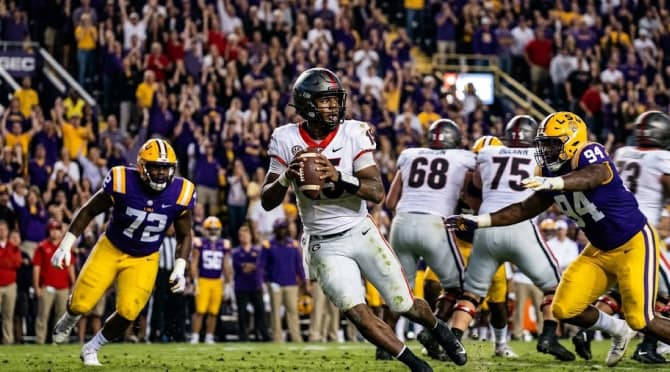
Crowd energy often amplifies defensive momentum, especially after negative offensive plays. That creates field position swings and tempo shifts that can change game flow quickly.
Texas’ defensive structure, shaped by recent recruiting emphasis on trench strength, becomes central in managing those swings.
The ability to generate early-down stops reduces offensive pressure in hostile environments. It also limits crowd escalation sequences that typically follow explosive plays.
Texas has invested heavily in defensive line recruiting, a trend discussed in our coverage of Texas defensive recruiting strategy shifts, which directly ties into controlling line-of-scrimmage outcomes in SEC environments.
Field position control becomes a hidden metric in rivalry games. It determines how often offenses operate in manageable down-and-distance situations.
Kyle Field amplifies that dynamic due to its crowd responsiveness to momentum changes.
Table: Key Environmental Factors At Kyle Field And Their Game Impact
| Environmental Factor | Game Impact Area | Texas Adjustment Focus |
|---|---|---|
| Crowd Volume (>100K) | Offensive cadence disruption | Silent count execution |
| Sustained Noise Pressure | Communication breakdown | Pre-snap identification |
| Momentum Swings | Field position volatility | Defensive early-down stops |
| Emotional Rivalry Context | Penalty risk increase | Discipline and composure |
| Tempo Disruption | Offensive rhythm loss | Controlled play sequencing |
Each factor compounds the others. Texas’ preparation model must address them simultaneously rather than individually.
SEC Stakes Increase The Importance Of Road Performance Consistency
Texas’ transition into the SEC has already elevated the importance of road performance. Championship paths in the conference rarely allow for multiple road failures in hostile environments.
Kyle Field represents one of the most demanding versions of that test.
Success in College Station often correlates with broader SEC championship viability. Programs that consistently win in that environment tend to sustain postseason competitiveness.
For Texas, the matchup becomes a benchmark game. It evaluates roster maturity, quarterback leadership, and coaching adaptability under pressure.
The Longhorns’ progression into SEC competition is measured not only by recruiting rankings or home performance, but by execution in stadiums like Kyle Field.
That shift reflects the structural reality of the conference. Road environments define seasons as much as talent levels.
Texas now operates within that framework.