
The Texas Tech QB situation has become the defining football story in Lubbock because it sits where roster planning, athlete welfare, NCAA enforcement, and the new economics of college football collide. Brendan Sorsby’s indefinite leave while entering treatment for gambling addiction is not merely a depth-chart problem; it is a test of how a modern program handles urgency without losing sight of the person at the center.
Why The Texas Tech QB Situation Matters Beyond Lubbock
I do not see this as routine quarterback uncertainty. Programs lose starters to injuries, transfers, suspensions, draft decisions, and performance swings every year. What makes this different is the combination of an expected starting quarterback, a high-profile transfer from Cincinnati, an NCAA sports-gambling investigation, and a treatment decision that requires more sensitivity than the usual football conversation tends to allow.
The easy reaction is to ask whether Sorsby will play. That is understandable. Texas Tech built part of its 2026 offensive projection around him, and quarterback is the one position where uncertainty can travel through every room in the building. But the sharper question is broader: what does a program do when competitive ambition collides with trust, welfare, and eligibility?
That is why the Texas Tech QB situation deserves more than a quick news-cycle response. It forces a serious look at how college football now manages risk in an environment where NIL money, transfer mobility, betting access, legal strategy, and public pressure all move faster than the old administrative playbook.
What Sorsby’s Absence Actually Changes
At quarterback, absence has a multiplier effect. A running back rotation can absorb uncertainty. A defensive line can redistribute snaps. Even a receiver room can compensate through scheme, tempo, and target share. Quarterback is different because the position organizes the entire offensive conversation: cadence, protection calls, route timing, locker-room rhythm, and weekly identity.
For Texas Tech, Sorsby’s absence creates immediate pressure in three places. The first is practical preparation. Whoever takes first-team reps must be treated not as a placeholder but as a real option. Coaches cannot run a serious offseason around a maybe. If the staff hedges too long, the offense risks entering the season with neither its intended leader nor a fully empowered alternative.
The second pressure point is messaging. The program has to support Sorsby publicly while staying careful about an active eligibility matter. Too much detail can become irresponsible. Too little detail can create speculation. The right tone requires judgment, especially when fans and media naturally want answers that may not yet exist.
The third pressure point is roster psychology. Players understand depth charts better than outsiders do. They know when a staff is preparing honestly, and they know when a room is waiting on a resolution. A team with serious ambitions has to prevent limbo from becoming its default emotional setting. That takes discipline.
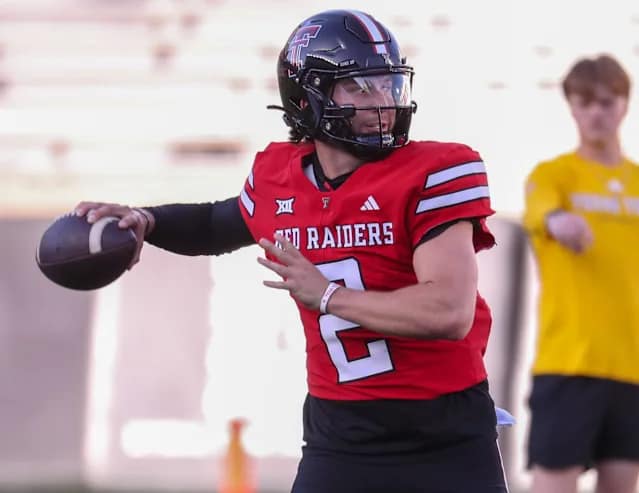
The Human Layer Cannot Be Treated As A Side Note
The most important part of this story is also the easiest for football culture to mishandle. Sorsby has entered treatment for gambling addiction. That should not be reduced to a transactional note beneath eligibility math. Addiction is not a scheme issue, and treatment is not a public-relations tactic. It is a serious personal step that deserves context and restraint.
The football questions are still legitimate. Texas Tech has a season to prepare for, teammates have roles to define, and the NCAA process may carry consequences. But there is a difference between asking hard questions and turning a health matter into spectacle. The distinction requires care.
The best programs understand that athlete welfare and competitive standards are not opposing values. They are connected. A team that cannot handle a player’s crisis with accountability and care will eventually pay for that weakness somewhere else, even if it wins a few Saturdays along the way.
I would be careful with certainty here. The public does not know every detail of Sorsby’s treatment, the investigative timeline, or the internal conversations between Texas Tech, the NCAA, and legal representatives. That gap should make analysis more disciplined, not more reckless. The responsible posture is restraint.
Why The NCAA Angle Raises The Stakes
The NCAA gambling component changes the story because it introduces eligibility risk that cannot be solved by practice reps alone. Sports wagering rules exist to protect competitive integrity, and college athletes operate inside a system where even small violations can become major issues because public confidence depends on the perception that games are clean.
That principle is not abstract. The NCAA’s broader NCAA sports betting policy reflects concern that mobile wagering, player-specific markets, and online harassment can put athletes and competitions under new forms of stress. Football programs can no longer treat gambling education as a preseason compliance box. It has become a credibility issue.
Sorsby’s situation has been described through allegations and investigation, not final adjudication. That distinction matters. An investigation is not a verdict. Still, the presence of NCAA scrutiny means Texas Tech must prepare for multiple outcomes: reinstatement, conditions for return, delayed resolution, or a ruling that makes football planning much more complicated. The key variable is eligibility.
This is where college football’s modern machinery shows its tension. The transfer portal rewards speed. NIL markets reward bold investment. Fan bases reward instant optimism. Enforcement processes, treatment timelines, and legal strategy move differently. They require patience, documentation, and uncertainty management.
NIL Has Raised The Cost Of Quarterback Volatility
Quarterback uncertainty used to be primarily a competitive concern. In the NIL era, it is also a financial and strategic concern. When a program lands a prominent transfer quarterback, the expectations attached to that addition extend beyond the football building. Donors, collectives, sponsors, ticket buyers, and media partners all read the move as a signal of ambition.
That does not mean players should be treated like assets rather than people. It means programs must recognize the new value chain around elite quarterbacks. The more money and expectation attached to a transfer, the more painful any disruption becomes.
For Texas Tech, the lesson is not to avoid aggressive recruiting. The lesson is to build more structure around contingency planning. If a program spends like a contender, it has to prepare like one: backup quarterback development, compliance education, mental-health support, and crisis communication before crisis arrives.
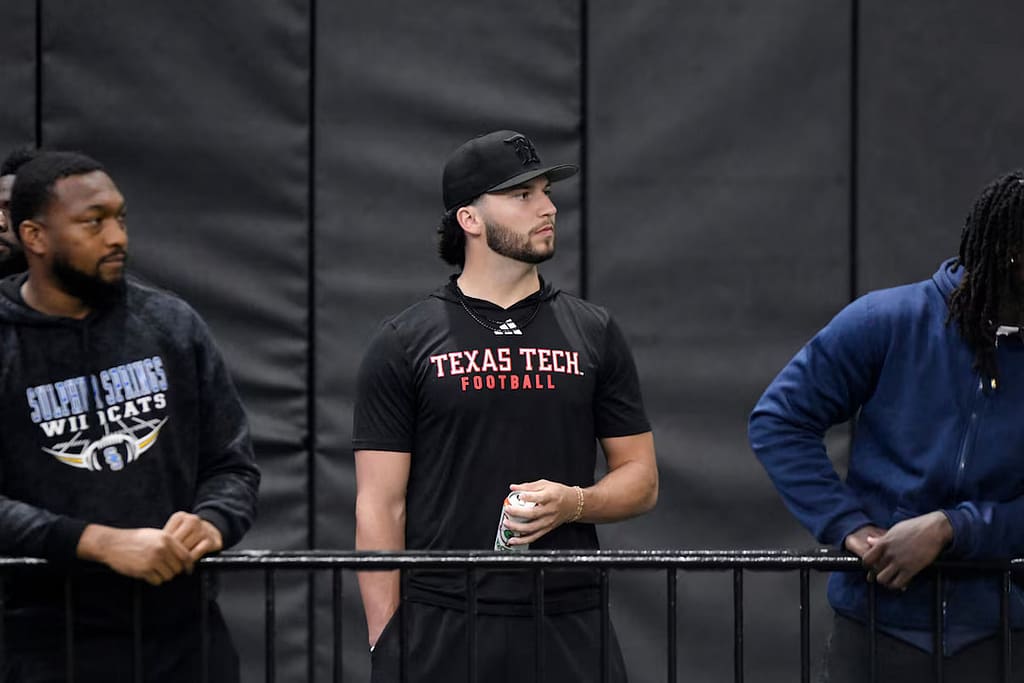
The Backup Quarterback Conversation Is Not Optional
Texas Tech must now evaluate its quarterback room with unusual honesty. The next quarterback cannot be treated as a temporary understudy in every practice period. He needs reps with starters, real installation responsibility, and coaching language that conveys choice rather than panic.
The staff’s job is to create a pathway where the offense can function even if Sorsby is unavailable for an extended stretch. That may require narrowing the playbook, leaning harder on the run game, building more defined reads, or changing the tempo profile. None of that is glamorous. All of it matters because execution depends on preparation.
A quarterback competition shaped by uncertainty can become corrosive if handled poorly. Players do not need false certainty. They need a fair process, clear standards, and consistent communication. In that sense, the backup plan is not just insurance. It is a signal of organizational seriousness.
Joey McGuire’s Leadership Moment
Head coaches are often judged by fourth-down calls, recruiting wins, and rivalry games. Those things matter, but moments like this reveal something deeper. Joey McGuire’s challenge is to support Sorsby as a person, protect the team’s preparation, and avoid letting public noise define the program’s internal temperature.
That requires emotional intelligence and institutional leverage. A coach cannot control the NCAA’s timeline. He cannot control every headline. He cannot control the legal strategy. What he can control is how the building operates each day.
The best response is usually not dramatic. It is steady. Keep the team informed without oversharing. Prepare the next quarterback without implying abandonment. Support treatment without converting it into a slogan. Respect the investigation without surrendering competitive urgency. That is leadership.
This is where culture stops being a word on a recruiting graphic. Culture is how a program behaves when the plan breaks. Texas Tech has a chance to show resilience in a situation that blends football pressure with personal difficulty.
What Fans Should And Should Not Assume
What fans should not assume is that every unanswered question signals dysfunction. Silence can be appropriate when treatment, privacy, and eligibility are involved. The absence of a detailed public timeline does not necessarily mean the program lacks order behind closed doors.
It is also worth resisting the instinct to make Sorsby either a villain or a victim in overly simple terms. Real life rarely fits those categories. A player can need help and still face consequences. A program can offer support and still protect its season. The useful word is balance.
For readers comparing quarterback stability across the Big 12, useful spring football context helps frame how much a single quarterback question can shape a program’s offseason.
The Gambling Issue Is Bigger Than One Player
College football has spent years learning how to talk about NIL, transfers, and playoff access. It is still learning how to talk about gambling. The sports-betting economy is now woven into broadcasts, mobile apps, social media, and fan conversation. For athletes, that visibility can create constant temptation, harassment, and reputational volatility.
The integrity concern is obvious: players cannot be allowed to bet in ways that compromise competition. But the welfare concern is just as real. Young athletes are living inside a marketplace that constantly monetizes prediction, performance, and inside information. Programs need more than annual reminders. They need education that is specific, repeated, and credible. That is protection.
This is not only a compliance-office problem. It is a player-development problem. It belongs in recruiting conversations, team meetings, family education, and leadership councils. If athletes are surrounded by betting language every day, then programs must answer with more than a paragraph in a handbook. They need governance.
The Sorsby case should push schools to examine their own systems. Do athletes understand what is prohibited? Do they know where to seek help before a problem becomes public? Do coaches know how to recognize warning signs? Those are operational questions. They demand seriousness.
The Eligibility Fight Could Become A Broader Test
The involvement of Jeffrey Kessler, one of the most prominent sports attorneys in the country, suggests the eligibility piece may not remain a quiet administrative matter. If legal advocacy becomes central, the case could become another example of how college athletics now operates in a contested space between association rules, athlete rights, and institutional investment.
That does not mean Sorsby will win, lose, return, or miss the season. The point is that high-profile eligibility disputes rarely stay narrow. They attract broader questions about addiction treatment, transfer history, institutional responsibility, and rule enforcement.
Those questions are uncomfortable because they expose the tension in the system. College football wants professional-level revenue and attention, but it still relies on a regulatory model that often feels reactive. When a quarterback with major competitive value becomes the center of an enforcement dispute, every ambiguity becomes louder.
Texas Tech’s best move is to avoid building its identity around the legal outcome. It can support the process while building a football team that is not emotionally dependent on one ruling. That kind of maturity matters.
The Offensive Identity May Need To Change
If Sorsby returns, Texas Tech may be able to revive its intended offensive blueprint. If he does not, or if his availability remains unclear deep into preparation, the Red Raiders may need a more adaptable identity. That does not mean lowering expectations. It means aligning ambition with available personnel.
The smartest staffs do not simply install plays. They build answers. If the quarterback changes, the offense may need more defined throws, heavier reliance on early-down efficiency, tighter protection plans, and a stronger relationship between the run game and play-action. The goal is not to hide the quarterback. The goal is to create confidence through structure.
That is especially important in a league where defensive coordinators punish hesitation. If opponents sense instability, they will test communication, protection, and decision-making immediately. Texas Tech cannot wait until game week to discover whether its alternative plan has enough detail. Readiness has to be earned.
The staff’s challenge is to preserve momentum without becoming stubborn. A good offensive identity is not a monument. It is a living plan shaped by personnel, health, timing, and opponent stress points.
What Texas Tech Should Prioritize Next
The first priority is the person. Sorsby’s treatment should remain the center of any responsible institutional response. The second priority is eligibility clarity, though clarity may not arrive quickly. The school needs to understand possible timelines, procedural steps, and conditions attached to any return. That is legal and administrative work, but it has football consequences.
The third priority is quarterback development. Every serious program says it prepares the next man. This is where that phrase becomes measurable. Practice reps, meeting-room ownership, and staff confidence will reveal whether the Red Raiders have built real depth or merely listed names behind the starter.
The fourth priority is message control. Not spin. Not deflection. Message control means consistent, careful communication that protects privacy, acknowledges reality, and avoids creating false expectations. In a story this sensitive, tone is part of credibility.
A Season Defined By More Than A Depth Chart
The Texas Tech QB situation matters now because it is about far more than who starts the opener. It is about how a contender manages uncertainty, how college football handles gambling risk, how athlete welfare fits inside high-stakes roster building, and how much institutional patience survives when expectations are already loud.
The opportunity for Texas Tech is not simply to get its preferred quarterback back. The opportunity is to show that a serious football program can handle complexity without losing its standards or its humanity. That requires focus, not slogans.
Sorsby’s future remains uncertain, and pretending otherwise would be careless. But the Red Raiders’ next steps do not have to be vague. They can prepare the room, support the player, respect the process, and build an offense capable of adapting. In the modern game, that kind of stability may be just as valuable as any single transfer win.
The Texas Tech QB situation will continue to shape the offseason because it touches the sport’s most sensitive fault lines: betting, eligibility, NIL expectations, legal pressure, and player welfare. The programs that handle those fault lines best will not be the loudest. They will be the ones with enough perspective to know that the next snap matters, but the system around the player matters more.