Football in Texas isn’t a sport; it’s a blood religion. It’s the Friday night lights burning a hole through the Hill Country darkness and the Sunday afternoon gridiron wars that define our very existence. And while figuring out how to bet on football from Texas might require a back-channel hustle in this puritanical state, recognizing pure, unadulterated homegrown talent requires nothing but open eyes. We bleed for this game. We breed monsters for this game. Here is the definitive, undeniable ranking of the ten greatest Texas-born gladiators to ever lace up cleats in the NFL.
Ranking The Top Ten Texas Born NFL Players
Every Texan thinks they own the list. Most are wrong. Bar arguments have ended in broken stools over this exact question. So here’s the bottom line, served straight: ten names, ranked top to bottom, hardest to softest. These are the best Texas NFL players the league has ever fielded. Some built dynasties. Some set records nobody has touched since. One still throws passes that mock physics. Disagree if you dare. The gospel starts now.
How We Ranked Them
We didn’t count Pro Bowls like loose change. This list rewards terror. Here’s what moved the needle:
- Peak dominance. How badly did he warp his position at his best?
- Championship weight. Rings carry the argument home.
- Cultural gravity. Did he rewire how Texas sees the game?
When two legends sat dead even, we broke the tie the honest way. We asked which one defenders prayed they’d never meet. Brutal. Final.
10. Von Miller, DeSoto
The man raised chickens. Wore bow ties. Smiled like a Sunday school teacher. Then he’d cross the line and gut your franchise.
DeSoto built him. Texas A&M sharpened him. The NFL never solved him.
Super Bowl 50 was his sermon. He hunted Cam Newton across the turf, ripped loose the fumbles that won Denver a championship, and walked off with the MVP. One ring wasn’t enough. He grabbed a second with the Rams in Super Bowl LVI.
His sack totals read like a felony rap sheet. He ranks among the deadliest pass rushers the game has produced. Watch the tape. There’s joy in his violence, a kid playing tag who refuses to be “it.”
Bow ties and busted quarterbacks. That’s Texas.
The man raised chickens. Wore bow ties. Smiled like a Sunday school teacher. Then he’d cross the line and gut your franchise.
DeSoto built him. Texas A&M sharpened him. The NFL never solved him.
Super Bowl 50 was his sermon. He hunted Cam Newton across the turf, ripped loose the fumbles that won Denver a championship, and walked off with the MVP. One ring wasn’t enough. He grabbed a second with the Rams in Super Bowl LVI.
His sack totals read like a felony rap sheet. He ranks among the deadliest pass rushers the game has produced. Watch the tape. There’s joy in his violence, a kid playing tag who refuses to be “it.”
Bow ties and busted quarterbacks. That’s Texas.
9. Mike Singletary, Houston
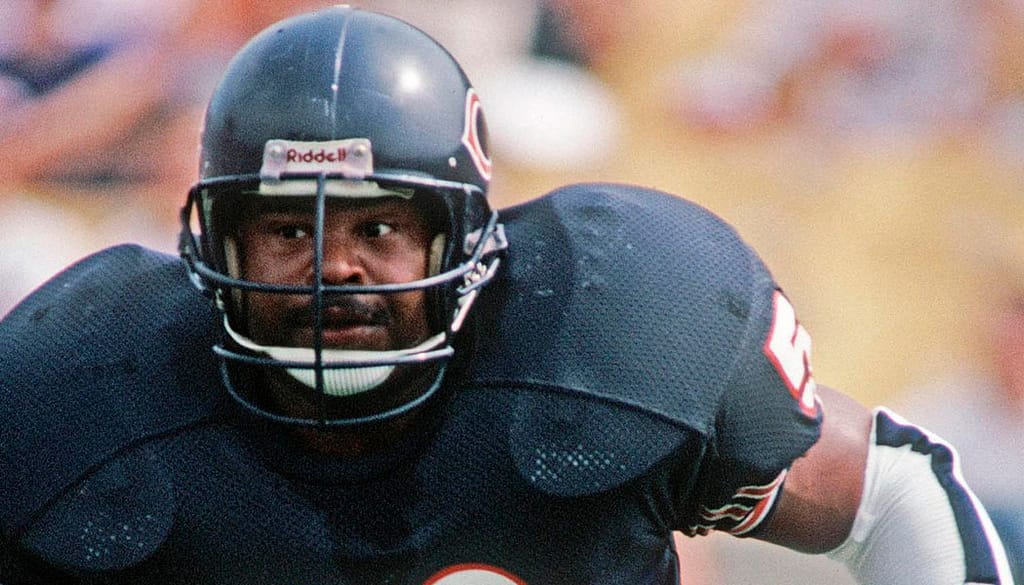
The eyes. You remember those first.
Samurai Mike came out of Houston and Baylor wearing a stare that could drop a fullback before contact. For a decade he was the beating center of the meanest defense ever built, the 1985 Chicago Bears.
Two Defensive Player of the Year trophies. Ten Pro Bowls. The pulse of a unit that tormented the league sixteen weeks a year.
He wasn’t the largest linebacker on the field. Who cared? Singletary read plays before the quarterback finished barking signals. Then he arrived like a man collecting a debt with interest.
Canton opened its doors. It had no choice.
A Houston kid who turned raw menace into leadership. Every middle linebacker since has chased his shadow and come up empty. The eyes saw it all coming.
8. Bob Lilly, Throckmorton
Before Dallas became America’s Team, it had Bob Lilly. The whole thing got built on his back.
Mr. Cowboy. The first player the franchise ever drafted, and the earliest name carved into their Ring of Honor. Fitting, since everything else stacked on top of him.
Out of small-town Texas and TCU, Lilly anchored the Doomsday Defense for fourteen unbroken seasons. He almost never missed a snap, freakish durability for a man living in the trenches.
His masterpiece lives in Super Bowl VI. He chased down Miami’s Bob Griese for a 29-yard sack, the quarterback backpedaling like he’d seen a ghost. Dallas won its maiden title that afternoon.
First-ballot Hall of Famer. The blueprint. You don’t raise a dynasty without a base like this.
He taught a generation of Texas kids that defense could be art. Mr. Cowboy, and he earned every syllable.
7. Michael Strahan, Houston
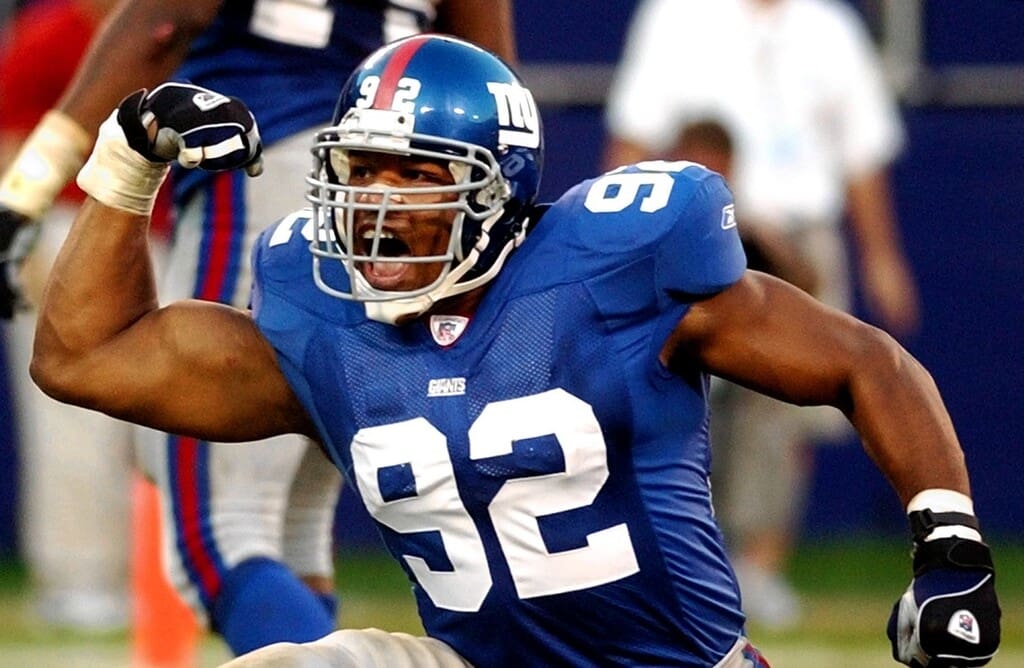
You know the grin now. Morning TV. The gap you could park a truck in. Don’t let it soften the memory. For fifteen seasons this Houston native was a waking nightmare in shoulder pads.
He set the single-season sack record with 22.5 in 2001. The number still stands like a monument while flashier rushers came and vanished.
Then February 2008 sealed it. Strahan and the Giants marched into the desert and torched New England’s perfect run in Super Bowl XLII, one of the biggest upsets the sport has coughed up.
He played end the complete way. Setting the edge against the run. Bull-rushing tackles into their own quarterback’s lap. No tricks.
Canton came knocking. It had to.
A Houston boy who left, found himself, came home, and became one of football’s most dreaded men. Then he learned to laugh about it on live television.
6. Eric Dickerson, Sealy
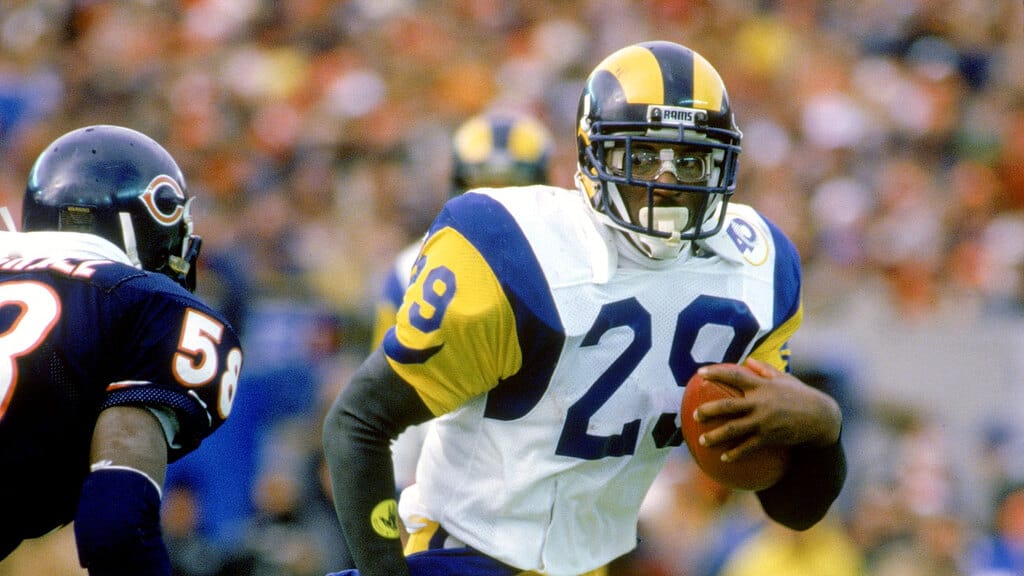
The goggles. The upright stride. A record that has buried everyone who swore to break it.
In 1984, Eric Dickerson ran for 2,105 yards in a single season. Nobody has touched it in over forty years. Rule changes piled up to help offenses. The mark didn’t blink.
Sit with that. A Sealy kid out of SMU posted a total so absurd it has outlasted generation after generation of supposedly faster, stronger athletes.
He didn’t run angry. He glided. Long, smooth, sneaky-quick, gone before the safety understood the angle had already died.
He looked like he was out for a light jog. Right up until he stood thirty yards downfield, staring at your defense’s backside.
Hall of Famer. Obviously. One of the cleanest runners the game has handed us. The 2,105 isn’t a stat. It’s a dare nobody can answer.
5. LaDainian Tomlinson, Rosebud
For a few seasons in San Diego, LaDainian Tomlinson was simply the best football player breathing. It wasn’t close.
Out of tiny Rosebud and TCU, LT did everything a running back could do, plus a few things a running back shouldn’t manage.
His 2006 season plays like a fever dream. Thirty-one total touchdowns. An MVP. A one-man offense that bordered on cheating. He ran. He caught. He even threw touchdown passes. He turned tacklers into men grabbing at a train that had already left the platform.
He retired among the most prolific scorers in league history and strolled into Canton on the opening ballot. Nothing to argue.
What’s the takeaway here? Small towns grow lethal talent.
A Rosebud kid who became, for a stretch, the most dangerous weapon in football. The kind of man a state carves statues for. LT scored at will. Then he humiliated you for sport.
4. Drew Brees, Austin
Scouts said he stood too short. Six feet, give or take, in cleats. They scribbled it down like a verdict.
The Austin native out of Westlake High and Purdue spent two decades proving them narrow-minded. A shoulder injury nearly ended his career. New Orleans handed him a second life, and he handed the city back its soul.
Forget calling the Super Bowl XLIV win after Hurricane Katrina a trophy. That was a resurrection. Brees stood at the center of it, football in one hand, MVP hardware in the other, a drowned city riding his shoulders.
Along the way he gutted the record book. Most completions. A monster passing-yardage total. Aim so precise it looked surgical.
Here’s the cruel joke. The league wrote him off over his height. He answered with one of the richest careers a quarterback has ever stitched together.
Canton is a formality. Start measuring him for the gold jacket.
3. “Mean” Joe Greene, Temple
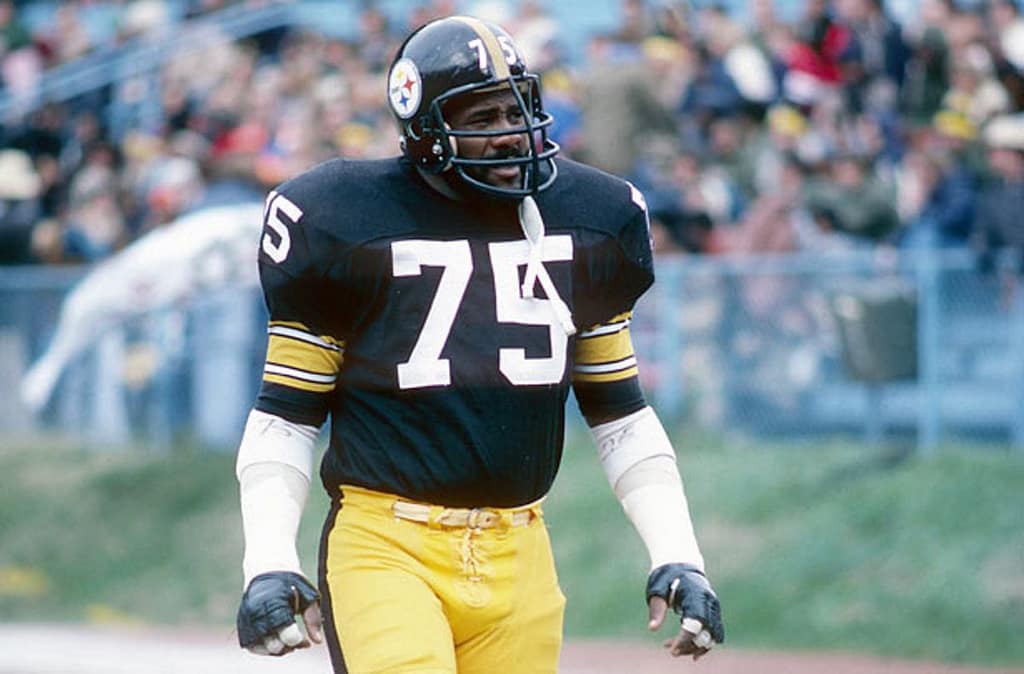
Want proof of how good he was? They named the dynasty after the defense. Then they named the defense’s soul after him.
Temple, Texas produced Joe Greene. North Texas State, the Mean Green, gave the nickname a home. Then Pittsburgh laid him down as the first brick of the team that owned the 1970s.
Four Super Bowl titles. The anchor of the Steel Curtain, the most fearsome wall the sport had seen. A defensive tackle so disruptive that opposing coordinators redrew their plans around the plain fact of him.
You probably know the soda commercial. The snarling giant who tosses a kid his jersey. Cute. The truth was a 6-foot-4 wrecking ball who lined up cockeyed in the gap just to detonate blocking schemes solo.
First-ballot Hall of Famer. The greatest defensive tackle who ever drew breath, by plenty of accounts.
A Texas man who flipped a doormat into an empire. Three names sit above nobody. He’s a whisker from the summit.
2. Earl Campbell, Tyler
The Tyler Rose. Say it slow. Nobody has ever run like him, and the body that gave us those years paid a heavy tax for it.
Earl Campbell ran like a controlled demolition. Thighs thick as oak trunks. A stiff-arm that cracked face masks clean off. A refusal to fall that turned every carry into assault charges.
He’d already grabbed the Heisman at Texas. When he reached the Houston Oilers, he hauled the entire Luv Ya Blue era on his shoulders. Offensive Rookie of the Year. Then league MVP. Then season after season where defenders genuinely did not want the assignment of tackling him.
That Monday night run, the one where he flat ran over a defensive back instead of around him, still gets passed around this state like scripture. It should.
He burned bright and brief. The punishment he dished came back collecting. His later years brought real hardship.
For a handful of seasons, though, Earl Campbell was the most physically punishing runner the game has witnessed. A Tyler kid who became Texas football in the flesh. Second on this list. First in a million Texas hearts.
1. Patrick Mahomes, Tyler
Same town as the Tyler Rose. Sit with that a second. Tyler, Texas coughed up the most bruising runner in NFL history and the most gifted quarterback who has ever lived. Bottle whatever runs through the tap down there.
Mahomes does things on a field that shouldn’t obey physics. No-look passes. Sidearm darts slung across his body off the back foot. Plays that look stone-dead right up until they end in the end zone. He throws angles geometry hasn’t approved.
In his first full season as a starter he tossed 50 touchdowns and won MVP. That was the floor.
Then he started stacking championships like the rest of us stack parking tickets. Multiple Super Bowl rings. Multiple MVPs. A clutch gene that turns the fourth quarter into a personal sandbox and ages opposing coordinators in real time.
He’s still mid-rampage. Still writing the book. Still inventing fresh ways to win.
And he sits in the talk for greatest quarterback ever. Not greatest from Texas. Greatest, full stop.
Number one. Born in Texas, naturally. Where else would a creature like this come from? The gospel ends at the top, and the top is a Tyler kid.
The Snubs That’ll Start a Bar Fight
Here’s where the hate mail lands. Here’s where you stand up and announce I’ve lost my mind. Good. That’s the gig. The ugly truth? Texas grows so much talent that the men below would headline almost any other state’s roster.
The Hall of Famers We Left Off
Sammy Baugh, the Temple legend who basically invented modern passing and could have cracked the top five on principle alone. Forrest Gregg, whom Vince Lombardi called the finest player he ever coached. Gene Upshaw out of Robstown, the benchmark at guard. Then stack up Don Maynard, Bobby Layne, Raymond Berry, Lance Alworth, Ken Houston, Charley Taylor, Cliff Harris, and Bulldog Turner. Every last one in Canton. Every last one born on Texas dirt. Cutting them stung.
The Modern-Era Snubs
Adrian Peterson out of Palestine ran with a rage that belongs on any list and might yet crash Campbell’s all-time-back party. Darrell Green, the Houston burner, played corner at a high level into his forties, a near-impossible feat. Tim Brown out of Dallas piled up a receiving résumé worthy of the gold jacket. Each man owns a real case. Each got squeezed out by a state that pumps out too many NFL Hall of Famers from Texas to fit ten slots. That’s not a flaw. That’s the state.
The Final Word
Ten names. Two of them out of Tyler. A defense’s whole identity borrowed from one of them. A single-season rushing record that has outlived four decades of pretenders. A quarterback rewriting the ceiling of the position as we watch.
This is the Texas machine at work. It takes kids from Rosebud and Sealy and Throckmorton and DeSoto, towns most of the country couldn’t pin on a map, and forges the men who define America’s loudest sport. These are the Texas football legends the rest of the league keeps trying to copy.
You hate the order? Of course you do. You’re a Texan. Fighting about this is practically a state holiday.
So go on. Tell me who I botched. Share it. Tag the buddy who still swears his guy got robbed. Then read the next ranking and start the brawl all over again.
Frequently Asked Questions
Who is the greatest NFL player born in Texas? Patrick Mahomes, born in Tyler. Multiple Super Bowl titles, multiple MVPs, and throws nobody else on the planet attempts. He sits at number one, and the gap keeps growing.
Which Texas-born running back had the best career? Take your pick from Earl Campbell, Eric Dickerson, and LaDainian Tomlinson. Campbell hit the hardest. Dickerson owns the single-season rushing record. Tomlinson scored at a clip the league had never seen. All three rank among the best NFL running backs born in Texas.
How many NFL Hall of Famers were born in Texas? Dozens. The roll call runs deep enough to fill a wing in Canton, from Sammy Baugh and Bob Lilly to Joe Greene, Mike Singletary, and beyond. Texas mints Hall of Famers faster than most states mint starters.
Is Patrick Mahomes really from Texas? Yes. Born in Tyler, the same East Texas town that gave us Earl Campbell. He later starred at Texas Tech before the Kansas City Chiefs grabbed him.Why does Texas produce so many great football players? Culture and sheer volume. The game runs through the state like groundwater, high school programs operate like junior colleges, and the talent pool is enormous. The pressure starts young and never eases up.