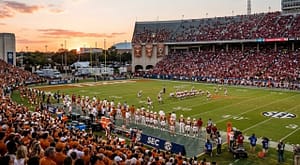
Forget the Friday night lights and a coach’s charming smile. The lifeblood of a modern college football empire now flows through spreadsheets and wire transfers.
Today’s recruiting pipeline is a year-round financial operation. It blends Wall Street aggression with diplomatic summitry. The transfer portal has turned team-building into a high-stakes auction.
Right now, the window is officially open. Over 3,000 athletes are shopping for new homes before January 16th. One program has declared it’s going “all in” to build a title contender by 2026.
But what does that phrase really mean in this new era? Is it savvy, NIL-fueled roster construction? Or is it a desperate gambit to shortcut a rebuild?
The answers will reveal everything about this ambitious plan. They’ll show us if we’re looking at a sustainable foundation or just a flashy rental. The Texas football future depends on which path they’ve chosen.
Coaching stability
The most beautifully engineered sports car is useless without a competent driver, and in Austin, Steve Sarkisian has proven he’s less a Formula One ace and more a tactical rally driver specializing in treacherous terrain.
That Inside Texas analysis nailed it: Sarkisian’s teams don’t win pretty. They win ugly. Think less highlight-reel fireworks, more trench warfare. Less ballet, more bulldozer. This isn’t accidental – it’s philosophical bedrock.
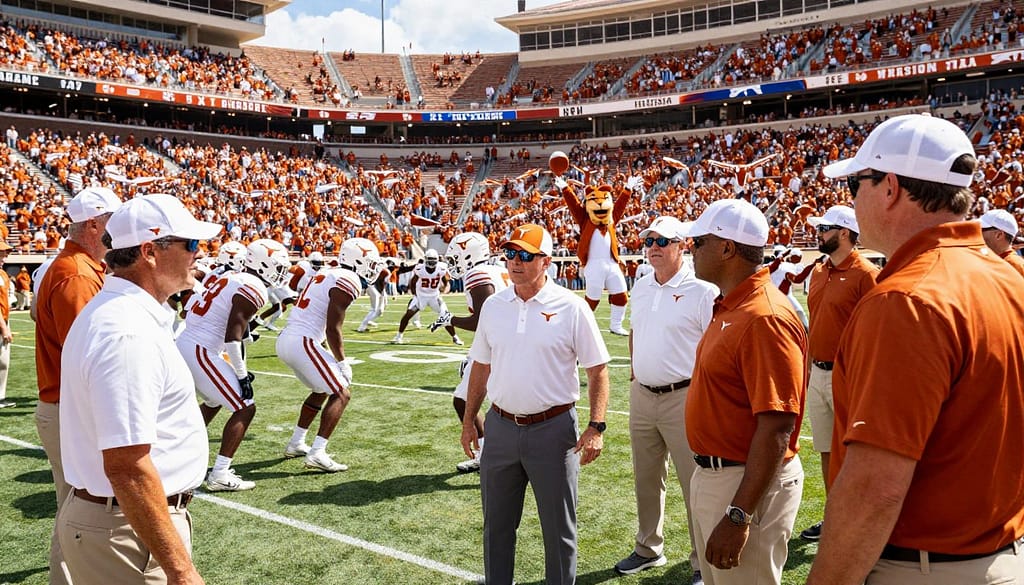
Consider the implications of this identity. When your head coach openly embraces winning “by playing tough defense and relying on special teams,” you’re signaling something fundamental about your program health. You’re building for sustainability, not spectacle. You’re prioritizing resilience over razzle-dazzle.
This creates a fascinating stability paradox. Sarkisian’s pragmatic approach – what RT Young called his “grinding out wins” mentality – provides undeniable floor-raising benefits:
- Predictable Identity: Players know exactly what’s expected – physicality, discipline, fundamentals
- Reduced Volatility: Less dependence on explosive offensive plays means fewer boom-or-bust weekends
- Cultural Cohesion: Everyone buys into the same blue-collar ethos
- Recruiting Alignment: You attract players suited for this specific brand of football
But here’s the analytical question that keeps me up at night: does stability come at the expense of ceiling? Is Texas building a program that consistently wins 9 games but never truly threatens for national supremacy?
Let’s be brutally honest. Sarkisian’s approach feels like investing in municipal bonds instead of tech stocks. Safer returns, lower volatility, but where’s the explosive growth potential? This is the core tension in assessing Longhorns program health under this regime.
The defense-first, grind-it-out model prevents panic. It builds calluses. It wins road games in hostile SEC environments. But does it inspire the kind of awe that changes national perception? Does it develop the quarterback wizardry that wins shootouts against Alabama or Georgia?
Sarkisian’s stability is the armored Humvee of coaching philosophies – it’ll get you through the minefield, but don’t expect to win any drag races. For a fanbase dreaming of returning to college football’s penthouse, this creates psychological whiplash. You’re simultaneously grateful for the competence and frustrated by the limitations.
Yet, consider this counterpoint: maybe this is the blueprint for modern SEC success. In a conference where physical attrition determines championships, perhaps the “ugly win” specialist is exactly what Texas needs. Sarkisian isn’t selling sizzle – he’s selling steak. Tough, chewy, occasionally bland steak that nonetheless provides consistent nourishment.
The true test of this coaching stability won’t be aesthetics. It’ll be whether this pragmatic foundation can support championship-level construction. Can you build a skyscraper on this bedrock, or are you destined for sturdy-but-unremarkable mid-rises?
For now, Sarkisian’s identity provides measurable program health benefits: no coaching carousel drama, clear developmental pathways, and a team that won’t beat itself. That’s valuable currency in today’s chaotic college football landscape. Whether it’s championship currency remains the multi-million dollar question hanging over the Forty Acres.
NIL positioning
Texas’s football future now depends on smart money moves as much as on defense. Welcome to a world where money isn’t just about winning games, but also about Name, Image, and Likeness deals. NIL deals are now the main focus, not just a side thing. They’re the secret part of the recruiting game, showing off more than just shiny helmets.
Our sources tell us to go “all in” with a big push. But what does that really mean? Is Texas acting like a top venture capital firm, investing in the best talent? Or is it more like a GoFundMe, trying to keep up with every big name that comes along? The answer is key to everything.
Get NIL right, and it can boost your program big time. It helps during tough years, wins big transfers, and keeps top high school players. It shows recruits their worth goes beyond sports. The health of the booster group now directly affects recruiting success. A look at the top NIL earners in the state shows just how big the stakes are.
So, what’s Texas’s approach? Are they loud and flashy, throwing money around? Or are they more like Berkshire Hathaway, strategic and focused on long-term value? The culture of the booster group is crucial, not just the size of the checks. A reactive approach drains resources and feels like a mercenary game. A proactive strategy is what drives growth.
This financial game is what shapes the Texas football future more than any play. A strong NIL setup doesn’t just attract talent; it keeps it. It creates a place where growth and pay aren’t against each other. With a steady flow of resources, the talent pipeline stays strong. The question is, is Texas playing chess while others play checkers?
At the end of the day, it’s all about positioning. Are they investors or just trying to outbid everyone? The market, full of young stars and veteran players, is watching closely. They can spot instability from far away. For Texas, securing the Texas football future means winning in the boardroom as much as on the field.
National perception
Look at the “Others Receiving Votes” column in the AP Poll. It’s like the kids’ table at Thanksgiving. You’re there, but not really part of the main talk. The numbers show a clear picture: “Houston 82, Iowa 74, Tennessee 61, New Mexico 21, Duke 18, Boise State 16…” It’s a mix of hopes and doubts.
Being in this group tells a lot about Texas’s national standing. It’s not just about talent or wins. It’s about what people think and say.
The story is clear: “Promising but not yet threatening.” It’s a nice way of saying you’re good, but not great. This feeling affects program health a lot. It matters when the playoff committee talks or when recruits choose where to go.
Let’s look at the “others receiving votes” list. It shows who’s respected and who’s not.
| Program Tier | Representative Teams (From Data) | National Perception | Impact on Program Health |
|---|---|---|---|
| The “Almost There” | Tennessee, Iowa | Consistently good, rarely great. A known quantity. | Stable recruiting, but ceiling is perceived as limited. |
| The “G5 Darling” | Boise State, UNLV | Respected disruptors from outside the power structure. | Great for morale, but doesn’t translate to elite resource competition. |
| The “Sleeping Giant?” | Texas, Miami (FL)* | Massive potential, perpetually “next year.” Burden of history. | High-pressure environment. Success is expected, not celebrated. |
| The “Puzzle” | Duke, Kansas | Academic schools with surprising football competence. | Positive outlier status, but hard to sustain at peak levels. |
*Note: Miami often occupies this psychological space alongside Texas in national discourse.
Where does Texas fit? In the “Sleeping Giant?” tier. The question mark is big. Are they waking up, or is it another false start? This battle is won on the field, but in a special way.
A tough win, like a 17-14 victory, shows toughness. It’s a program health plus. But it can also keep the “not elite” label alive. Style points still count.
To move forward, Texas needs to change the story. From a promising drama to a real thriller. It’s not just about winning. It’s about changing what people think. Every talk about the future playoff outlook for teams in transition is about this shift. Until then, Texas stays at the kids’ table, listening to talks about Georgia, Ohio State, and Oregon. To join the big talk, Texas needs to bring something big.
Program trajectory
So, what’s next for Texas football? Navigating the SEC is like driving in Austin during SXSW. You know where you’re going, but the journey is unpredictable.
The 2023 season was incredible. Texas had a 23-4 record, made the College Football Playoff, and beat Alabama on the road. But then, the SEC schedule hit, and reality set in.
Despite losing 72% of last year’s defense, the offense looks strong. Kelvin Banks Jr. is a standout on the line. However, the secondary is a concern with two new corners and limited experience.
The real test comes in November with games against Georgia, Michigan, Oklahoma, and Texas A&M. If Texas can make it through, their story will change. But if they struggle, doubts will grow.
Arch Manning’s talent is a bright spot. His size and skill offer hope. Yet, hope alone is not enough.
Betting markets show cautious optimism. The odds for a national title are +750. A detailed forecast of the 2024 season suggests a 9-3 record. But if the defense falters, Texas could face a tough 7-5 season.
The journey is not straightforward. It’s a path with ups and downs, driven by Steve Sarkisian’s vision and NIL support. The faith in Texas is strong. But in the SEC, results are what matter. The 2024 season will be a crucial test. Will Texas build an empire or just be a flash in the pan? We’ll find out this fall.