
Texas Tech did not merely have a good NFL Draft weekend; it had the kind of weekend that changes how a program is discussed nationally. With a program-record nine players selected and edge rusher David Bailey going No. 2 overall to the New York Jets, the Red Raiders transformed a single draft cycle into a statement about where the program has been and where it is heading.
For years, Texas Tech carried a familiar identity: dangerous offense, wide-open Saturdays, memorable quarterbacks, and enough volatility to keep the Big 12 interesting. This Texas Tech NFL Draft class tells a different story. It signals depth, defensive legitimacy, roster construction, and a level of player development that should force the rest of college football to recalibrate its assumptions about Lubbock.
The Texas Tech NFL Draft Class Was More Than A Numbers Story
Nine draft picks is the headline, but the number alone does not capture the weight of the moment. Draft volume matters because NFL teams are not in the business of rewarding college brands for nostalgia. They select traits, production, medical profiles, positional value, and developmental upside. When nine players from one roster are chosen, it means evaluators saw transferable football.
That is why the Texas Tech NFL Draft class should be read as evidence, not decoration. It reflects a roster that was not carried by one star or one scheme advantage. The Red Raiders placed talent into the league across multiple roles, and that breadth matters. A program can occasionally produce a first-rounder. A program that sends nine players into the draft conversation has built something more durable.
Bailey’s selection at No. 2 gave the weekend its national spotlight, but the broader class gave it institutional meaning. The message was clear: Texas Tech was not just housing an elite individual prospect. It had assembled a roster with NFL-caliber bodies, competitive maturity, and enough high-end tape to command attention deep into draft weekend.
For readers tracking the full draft board, the Texas Tech NFL Draft class stands out because it sits at the intersection of individual stardom and program validation.
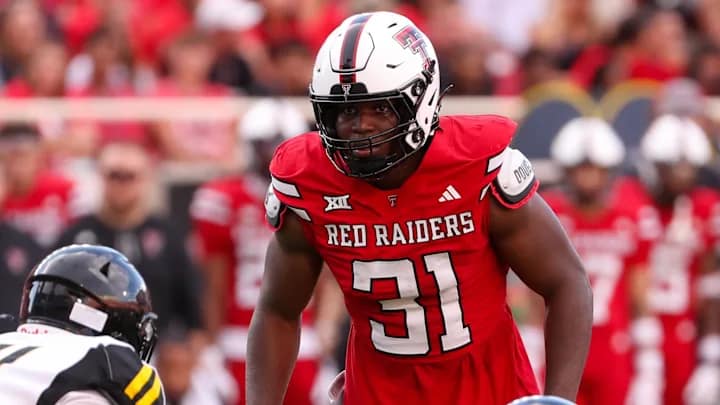
David Bailey Gave The Red Raiders A Franchise-Level Calling Card
There is no way to discuss this draft class without starting with Bailey. A No. 2 overall pick does more than elevate a player’s profile. It becomes a recruiting asset, a development proof point, and a national shorthand for what a program can produce.
Bailey’s rise is especially important because of the position he plays. Edge rushers are among the most valuable players in modern football. The NFL is built around quarterbacks, and defenses are built around disrupting them. When a team spends the second overall pick on an edge defender, it is making a premium investment in game-changing pressure.
For Texas Tech, that matters enormously. The Red Raiders have long been associated with offensive innovation, but Bailey’s draft slot reframes the program’s modern identity. This was not a system quarterback or a statistical receiver benefiting from tempo. This was a defensive front player selected near the top of the draft because professional evaluators saw rare impact potential.
That distinction is crucial. Defensive credibility changes perception. It affects how recruits view the program, how opponents prepare, and how national media discuss future Texas Tech teams. Bailey’s selection gives the Red Raiders something every ascending program needs: a recognizable NFL success story at a position of premium importance.
A Defensive Class That Rewrites The Old Texas Tech Narrative
The deeper story of the weekend was not simply that Bailey went early. It was that the Red Raiders’ defensive presence carried real draft weight. Multiple defensive players from the roster entered the professional pipeline, giving Texas Tech a profile that would have seemed unlikely in earlier eras.
This is the most meaningful shift. Offensive production can be dismissed by skeptics as scheme-inflated. Defensive production is harder to wave away when NFL teams spend draft capital on front-seven players, pass rushers, and physical defenders. That kind of recognition suggests the program has improved in areas that historically separate entertaining teams from serious contenders.
The modern Big 12 is not won by novelty alone. It requires line-of-scrimmage answers, defensive multiplicity, tackling depth, and the ability to survive against teams that can win in different ways. Texas Tech’s draft weekend reflects those ingredients. It also reinforces that the Red Raiders’ recent rise was not built on smoke and tempo, but on personnel that translated to the next level.
The most important takeaway is not that Texas Tech produced NFL players. It is that it produced them in the areas that define sustainable football.
Why This Draft Weekend Matters For Recruiting
Recruiting is often described in terms of facilities, relationships, geography, NIL resources, and conference visibility. All of that matters. But few recruiting tools are cleaner than draft proof.
When a high school player or transfer prospect evaluates Texas Tech now, the pitch has changed. The staff can point to a record-setting draft class and a top-two overall pick. That is not theoretical development. It is a measurable outcome.
This matters especially in the transfer era. Players are increasingly willing to move for opportunity, role clarity, exposure, and professional preparation. Texas Tech’s ability to turn a high-profile roster into draft results strengthens its credibility in that marketplace. It tells prospects that Lubbock can be more than a stepping stone or a fit for a particular offensive style. It can be a legitimate NFL launch point.
The impact may be even greater on defensive recruiting. Programs trying to change perception often need a breakthrough example. Bailey supplies that example. The wider draft class supplies the supporting argument. Together, they give Texas Tech a recruiting story with both star power and depth.
The Big 12 Implications Are Significant
The Big 12 has entered an era defined by opportunity and instability. Without the old gravitational pull of Texas and Oklahoma, the conference has become more open, more volatile, and more sensitive to program momentum. In that environment, Texas Tech’s draft weekend carries competitive implications.
A program that sends nine players to the NFL is not merely enjoying a public-relations win. It is proving that its roster can stack up physically with the best teams in the league. That matters in a conference where the path to playoff relevance may be more accessible than it was a decade ago.
Texas Tech’s challenge now is continuity. Draft success creates momentum, but it also creates vacancies. The programs that sustain success are the ones that turn departures into proof of process. If the Red Raiders replace this class with another wave of credible contributors, the 2026 draft weekend will look less like a peak and more like the beginning of a new baseline.
That is the real question facing the program. Was this a special roster, or was it the first visible return on a broader infrastructure shift? The answer will define how Texas Tech is viewed over the next several seasons.
The NFL Validation Changes The Program’s Ceiling
College football perception is sticky. Programs often carry old labels long after the evidence begins to change. Texas Tech has dealt with that dynamic for years. The Red Raiders could score, entertain, and upset people, but national confidence often lagged when the discussion turned to championship seriousness.
This draft class challenges that lag. NFL validation is not the only measure of a college program, but it is one of the clearest indicators of talent density. When professional teams repeatedly choose players from the same roster, it becomes harder to dismiss that roster as merely well-coached or opportunistic.
That does not automatically make Texas Tech a permanent national power. It does, however, expand the plausible ceiling. The program can now sell a more complete vision: Big 12 contention, playoff relevance, NIL competitiveness, defensive development, and NFL outcomes. In modern college football, that is a serious package.
The Red Raiders do not need to become Alabama or Georgia to capitalize on this moment. They need to become the most convincing version of Texas Tech: aggressive, modern, well-funded, development-oriented, and increasingly trusted by NFL evaluators.
What Comes Next For The Red Raiders
The danger after a historic draft weekend is assuming the work has already been completed. In reality, this is when expectations harden. Opponents adjust. Recruits pay closer attention. Donors expect continued return. Fans stop treating breakthrough seasons as pleasant surprises and begin demanding repeatable success.
That pressure is healthy if managed correctly. It can sharpen standards inside the building and raise the program’s national seriousness. But it also requires discipline. Texas Tech cannot live forever on one draft class, even one as historic as this. The staff must convert the moment into retention, recruiting wins, transfer portal precision, and continued player development.
The best programs use draft success as a flywheel. Players get selected, recruits notice, roster quality improves, competition rises, and more players become draftable. Texas Tech now has a chance to build that cycle. The record-setting weekend gave the Red Raiders leverage. What they do with that leverage will determine whether this becomes a milestone or a movement.
A Turning Point With Real Stakes
The Texas Tech NFL Draft class matters because it arrived at exactly the right time for a program trying to redefine itself. College football is changing quickly, and the programs that rise are the ones that can prove investment, development, visibility, and results in the same breath.
Texas Tech just delivered one of the strongest proof points in its football history. Nine players drafted. A No. 2 overall pick. Defensive legitimacy. National attention. Those are not small signals. They are markers of a program that has moved from interesting to consequential.
The opportunity now is obvious, but so is the risk. If Texas Tech builds from this weekend, the Red Raiders can turn a historic draft class into a durable shift in national standing. If they fail to sustain it, the moment will still be remembered but more as a spectacular high point than a true transformation. For now, the evidence points to a program with momentum, credibility, and a much stronger argument for its place in the future of college football.