
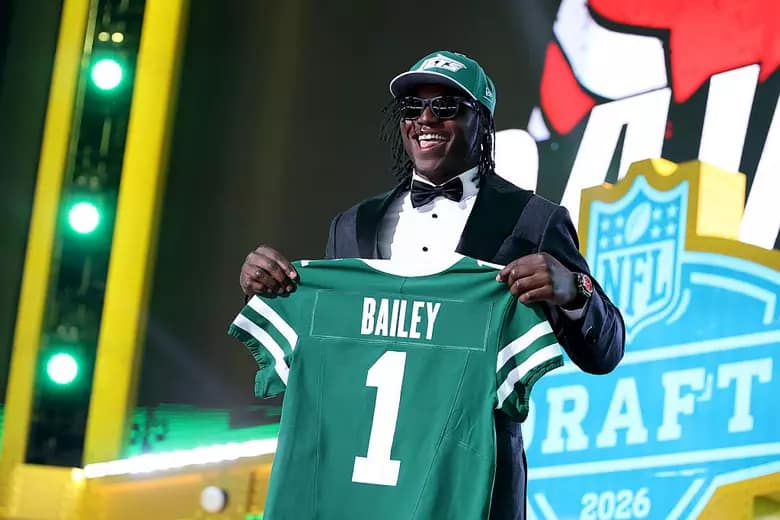
David Bailey’s rise to the No. 2 overall pick has done more than validate one elite defender’s talent. It has forced a broader reassessment of Texas Tech football, a program now positioned to sell something every ambitious college team wants: proof that Lubbock can be a direct route to the NFL’s biggest stage.
Texas Tech Football NFL Pipeline Enters A New Era
For years, Texas Tech carried a recognizable football identity, but not always the one programs use to dominate recruiting conversations. The Red Raiders were often associated with offensive imagination, wide-open passing games, hostile home crowds and the occasional star who outgrew regional expectations. What David Bailey’s selection signals is different. It suggests that the Texas Tech football NFL pipeline is no longer merely a useful talking point. It is becoming a strategic asset.
A No. 2 overall pick changes perception because the NFL Draft remains college football’s clearest public scoreboard for player development. Wins matter. Bowl appearances matter. Recruiting rankings matter. But when professional teams invest premium draft capital in a player, they validate the environment that helped shape him. Bailey’s draft position tells high school prospects, transfer targets, agents, families and rival programs that Texas Tech can produce players evaluated at the very top of the sport.
That kind of signal has lasting value.
Why David Bailey’s Draft Position Matters
There is a meaningful difference between having a player drafted and having a player selected second overall. A late-round pick can reflect upside, roster fit or special-teams value. A top-two selection reflects organizational conviction. It means an NFL franchise sees a player as foundational, not supplemental.
For Texas Tech, Bailey’s draft moment carries the force of a national advertisement. Edge rushers are among the sport’s most valuable commodities, and players who pressure quarterbacks have become premium investments in both college and professional football. When a Red Raider defender climbs that high, the program gains credibility in one of the most important positional markets in modern football.
This is especially significant because defensive identity has not always been the first phrase attached to Texas Tech. Bailey gives the program a new reference point. He allows coaches to walk into recruiting conversations and point not to abstract promises, but to a concrete outcome: elite development, national visibility and first-round validation.
The Recruiting Implications Are Immediate
Recruiting is driven by relationships, evaluation and money, but perception still shapes every serious decision. Prospects want to know whether a program can develop them, showcase them and prepare them for the professional game. Bailey’s draft result strengthens Texas Tech’s answer.
The impact should be particularly strong along the defensive front. Edge rushers, linebackers and hybrid defenders can now look at Texas Tech through a different lens. The program is not simply offering playing time in a major conference environment. It is offering a recent example of a defender turning that opportunity into one of the highest draft outcomes possible.
That matters in the transfer portal as well. College football’s modern roster marketplace moves quickly, and players with NFL ambitions often seek programs where scheme, snaps and exposure align. Texas Tech can now argue that its defensive platform is not theoretical. It has produced a top-tier professional prospect in the most visible way.
The Bailey effect will not automatically turn every recruiting battle in Texas Tech’s favor. The sport remains intensely competitive, particularly inside the state of Texas. But it gives the Red Raiders a stronger closing argument, and in recruiting, the closing argument often matters as much as the opening pitch.
National Attention Creates Opportunity And Pressure
The spotlight around Bailey’s selection is valuable, but it also raises expectations. Programs often spend years trying to earn national attention. Once they get it, the challenge becomes converting attention into momentum.
Texas Tech now has an opportunity to reframe its national story. Instead of being viewed primarily as a dangerous Big 12 program capable of disrupting contenders, the Red Raiders can push toward a more ambitious identity: a developmental destination with legitimate NFL credibility.
That shift requires consistency. One elite draft pick can open doors, but a true pipeline is built through repetition. The next phase is about proving Bailey was not an isolated outlier. If Texas Tech follows his selection with more high draft picks, particularly on defense, the program’s brand will harden into something more durable.
The risk is equally clear. If the program fails to capitalize, Bailey’s success may be remembered as an exceptional individual achievement rather than a structural breakthrough. The distinction matters. Great programs turn individual success into institutional leverage.
The Big 12 Context Makes This Even More Important
Texas Tech’s rise in draft visibility comes at a time when the Big 12 is still defining its post-realignment hierarchy. With traditional powers repositioned and newer contenders fighting for national relevance, the league offers both instability and opportunity.
For the Red Raiders, this is a moment to become louder in the conference conversation. NFL Draft success helps because it travels beyond weekly results. A player selected near the top of the draft gives the program credibility in rooms where conference perception, media attention and recruiting influence overlap.
The Big 12 is not short on ambitious programs. Several schools can claim strong facilities, passionate fan bases and serious NIL support. What Texas Tech can now add to its case is premium draft proof. That may not decide conference standings by itself, but it can influence the talent acquisition cycle that eventually shapes those standings.
What This Says About Player Development
The most important lesson from Bailey’s rise is not simply that Texas Tech had a great player. It is that elite players need environments capable of turning traits into production and production into professional readiness.
NFL evaluators are not impressed by statistics alone. They study athletic profile, technical growth, competitive temperament, schematic translation and consistency against quality competition. For Bailey to go No. 2 overall, he had to present more than flash. He had to look like a player whose college experience prepared him for immediate professional demands.
That reflects well on Texas Tech’s staff, strength program, defensive structure and player development operation. In modern college football, the best recruiting message is development that can be verified. Bailey gives Texas Tech exactly that.
The program’s challenge now is to make that development visible across the roster. If offensive linemen, defensive backs, receivers and front-seven defenders begin stacking draft outcomes, the Red Raiders’ reputation will expand beyond one position group.
The Brand Value For Texas Tech Football
College football brands are built through moments, but sustained through memory. Bailey’s draft night is one of those moments Texas Tech can use repeatedly. It belongs in recruiting graphics, facility tours, broadcast storylines and alumni messaging. It gives the program a national proof point that is easy to understand and difficult to dismiss.
The broader brand benefit is that Texas Tech can now speak more credibly to ambition. The Red Raiders are not merely trying to compete. They can present themselves as a place where serious NFL futures are possible.
That is powerful because today’s college football marketplace rewards programs that can define themselves clearly. Some sell championships. Some sell geography. Some sell tradition. Some sell immediate opportunity. Texas Tech can increasingly sell a blend of opportunity, development and professional access.
Bailey’s selection sharpens that message.
Why The Moment Extends Beyond One Draft
The most compelling part of Texas Tech’s current position is that Bailey’s success arrives at a time when the program can still shape what it means. This is not the conclusion of a story. It is leverage for the next one.
If Texas Tech turns this moment into stronger recruiting classes, better portal additions and more national defensive credibility, Bailey may be remembered as a turning point. If the Red Raiders use his draft position to attract the next wave of NFL-caliber talent, the program can move from episodic relevance to sustained influence.
That is the real opportunity inside the Texas Tech football NFL pipeline. The value is not just that one player became a top pick. The value is that every future prospect now has a clearer picture of what the path can look like.
For a program trying to climb in a crowded national landscape, clarity is currency.
A Defining Chance For The Red Raiders
Texas Tech football is standing in a more powerful position because David Bailey’s No. 2 overall selection changed the conversation. The Red Raiders now have a national credibility point that can influence recruiting, player development perception and the program’s place in the Big 12 hierarchy.
The opportunity is substantial, but it is not automatic. Texas Tech must turn attention into infrastructure, momentum into roster quality and one elite draft story into a repeatable model. If it does, the Texas Tech football NFL pipeline will become more than a headline. It will become one of the defining features of the program’s next era.