
Texas does not need every recruiting win to dominate the headlines to matter. In fact, some of the most important additions in modern roster building are the ones that look modest on paper but answer bigger structural questions inside a program.
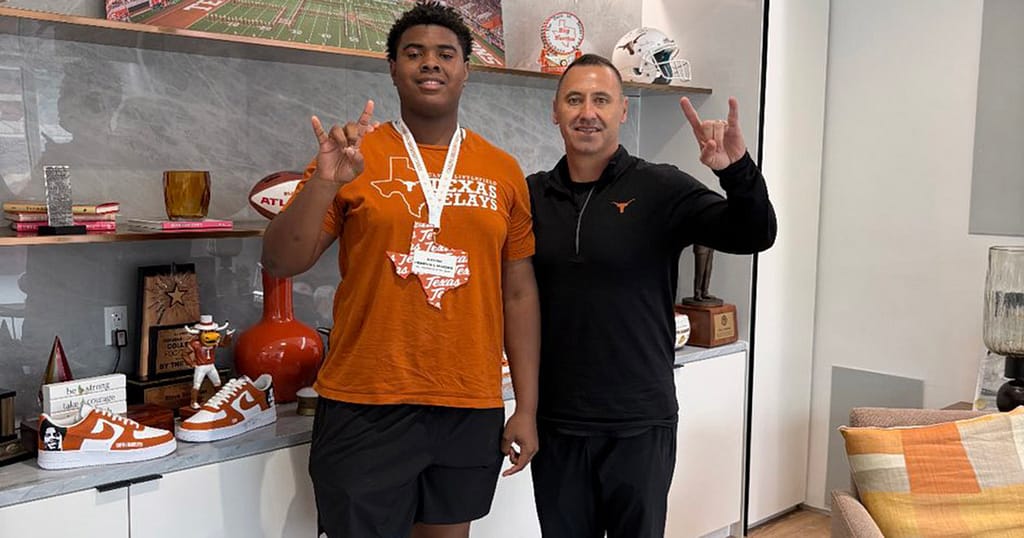
That is why the addition of Keyon Hemphill-Woods deserves a closer look right now. Texas is operating in an era when line depth, player development, and long-term roster management can shape seasons just as much as star quarterbacks and splashy five-star commitments. For a program trying to sustain championship relevance in the SEC, this is the kind of move that reveals how seriously it is treating the trenches.
Why This Commitment Carries Weight
I view this commitment as a reminder that recruiting is not only about collecting marquee names. It is also about building a complete roster that can survive attrition, injuries, transfer movement, and the week-to-week physical demands of elite conference play. Hemphill-Woods, a 3-star offensive lineman committed for a future class, may not generate the same buzz as a blue-chip skill player, but the logic behind the move is easy to understand.
Texas is trying to maintain a roster capable of competing at the highest level over multiple seasons, not just win a single recruiting cycle in the rankings. Offensive line recruiting, perhaps more than any other position group, rewards patience and projection. Prospects often need time in a college strength program, time in a film room, and time in a developmental system before they are ready to contribute. The teams that understand that tend to avoid the kind of depth crises that can derail promising seasons.
In that respect, this commitment is not simply about one player. It is about roster architecture.
The SEC Changes the Math Up Front
The move feels even more relevant because Texas is now recruiting for the realities of SEC football. That conference environment changes the physical threshold for nearly every position, but the difference is especially stark on the offensive line. Teams need size, conditioning, technique, and legitimate second-team depth just to get through a season intact.
A prospect like Hemphill-Woods fits into that long-view model. He represents a developmental investment at a position where timelines are naturally longer and misses can be costly. Offensive linemen do not always arrive college-ready, but they can become critical pieces by the time they are redshirt sophomores or juniors. That development curve is exactly why smart programs recruit beyond immediate need.
Texas has the profile of a team that wants to compete for conference titles and playoff spots every year. That goal demands more than a strong starting five. It demands eight or nine players who can function in meaningful snaps, hold up against top-tier defensive fronts, and preserve continuity when injuries inevitably hit.
What Texas Is Really Betting On
When I look at this commitment, I see Texas betting on three things at once: evaluation, development, and stability. The evaluation piece matters because programs at this level are not simply reading a star label and stopping there. They are projecting body type, athletic ceiling, coachability, and how a prospect may look after two years in a college system.
The development piece may be even more important. Offensive linemen can change dramatically once they enter a major program. Better nutrition, more advanced coaching, and full-time strength training can transform a player’s footwork, balance, and power profile. A 3-star lineman who has the right frame and mental approach can become far more valuable than his recruiting profile initially suggests.
The stability piece is the one often ignored in public conversation. Texas is building for continuity, and that matters in a transfer portal era where roster churn can happen quickly. Recruiting future contributors at positions that traditionally require incubation gives the coaching staff a better chance to avoid sudden shortages later.
Where Hemphill-Woods Fits in the Bigger Picture
Texas is not recruiting in a vacuum. Every commitment becomes part of a larger roster equation, and offensive line planning is usually mapped several classes ahead. Coaches are thinking about graduation timelines, likely departures, positional flexibility, and how many prospects they need at tackle, guard, and center over the next two to three years.
That makes this kind of commitment strategically useful even before the player arrives on campus. It helps the staff balance scholarship numbers, stagger classes, and continue building competition inside the room.
Here is a concise look at why the commitment stands out:
| Area | Why It Matters for Texas |
|---|---|
| Future Depth | Adds another body to a position group that must be stocked years in advance |
| SEC Readiness | Reflects a commitment to building size and durability in the trenches |
| Development Value | Offensive line prospects often outperform early recruiting labels |
| Roster Stability | Helps Texas manage long-term scholarship and succession planning |
That table tells the story clearly: this is less about immediate hype and more about structural value.
The Recruiting Narrative Often Misses Players Like This
One of the recurring mistakes in recruiting coverage is treating lower-profile offensive line commitments as secondary news. I think that misses the reality of how contender-level rosters are assembled. Coaches do not win in November because they won the internet in June. They win because they recruited enough real football players to survive the grind.
That is why this addition matters. It reflects a program making disciplined decisions, not chasing attention. It also reinforces the idea that Texas football recruiting is moving with an eye toward sustainability rather than pure optics.
There are several reasons that matters now:
- Texas must keep feeding the offensive line pipeline as SEC competition intensifies.
- Developmental linemen often become essential contributors by the time title windows fully open.
- Roster depth has become a competitive separator in the transfer portal era.
Those are not glamorous truths, but they are decisive ones.
What Comes Next for Texas
The most realistic outlook is that Hemphill-Woods enters the program as a long-term project rather than an instant-impact player. That is normal for the position. A likely path would involve early development time, physical growth, technical refinement, and a gradual climb through the depth chart. If that process goes well, Texas could eventually have a valuable rotational piece or even a future starter.
That possibility is exactly why programs keep taking these bets. The upside is meaningful, the cost of ignoring line depth is severe, and the payoff often comes later, when a player is ready just as the program needs him most.
Texas fans may not remember this commitment as one of the loudest moments in a recruiting cycle. They may, however, remember it differently if the player grows into a reliable part of the offensive front in the seasons ahead. That is how offensive line recruiting works. It is rarely instant, often understated, and absolutely central to winning serious football games.
Right now, this matters because Texas is no longer building merely to look talented. It is building to endure. And for any program with championship ambitions in the SEC, that is the only approach that truly counts.