
The most revealing development in Austin this spring is not a spectacular touchdown throw or a viral practice clip. It is the decision to change the format of the program’s showcase altogether. For me, that makes this one of the most important spring storylines in the state, because it says as much about Texas’ current reality as any depth chart ever could.
When a contender steps away from the traditional spring game, it is never just a scheduling tweak. It is a signal about roster health, program priorities, and the balancing act between development and preservation. In the case of the Longhorns, the move puts the spotlight squarely on where the team stands in April and where it believes it can go by fall.
Why The Format Change Matters
Texas will hold an open practice on April 18 instead of a conventional spring game, and that choice is more significant than it may first appear. In a traditional spring game, coaches get the closest thing to a live scrimmage before summer. Fans get a public glimpse of the roster. Players get a chance to show how they respond to a game-like environment.
But that model only works if a team has enough healthy bodies to stage something close to real football.
Texas does not appear to be in that position right now, particularly up front. A shortage of healthy offensive linemen changes everything. It limits what coaches can call, how physical they can be, and how much they are willing to expose players who are already carrying the heaviest burden in spring camp. I see this decision as a practical response, not a retreat. It reflects the simple reality that a spring game can become counterproductive when the roster is thin in the trenches.
That matters because offensive line depth often determines whether a talented team becomes a playoff threat or merely an intriguing one. Texas may still have star power, speed, and national expectations, but none of that travels very far if the front cannot stay intact.
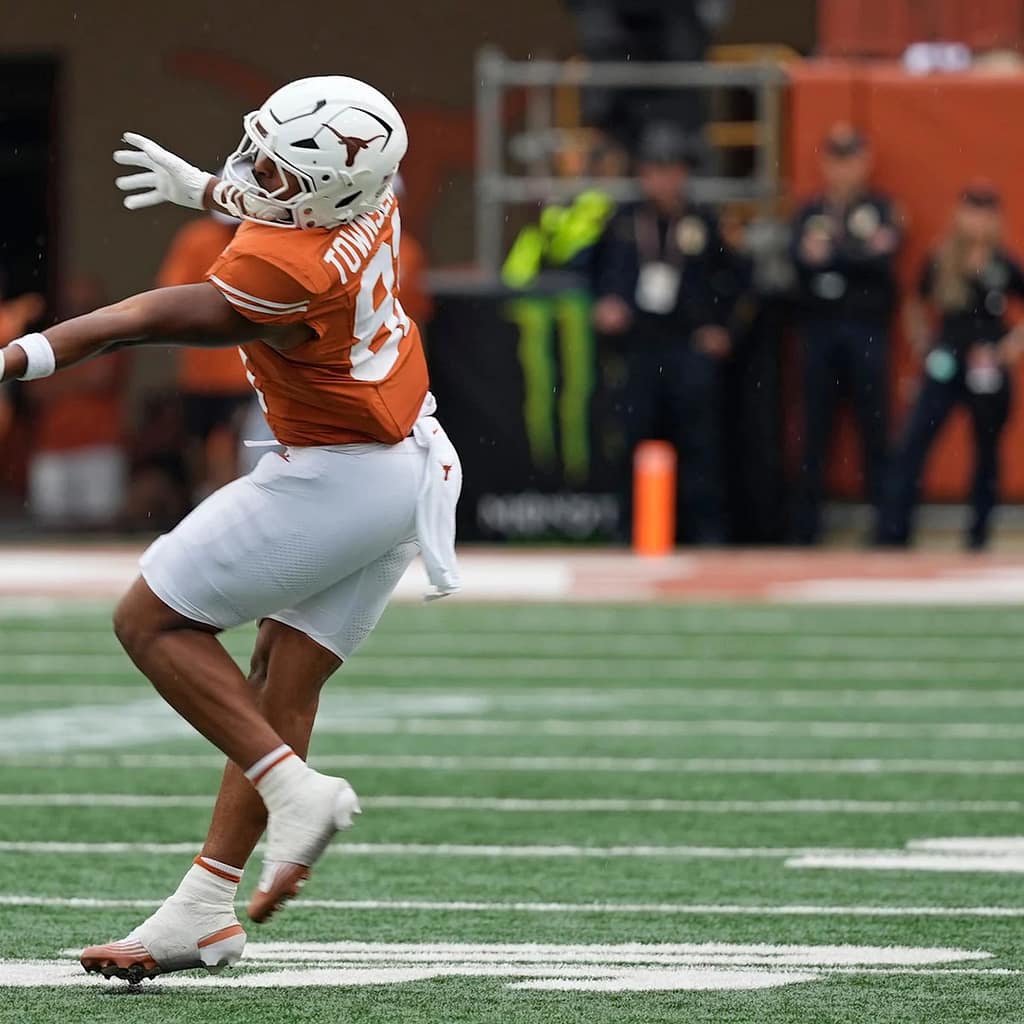
The Offensive Line Is The Real Spring Story
Even when quarterback play dominates the headlines, spring football is usually decided in less glamorous spaces. Right now, Texas is offering a reminder that offensive line health is not a side issue; it is the structure that holds an entire season together.
A limited number of healthy linemen does more than alter one exhibition event. It changes the tone of spring practice itself. Coaches must monitor workloads more carefully. Reps become more selective. Evaluation becomes less about full-contact proof and more about incremental progress, assignment discipline, and availability.
That creates a different kind of spring. Instead of staging a broad public statement, Texas is managing a controlled environment designed to protect the roster while still advancing development. I think that is a smart trade-off, even if it deprives fans of the usual pageantry. Championship-level teams do not win points in April for putting on a show. They win in the fall by arriving healthy enough to survive a long schedule.
Arch Manning Remains The Center Of Gravity
Even with the format shift, the biggest figure in the program remains obvious. Arch Manning is still at the center of everything around Texas, and that is unlikely to change anytime soon.
Spring always magnifies quarterbacks, but in Austin the amplification is even stronger. Manning is not just a passer competing for rhythm and timing; he is the emotional and commercial axis of the program. Every practice detail seems to orbit him, and every spring update is filtered through the question of what his presence means for Texas’ ceiling.
What stands out to me is how his development intersects with the current offensive reality. A quarterback with explosive-play potential can make an offense feel dangerous in a hurry, but that upside is only meaningful if the supporting structure allows it to function. The encouraging sign for Texas is that the staff clearly sees juice in the offense. The more complicated truth is that explosiveness in spring is a teaser, not a verdict.
That distinction matters. A team can flash big-play capability in controlled conditions and still face serious protection issues once the games begin. So while the conversation around Manning will continue to drive attention, the real measure of progress will be whether Texas can pair that high-end playmaking promise with enough stability in protection to let it breathe.
Explosive Potential Is Real, But So Is The Caution
There is a reason optimism keeps surfacing around this roster. Texas appears to believe it has real explosive-play ability this spring, and that kind of confidence usually comes from speed, timing, and comfort within the system. Those are valuable signals for any team with championship ambitions.
Still, spring optimism can be misleading when it is detached from context. I view the current moment in Austin as a study in controlled excitement. The Longhorns have enough offensive talent to generate intrigue, and enough injury-related limitations to remind everyone that intrigue is not the same as readiness.
That is why the open-practice model actually fits the moment. It allows the program to show progress without pretending the roster is in ideal game condition. It offers transparency while protecting players from unnecessary risk. And it underscores a truth that often gets lost in spring coverage: April is not about proving dominance to the public. It is about getting to August with the fewest avoidable setbacks possible.
For readers tracking Texas Longhorns spring football, this is the key lens through which to understand the month. The headline is not simply that the spring game is gone. The headline is that Texas is behaving like a program that believes its biggest goals still lie ahead and is willing to make pragmatic choices to preserve them.
What This Says About Texas Right Now
To me, the most revealing part of this story is the mindset behind it. Texas is not treating spring as theater. It is treating spring as asset management.
That may not be as entertaining, but it is often how mature contenders operate. They identify the weak points in the roster, protect what is vulnerable, and focus on what must be ready by the opener. In this case, that means acknowledging offensive line limitations while continuing to build around a quarterback who naturally draws the brightest light.
The broader message is clear: Texas still sees enough upside in this team to warrant caution. Programs without meaningful expectations do not usually calibrate spring this carefully. They chase exposure. Teams with real aspirations tend to think more clinically.
That is why this moment matters now. Texas enters the heart of spring with excitement around its offense, questions about its front, and a quarterback storyline that will define every national conversation about the program. The open practice is not a small administrative detail. It is a window into how the Longhorns are balancing ambition with vulnerability.
And in college football, that balance often determines whether the promise of spring becomes the substance of fall.