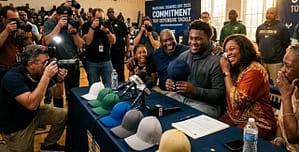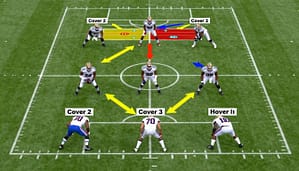
Texas entered the 2026 offseason carrying momentum that few programs in the country can match. The Longhorns are coming off another successful recruiting cycle, expectations surrounding quarterback Arch Manning continue to rise, and national analysts have placed Steve Sarkisian’s roster among the deepest in college football.
Those expectations gained another layer when five Texas players earned preseason Walter Camp All-America recognition ahead of the 2026 season. Quarterback Arch Manning, offensive tackle Trevor Goosby, edge rusher Colin Simmons, linebacker Rasheem Biles, and wide receiver Cam Coleman all appeared on the preseason teams, highlighting the balance Texas has built across multiple position groups.
Individual honors never guarantee championships, but they often reveal how a roster is viewed before the season begins. For Texas, the distribution of talent across offense and defense suggests the Longhorns possess many of the characteristics associated with College Football Playoff contenders.
National Recognition Reflects Texas’ Roster Development
Preseason All-America selections are based on production, projected impact, and long-term consistency. Programs that place multiple players on national teams usually combine elite recruiting with player development over several seasons.

Texas fits that profile entering 2026.
Steve Sarkisian has steadily transformed the roster since arriving in Austin, emphasizing quarterback development, offensive line depth, defensive speed, and recruiting across multiple states. The result is a team with experienced starters supported by one of the nation’s strongest recruiting pipelines.
The Walter Camp preseason selections demonstrate that national evaluators view Texas as more than a talented offense. Recognition across both sides of the football points to roster balance, an attribute shared by most recent national championship contenders.
The complete preseason honors list published by the Walter Camp Football Foundation places Texas among the nation’s leaders in All-America selections, reinforcing the program’s standing entering the SEC season.
Balance Across The Roster Separates Texas From Many Contenders
Elite quarterbacks often dominate preseason conversations, yet championship teams rarely rely on one player.
Texas’ preseason All-Americans illustrate how the roster has matured across every major unit.
| Player | Position | Why It Matters |
|---|---|---|
| Arch Manning | Quarterback | Offensive leadership and Heisman candidate |
| Trevor Goosby | Offensive Tackle | Protects the blind side and anchors pass protection |
| Colin Simmons | Edge Rusher | Elite pass-rushing production against SEC offenses |
| Rasheem Biles | Linebacker | Defensive communication and run support |
| Cam Coleman | Wide Receiver | Dynamic playmaker capable of stretching defenses |
Each player represents a position that frequently determines postseason success.
Quarterback controls offensive efficiency.
Left tackle protects the quarterback.
Elite edge rushers disrupt opposing offenses.
Linebackers organize defensive adjustments.
Explosive receivers create scoring opportunities.
Few teams possess preseason All-Americans across each of those categories.
Texas enters the season with national-caliber talent distributed throughout the lineup rather than concentrated at one position.
That balance becomes increasingly valuable during an SEC schedule where injuries and weekly physical matchups test roster depth.
Arch Manning Represents The Centerpiece Of Texas’ Championship Hopes
No player will receive more attention than Arch Manning.
After throwing for more than 3,100 yards and 26 touchdowns during the 2025 season while adding another 10 rushing scores, Manning enters 2026 as one of college football’s leading Heisman candidates.
His inclusion on the preseason All-America team reflects more than statistics.
Quarterback remains the most influential position in championship football. Teams competing for national titles consistently receive elite decision-making, leadership, and efficiency from under center.
Manning has shown progress in each of those areas.
His command of Steve Sarkisian’s offense improved throughout last season, particularly in pre-snap recognition and intermediate passing concepts. Texas now expects him to elevate the offense rather than simply operate it.
The Longhorns’ championship ceiling rises if Manning reduces turnovers, maintains efficiency against SEC defenses, and continues creating explosive plays outside the pocket.
That combination explains why national projections place Texas among the leading contenders entering 2026.
Offensive Continuity Could Become Texas’ Biggest Advantage
Steve Sarkisian has built one of college football’s most respected offensive systems.
Texas returns a quarterback entering his second full season as the starter, experienced offensive linemen, and proven receiving talent capable of producing explosive plays.
Cam Coleman’s preseason recognition reflects expectations that he will become one of the conference’s premier receivers after transferring to Austin.
Combined with Manning’s continued growth, Texas possesses the ingredients needed for one of the SEC’s highest-scoring offenses.
Execution remains the deciding factor.
Conference road games frequently force offenses into difficult communication environments. The Longhorns have already begun preparing for those situations, particularly as they approach rivalry matchups in hostile venues.
Our recent analysis of the SEC road game challenge explains why communication and offensive discipline become increasingly important inside stadiums such as Kyle Field.
Texas appears better equipped for those environments than it was a year ago.
Defensive Leaders Give Texas Championship-Level Potential
Recent national champions have consistently fielded disruptive defenses capable of creating negative plays without relying on constant blitz pressure.
Texas hopes Colin Simmons becomes the centerpiece of that philosophy.
The former five-star recruit has developed into one of the nation’s premier edge defenders, combining speed with improved hand technique and closing ability.
His preseason All-America recognition suggests evaluators expect another leap during 2026.
Behind Simmons, Rasheem Biles provides stability at linebacker.
Modern SEC offenses place linebackers under constant pressure through motion, option concepts, and layered passing attacks. Biles’ communication skills help organize Texas’ defensive front before the snap while allowing the secondary to adjust quickly.
Texas’ recruiting efforts over the past three years have steadily increased defensive depth.
The program has prioritized defensive linemen, athletic linebackers, and versatile defensive backs capable of matching today’s offensive trends.
Those investments position Texas to compete against the conference’s most balanced offenses.
Additional player rankings and national evaluations are available through 247Sports recruiting database, which continues to rank Texas among the nation’s premier talent accumulators.
Championship Teams Usually Share Similar Characteristics
Looking across recent College Football Playoff champions reveals recurring patterns.
- Elite quarterback play
- Offensive line stability
- Defensive pressure without excessive blitzing
- Experienced leadership
- Depth created through consecutive top recruiting classes
Texas checks many of those boxes entering the 2026 season.
The Longhorns are no longer building toward national relevance. Expectations have shifted toward competing for championships every season.
That transition creates different standards.
Close victories become expected.
Road success becomes mandatory.
Player development receives greater scrutiny than recruiting rankings alone.
The preseason All-America selections reinforce that Texas has assembled one of the country’s strongest starting lineups.
The remaining question centers on consistency across an SEC schedule that leaves little room for mistakes.
Expectations Have Shifted From Potential To Production
For much of the past decade, conversations surrounding Texas focused on future potential.
That language has changed.
National analysts now evaluate the Longhorns alongside programs like Georgia, Ohio State, Oregon, and Alabama because the roster supports those comparisons.
Five preseason All-Americans symbolize that shift.
The recognition earned by Manning, Goosby, Simmons, Biles, and Coleman reflects years of recruiting success, player development, and coaching continuity.
Texas now enters the season with realistic championship expectations rather than hopeful projections.
Whether the Longhorns capitalize on that opportunity will depend on execution across conference play, health during the second half of the schedule, and continued leadership from one of the nation’s most talented rosters.